Emergency Exit Row Seats: Who Qualifies to Sit Here and When You Should Avoid Them [2026 Guide]
When selecting your seat during flight booking or online check-in, few options are more tempting than the emergency exit row. The prospect of enjoying business-class legroom without paying for a premium ticket feels like the ultimate hack to bypass the cramped realities of standard economy—especially on long-haul flights. Yet, countless flyers snap up these seats on impulse only to be caught off guard once aboard: flight attendants demand that every single personal item be stored in overhead bins, the seat back refuses to recline a fraction of an inch, or crew members abruptly reseat them to the back of the plane before pushback.
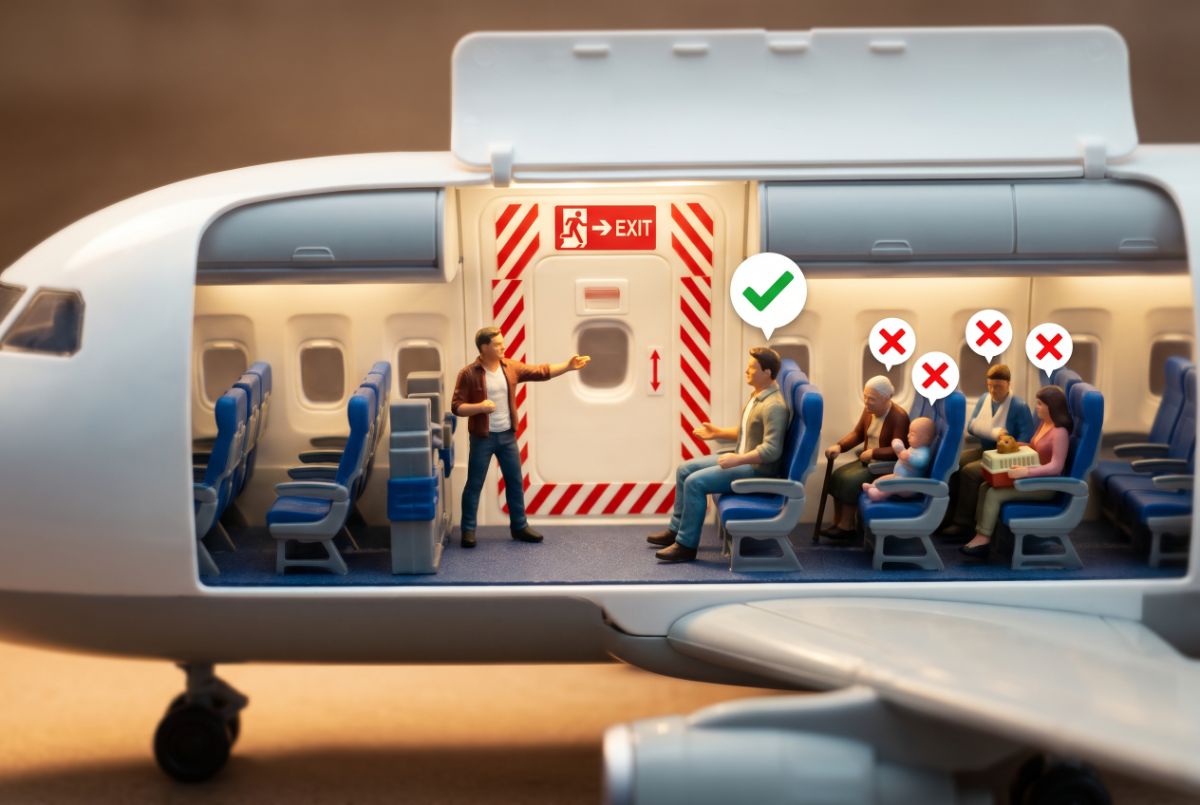
What many travelers overlook is that an emergency exit row seat is not just an extra-legroom perk: it is a critical operational safety station governed by strict federal aviation mandates from the FAA, EASA, and ICAO. Occupying an exit seat means formally assuming the legal and physical responsibility to operate emergency doors weighing up to 35 to 50 pounds (15 to 23 kg) and directing cabin evacuation during a catastrophic event. Furthermore, lesser-known ergonomic drawbacks make these rows a frustrating choice for certain traveler profiles. This comprehensive 2026 aviation consumer guide outlines legal eligibility criteria, key regulatory restrictions, and the specific travel scenarios where choosing an exit row seat is a mistake.
Emergency Exit Row vs. Standard Economy: Pros & Cons Compared
Compare pitch, seat dimensions, physical storage rules, and regulatory requirements before selecting an exit row seat:
| Feature / Metric | Emergency Exit Row Seat | Standard Economy Seat | Operational & In-Flight Impact | Traveler Verdict |
|---|---|---|---|---|
| Legroom (Seat Pitch) | 36 to 41 inches (91–104 cm) | 29 to 31 inches (74–79 cm) | Allows full leg extension and aisle egress without disturbing seatmates. | Massive Advantage for tall passengers over 6 feet (183 cm). |
| Under-Seat Floor Storage | Strictly Zero During Taxi, Takeoff & Landing | Permitted beneath seat in front | 100% of bags, laptops, coats, and purses must go into overhead bins. | Inconvenient for travelers needing constant access to medication, headphones, or books. |
| Seat Recline Capability | Locked / Zero Recline (Forward exit row) | Standard recline (2 to 3 inches) | Forces you to sit at a strict 90-degree angle for the entire flight duration. | Terrible for Sleeping on overnight red-eye and long-haul flights. |
| Seat Width & Armrests | Narrower seat width; fixed rigid armrests | Movable, swing-up armrests | Tray tables stowed inside armrests reduce hip width by ~1 inch. | Uncomfortable for broad-hipped or larger passengers. |
| Legal & Physical Duty | Mandatory legal duty to assist crew | Follow crew instructions only | Requires physical strength, mobility, and clear verbal briefing consent. | Strictly barred for minors, injured travelers, and passengers with pets or infants. |
1. Legal Requirements: Who Is Allowed to Sit in an Exit Row?
Under strict aviation safety codes—such as FAA 14 CFR § 121.585 in the United States and comparable EASA regulations across Europe—airlines are legally mandated to screen every passenger occupying an exit seat. To sit here, you must meet all of the following requirements:
- Minimum Age Limit: The passenger must be at least 15 years old under FAA rules (and up to 16 or 18 on several European and Asian carriers). Children and infants are barred under all circumstances.
- Physical Strength and Dexterity: You must possess sufficient strength, mobility, and stamina in both arms, hands, and legs to unlock, lift, and maneuver an emergency exit hatch that weighs between 35 and 50 pounds (15 to 23 kg), throw it out the opening, and help deploy escape slides. Anyone with broken bones, mobility casts, or temporary joint limitations is excluded.
- Visual and Auditory Acuity: The occupant must be able to see emergency exit markers, read instructional diagrams, and hear verbal evacuation instructions without assistance other than standard eyeglasses or certified hearing aids.
- Fluency in the Operating Crew’s Language: On US-registered carriers, passengers must speak, read, and understand English fluently. On foreign carriers (e.g., Lufthansa, Air France, ANA), you must understand English or the airline’s primary operating language. If a flight attendant delivers the mandatory safety briefing and you cannot clearly respond in their language, you will be reseated immediately.
- Willingness to Act: Sitting in an exit row is strictly voluntary. Prior to pushback, cabin crew will ask directly: “Are you willing and able to assist in an emergency?” If you answer “no”, hesitate, or refuse to give a clear verbal “yes”, the crew is legally obligated to reassign your seat.
2. Who Is Barred from Sitting in an Exit Row?
Even if you pay an extra fee to reserve an exit row seat online, flight attendants have absolute regulatory authority to remove you if you fall into any of these categories:
- Passengers Traveling with Infants or Children: Parents flying with lap infants (INF), toddlers, or minors under 15 years of age cannot sit in exit rows. In an emergency, parental instinct compels travelers to assist their child first rather than prioritizing the prompt opening of exit doors for the wider cabin.
- Passengers Requiring a Seatbelt Extender: If the standard aircraft seatbelt does not fit around your waist and you require an extension belt from the crew, you are legally barred from the exit row. The excess belt webbing presents an entrapment hazard along the emergency egress corridor.
- Passengers with Reduced Mobility (PRM): Anyone using crutches, walking canes, wheelchairs, or requiring airport wheelchair assistance cannot occupy an exit seat.
- Travelers with Service Animals or Pets in Cabin (PETC): Animals—including trained service dogs—cannot travel in exit rows because they block the floorway and cannot be safely restrained during rapid evacuations.
- Expectant Mothers: Most international airlines restrict pregnant passengers from exit rows to protect maternal health during heavy lifting and preserve escape route speed.
3. When You Should AVOID Booking an Exit Row Seat
While the extra legroom is undeniable, exit row seats come with substantial comfort trade-offs that can ruin an otherwise relaxing flight:
A. The Non-Reclining “Front” Exit Row Trap
On standard narrowbody aircraft with two consecutive over-wing exit rows (such as the Boeing 737 or Airbus A320 families):
- The Forward Exit Row Does NOT Recline: Aviation safety rules dictate that seats directly in front of an exit hatch must remain permanently locked upright to prevent them from obstructing the escape corridor behind them.
- Sitting bolt upright at a rigid 90-degree angle for a 5-hour flight can cause severe lower back pain and fatigue. If you want both legroom and standard recline, always book the SECOND (aft) exit row, which reclines normally without blocking an exit path.
B. The Rigid Armrest & Narrower Seat Problem
In standard rows, fold-down tray tables attach to the back of the seat ahead. Because exit rows feature massive open gaps in front of passengers, the tray table is integrated directly inside the armrest:
- These armrests are constructed from solid, non-movable metal housings that cannot be raised or pushed flush with the seat cushion.
- This mechanical hardware robs roughly 1 to 1.5 inches of usable seat cushion width, creating tight hip pressure for larger flyers.
C. The Absolute “No Floor Storage” Mandate
In normal seats, you can slide a backpack, laptop case, coat, and water bottle beneath the seat in front of you for quick access.
- In an exit row, safety mandates are zero-tolerance: every personal belonging—including tiny crossbody bags, jackets, laptops, and cameras—must be stowed in overhead bins for taxi, takeoff, and landing.
- If nearby bins fill up early, your gear may end up four rows behind you, making it impossible to grab your headphones or reading material until cruising altitude.
D. Freezing Cold Window Drafts
Emergency exit door plugs feature thinner thermal and acoustic insulation than standard solid fuselage panels. At cruising altitudes of 36,000 feet, where outside temperatures plummet below -50°F (-45°C), a noticeable cold draft constantly leaks around the door seals. Window seats in exit rows (typically seats A and F) run considerably colder than the rest of the cabin; bring an extra layer if you sit here.
Essential Exit Row Seat Selection Street Smarts
Want Maximum Legroom AND Recline? Target the Second Exit Row: When viewing airline seat maps during booking, look for paired exit rows over the wing (typically rows 14 and 15 on Airbus A320s or rows 15 and 16 on Boeing 737s). Always choose the rearward exit row. You will enjoy the expanded legroom while retaining standard seat recline.
Disqualified by the Crew? Request a Seat-Fee Refund: If you paid an extra “preferred seat” fee to book an exit row online, but the gate or flight crew reseats you due to language barriers, minor injuries, or seatbelt extender rules, the airline must refund your seat selection fee. Ask the purser or gate agent to record the involuntary reseat in your reservation log, then file an online customer service refund request.
Authoritative Cabin Safety Guidelines & Regulations
Review official federal flight safety standards and international passenger seating mandates:
- Review federal exit row seating criteria and legal restrictions via the Federal Aviation Administration (FAA 14 CFR § 121.585 Exit Seating).
- Check European passenger safety and cabin management standards on the European Union Aviation Safety Agency (EASA Cabin Operations).
- Explore global passenger evacuation protocols and cabin safety guidance at the International Civil Aviation Organization (ICAO – Cabin Safety).
- Review seat selection consumer guidelines and carrier disclosure obligations on the US Department of Transportation (Aviation Consumer Protection).


Post Comment