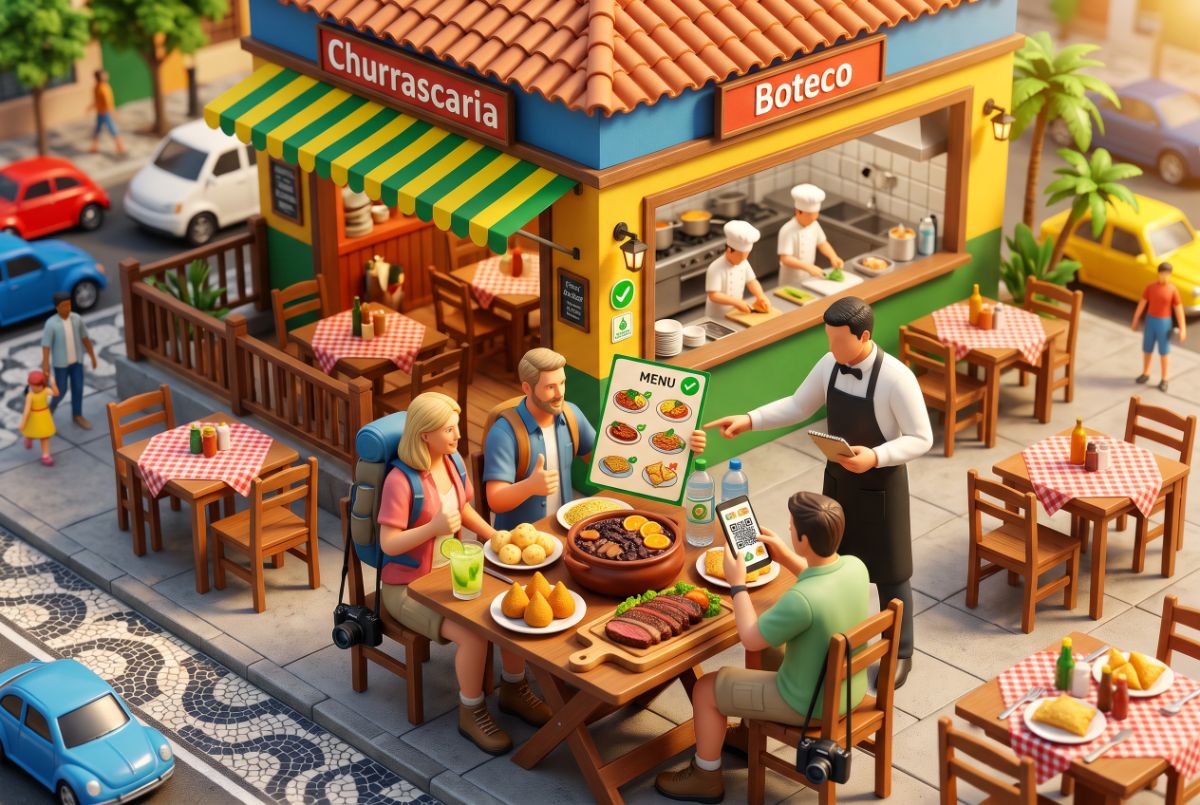
Brazilian Food for First-Time Visitors: What to Try and How to Order Safely
Landing in Brazil for the first time opens up a culinary universe far richer than the standard tourist expectation of grilled meats and sugary caipirinhas. From slow-simmered black bean stews perfumed with bay leaves to golden cassava fritters, Amazonian fruit bowls, and coastal seafood stews bubbling in clay pots, Brazilian cuisine is an intense regional mosaic shaped by Indigenous, Afro-diasporic, and Portuguese traditions. Yet, stepping into a bustling lunchtime restaurant in Rio de Janeiro or São Paulo can trigger instant sensory overload: confusing dining formats like pay-by-weight buffets, servers carving meat tableside without printed menus, and the ever-present traveler anxiety: “What should I order first, is the street food safe, and how does the tipping system work?”
Navigating Brazil’s food culture requires understanding its unique dining models as much as its signature flavors. Formats like the comida a quilo (pay-by-weight buffet), the carnivorous marathon of the rodízio de churrasco, and traditional neighborhood snack bars (botecos) each carry their own unspoken operational rules. At the same time, practical health hygiene—such as knowing how to order bottled drinking water, handling fresh beach snacks, and navigating tap water safety—ensures your trip stays seamless. This comprehensive 2026 culinary guide breaks down the essential Brazilian dishes every first-timer must taste, explains local dining formats step by step, and outlines critical ordering rules for a safe, authentic food journey.
Essential Brazilian Foods & Dining Styles Compared
Compare classic national dishes, dining styles, average prices in Brazilian Reais (BRL), and traveler safety profiles:
| Dish / Dining Format | What It Is | Average Cost (BRL / USD) | Where to Eat It | Traveler Verdict & Safety |
|---|---|---|---|---|
| Feijoada Completa | National black bean stew with cured pork, ribs, sausage, collard greens, rice, and farofa | R$ 45 – R$ 90 (~$8 – $16 USD) | Traditional restaurants on Wednesday and Saturday lunch | The National Icon. Extremely filling; historically served as a leisurely weekend meal. |
| Restaurante a Quilo (Pay-by-Weight Buffet) | Self-service hot and cold buffet where you weigh your plate at a digital scale | R$ 60 – R$ 110 per kg (plate ~$6 – $10 USD) | Every city business district and residential neighborhood | Best Everyday Format. Inspect visually, pick what looks freshly made, and control your portion sizes. |
| Churrascaria Rodízio | All-you-can-eat grilled meats (picanha, ribs, flank) carved tableside from giant skewers | R$ 110 – R$ 260 (~$20 – $45 USD) | Specialized steakhouse steakhouses (Fogo de Chão, Assador, local rodízios) | Carnivore Paradise. High hygiene standards, generous gourmet side buffets, excellent beef quality. |
| Pão de Queijo & Salgados | Baked cassava starch cheese buns, shredded chicken coxinhas, and ground beef pastéis | R$ 5 – R$ 15 (~$1 – $3 USD) | Padarias (bakeries) and street-corner lanchonetes | Safe & Ubiquitous. Freshly baked or fried in high-temperature oil; excellent quick breakfast or snack. |
| Acarajé (Northeastern Street Food) | Black-eyed pea fritter fried in red dendê palm oil, split and stuffed with vatapá, caruru, and dried shrimp | R$ 15 – R$ 25 (~$3 – $5 USD) | Street stalls run by traditional Baianas (Bahia) and specialist venues | Rich & Pungent. Dendê oil is heavy on unadjusted stomachs; order mild pepper (sem pimenta). |
| Moqueca (Baiana or Capixaba) | Slow-simmered fish and seafood stew with bell peppers, tomatoes, onions, and coriander | R$ 120 – R$ 220 (usually serves 2 people) | Coastal seafood restaurants | Top Seafood Choice. Cooked fresh to order in red clay pots; served piping hot with rice and pirão. |
1. The Dishes You Cannot Leave Brazil Without Tasting
Brazilian cuisine changes dramatically as you travel along its 7,400-kilometer coastline and into its interior savannahs, but several foundational dishes appear across every state:
- Feijoada: Considered the culinary soul of the country. A rich stew of black beans slow-simmered with smoked sausages (calabresa, paio), bacon, cured pork ribs, and dried beef (carne-seca). It is invariably accompanied by white rice, finely shredded and sautéed collard greens (couve), crispy toasted cassava flour (farofa), and fresh orange slices (whose acidity cuts the heavy rendered pork fat). Local tradition: Wednesdays and Saturdays are the designated feijoada days in bars and restaurants nationwide.
- Picanha: The undisputed queen of Brazilian beef cuts. This prime top sirloin cap retains a thick, caramelized layer of outer fat that self-bastes the meat over lump charcoal or open flames. Seasoned only with coarse sea salt, it is sliced thin across the grain and melts in your mouth.
- Moqueca: A fragrant seafood stew cooked in shallow, handmade black clay pots. It exists in two primary rival schools:
- Moqueca Baiana (from Bahia): Made with rich coconut milk, aromatic sweet bell peppers, cilantro, and bright-red unrefined dendê palm oil.
- Moqueca Capixaba (from Espírito Santo): A lighter, delicate variation omitting coconut milk and dendê, using natural urucum (annatto seeds) for a vibrant orange-red hue.
- Coxinha: The quintessential Brazilian comfort street snack. A teardrop-shaped dumpling formed from potato or wheat dough, stuffed with spiced shredded chicken breast and cream cheese (catupiry), coated in breadcrumbs, and deep-fried to a shatteringly crisp golden crust.
- Açaí na Tigela: Originating in the Amazon, pure açaí is an unsweetened, earthy berry eaten with fish. In coastal cities, it is blended into a thick, chilled purple sorbet topped with sliced bananas, strawberries, and crunchy toasted granola. It is refreshing, antioxidant-packed, and available at dedicated juice bars (casas de suco) on nearly every corner.
2. How Local Dining Formats Work (And How to Order)
The biggest operational barrier for foreign travelers is not the food itself, but navigating Brazilian dining systems that have no exact international equivalent:
A. Restaurante por Quilo (Pay-by-Weight Buffet)
The backbone of lunchtime in urban Brazil. Fast, economical, and offering endless variety:
- Upon entering the restaurant, an attendant hands you a plastic tally card (called a comanda). Do not lose this card; all your food and drink charges will be tracked on it.
- Grab a plate and browse the central buffet stations, which typically feature cold salads, sushi, hot meats, feijoada, pasta, and grilled steaks. Take as much or as little as you want.
- Head to the scale station (a balança) at the end of the buffet line. Place your plate on the scale. The attendant will scan your tally card, print a barcode sticker with your plate’s weight and cost, and stick it to your card.
- Sit down and order drinks from roaming waitstaff, who scan your card for each beverage. When finished, take your comanda to the cashier counter (o caixa) near the exit to pay your total bill.
B. Churrascaria Rodízio (All-You-Can-Eat Meat Parade)
A carnivorous feast that requires pacing strategy:
- After seating, servers offer drinks and direct you to an expansive central gourmet buffet loaded with cheeses, cured meats, palm hearts, fresh salads, and seafood. Pace yourself: amateur visitors fill their plates with bread and sushi before the meat ever arrives.
- Each table setting features a two-sided circular token or coaster: Green side (“Sim, por favor” / Yes, please) and Red side (“Não, obrigado” / No, thank you).
- Flipping the token to green signals roaming passadores (gaucho meat carvers) to swarm your table with long stainless-steel skewers bearing picanha, garlic steak, lamb chops, chicken hearts (coração de frango), and roasted pineapple with cinnamon.
- When you need a breather or want to eat what is on your plate without interruption, flip the token to red.
C. The Traditional Neighborhood “Boteco”
Laid-back, open-air corner bars where Brazilians socialize after work over ice-cold beer and sharing plates (petiscos):
- Bottles of beer (typically 600 ml glass bottles of Brahma, Antarctica, or Heineken) are delivered inside insulated plastic or aluminum sleeves called camisas to keep the beer frosty in tropical heat.
- Waiters continuously pour beer into small 200 ml glasses (copo americano) so that the beverage is finished before warming up. When your bottle drops to its last sip, waiters will automatically bring another unless you tell them to hold off.
3. Critical Food Safety & Drinking Rules for Travelers
Brazil maintains rigorous commercial health and sanitation standards, but differences in local water supply and culinary practices require standard travel prudence:
- Tap Water Safety: Never drink unfiltered tap water in Brazil. While municipal water treatment plants purify the water, ancient distribution pipes and residential rooftop water storage tanks (caixas d’água) can introduce sediment and bacterial contamination. Drink exclusively bottled or purified water.
- When ordering, specify: “Água sem gás” for still flat water, or “Água com gás” for sparkling carbonated water.
- Ice in commercial restaurants and bars is industrially manufactured with purified water and is universally safe to consume in your cocktails and sodas.
- Street Food Guidelines: Street vendors cooking food in front of you at high temperatures—such as deep-fried pastéis at open-air farmers markets (feiras livres) or tapioca crepes griddled fresh—are generally very safe. Look for stalls with long queues of local families.
- Beach Food Caution: On the sand, avoid pre-cooked seafood (like cold peeled shrimp sold from wandering buckets) or unchilled mayonnaise-based salads. Instead, opt for whole freshly grilled cheese skewers (queijo coalho) torched directly over charcoal pots in front of you, or freshly opened chilled coconuts (água de coco).
- Fresh Fruit & Juices: Brazil produces some of the most vibrant fruits on Earth (passion fruit, mango, guava, caju, graviola, acerola). Dedicated juice bars in Rio and São Paulo peel and blend whole fresh fruit right across the counter. They are exceptionally safe, hygienic, and a mandatory cultural experience.
4. Tipping and Paying: How the 10% Service Fee Works
Settling the restaurant bill in Brazil is straightforward and transparent:
- The Standard 10% Service Charge: By law and national customs, restaurants include a 10% service fee (taxa de serviço) at the bottom of the bill. It is technically discretionary, but virtually everyone pays it unless service was actively catastrophic. You do not need to leave additional cash on the table beyond this printed amount. Higher-end dining venues may occasionally suggest 12% or 13%.
- Card Acceptance is Universal: Brazil possesses one of the world’s most advanced digital payment infrastructures. Virtually every food establishment—from Michelin-starred dining rooms down to coconut vendors sitting on the beach—carries portable wireless card machines (POS) that accept contactless international Visa, Mastercard, Apple Pay, and Google Wallet.
- Splitting the Bill (Dividir a Conta): Waitstaff in Brazil are exceptionally accustomed to splitting bills across large groups. Simply tell your server: “Pode dividir por [número de pessoas], por favor”, and they will run individual card payments at the table.
Essential Brazilian Dining Street Smarts
Watch the “Couvert” Charge: When you sit down at full-service traditional restaurants, servers often immediately drop small dishes of bread, butter, pickled quail eggs, or marinated olives on your table without you asking. These are not complimentary; they represent a charged appetizer course called the couvert. If you do not want to pay for it, wave your hand politely and say: “Não, obrigado” within the first minute, and the server will remove it without charge.
Portions Often Serve Two People: In traditional sit-down Brazilian restaurants, standard entrées (especially moquecas, roasted meats, and stews) are served family-style and easily feed two hungry adults. Look at the menu for notations like “Serve 2 pessoas” or ask the waiter if a half-portion (meia porção) is available if you are dining solo.
Authoritative Tourism & Health Resources
Consult official Brazilian food safety guidelines, travel advisories, and culinary heritage directories:
- Explore regional culinary tourism directories on the Embratur Official Brazilian Tourism Board.
- Check national food sanitation and traveler water safety standards via ANVISA (National Health Surveillance Agency).
- Review international traveler health and vaccination recommendations at the CDC Travelers’ Health Guide for Brazil.
- Review consumer dining rights, bill splitting, and service fee laws on PROCON-SP (Consumer Protection in Restaurants).


Post Comment