No Safe in Your Hotel Room? Where to Keep Your Passport, Cash, and Cards [2026 Guide]
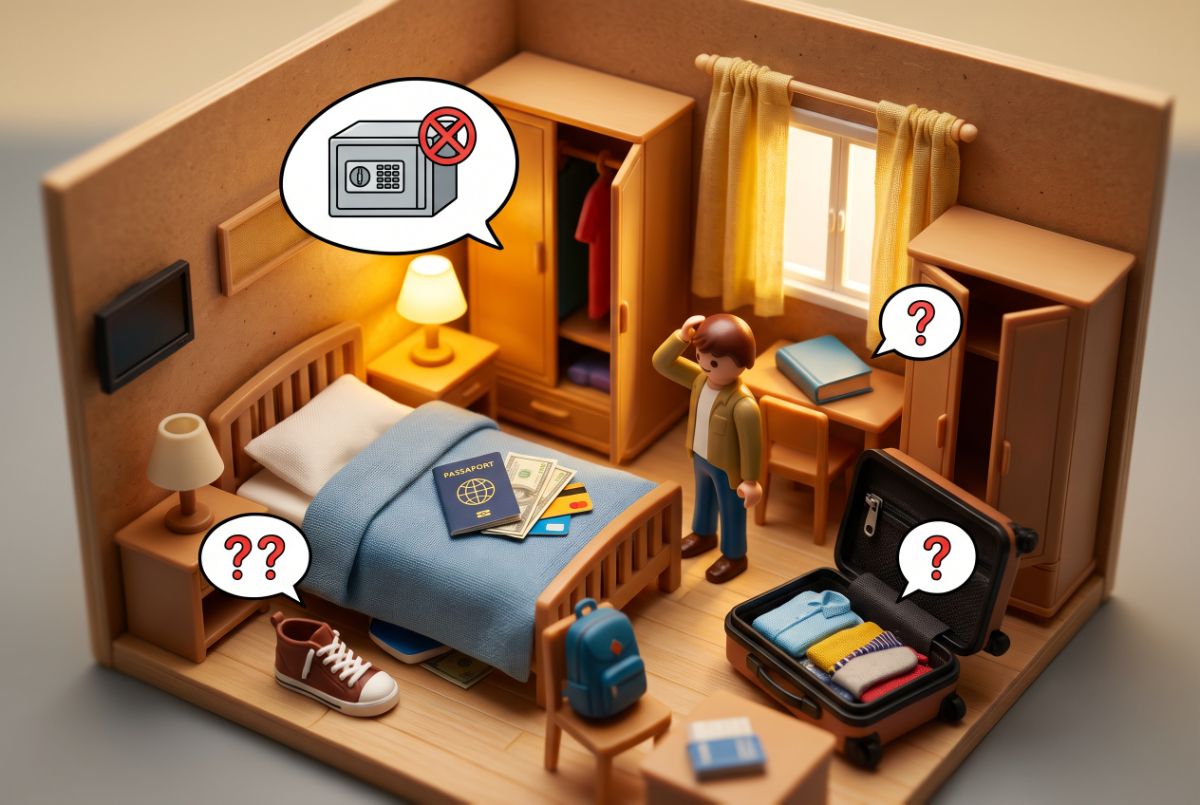
Arriving at your hotel room or vacation rental after a long flight, unpacking your daypack, and discovering there is no in-room electronic safe is an unsettling moment. A familiar dilemma immediately sets in: “Is it safe to leave my original passport, emergency backup cash, and extra bank cards in this unlocked room while I sightsee all day? Or is it riskier to carry everything in my daypack through crowded streets, exposing myself to pickpockets and transit thieves?”
This concern affects anyone booking boutique hotels in historic European city centers, guesthouses across Southeast Asia, or vacation rentals via Airbnb and Vrbo. The anxiety is justified: hotel rooms experience daily traffic from housekeeping crews, maintenance workers, and third-party contractors. On the flip side, walking through congested tourist hubs with your passport and entire travel budget on your back turns you into a prime target for opportunistic street thieves. The answer to this dilemma is not blind trust—it is a system of asset compartmentalization, physical perimeter locks, and practical hiding strategies. This comprehensive 2026 security guide outlines exactly how to protect your valuables when an accommodation lacks an in-room safe.
Where to Keep Your Passport & Cash: Custody Methods Compared
Compare security levels, daily convenience, and primary risks across common storage strategies:
| Storage Strategy | Security Level | Daily Convenience | Primary Associated Risk | Operational Verdict |
|---|---|---|---|---|
| Hard-Shell Luggage Locked with a TSA Lock | High | Excellent | Entire suitcase theft (extremely rare in rooms) | The Best Safe Alternative. Creates a physical deterrent against quick opportunistic room theft. |
| Undercover Money Belt / Body Pouch (On Your Person) | Very High | Moderate (sweat/discomfort in hot weather) | Violent muggings (rare in daytime tourist areas) | Essential for Travel Days. Ideal during transit between cities or in accommodations with shared dorm access. |
| Front Desk Safety Deposit Box | Maximum | Low (must request access from clerk each time) | Time spent waiting at front desk | Best for substantial amounts of foreign cash or expensive jewelry; hotel logs formal legal custody. |
| Improvised Room Hiding Spots (Vent, book, deep closet) | Moderate to Low | Easy | Forgetting items behind at early morning checkout | Use with Caution. Never hide items in obvious zones like under the mattress or in nightstand drawers. |
| Carrying Everything in a Daypack on the Street | Worst / Critical | High | Pickpocketing in transit networks and attractions | Strongly Discouraged. Street-level risk in crowded tourist centers far exceeds room theft risk. |
1. Your Locked Suitcase Is Your Most Effective Improvised Safe
If your room lacks a steel wall safe, the most secure storage device in the building is your own hard-shell rolling suitcase secured with a reliable lock:
- Understanding Room Theft Dynamics: The vast majority of hotel property disappearances fall under crimes of opportunity. A rogue housekeeper, visiting contractor, or open-door prowler will pocket a loose $100 bill left on a dresser, high-end earbuds on a nightstand, or a designer wallet on a desk. They almost never risk prying open a locked, zippered suitcase because leaving visible evidence of forced entry triggers immediate police reports and audit trails.
- How to Fortify Your Suitcase: Place your original passport, emergency backup cards, and excess cash inside an opaque pouch. Tuck it deep beneath clothes at the bottom of your suitcase, zip the interior lining, shut the outer shell, and engage the built-in TSA combination lock or a heavy-duty luggage padlock.
- The Cable Lock Anchor Trick: If you are carrying high-value electronics like a work laptop or camera kit, pack a flexible steel luggage cable lock. Loop the steel wire through your suitcase frame handle and anchor it to a non-movable room fixture—such as an exposed bathroom water pipe, closet mounting bracket, or heavy bed frame. This prevents anyone from quickly picking up the suitcase and walking down the hallway with it.
2. The Three-Basket Rule: Split Your Valuables
The single most dangerous security mistake is keeping all your funds and identification together in one place:
- Divide Your Assets into Three Tiers:
- Tier 1: Daily Walking Pocket (Front Pocket or Crossbody Bag): Carry only the estimated local cash required for that day (transport, dining, small entrance fees) plus a single debit or credit card.
- Tier 2: Street ID Copies: In almost every global destination, tourists are not legally required to carry their physical original passport for standard sightseeing. Carry a clear digital photo of your passport’s information and visa pages on your smartphone (saved offline), backed up by a laminated paper color photocopy. Leave the original passport locked in your room.
- Tier 3: The Basecamp Stash (Locked Luggage): Your original passport, secondary emergency credit card (from a completely different bank network), and primary cash reserve remain in your locked room. If your wallet is lifted on the subway, you lose only a single day’s cash, and your trip remains completely intact.
3. When You Must Carry Items: The Undercover Money Belt
On travel days—such as taking intercity trains, changing hotels, or staying in shared hostel dormitories without lockable lockers—carrying your core documents becomes unavoidable:
- Undercover Body Pouches: Invest in an ultra-slim, moisture-wicking money belt or neck pouch worn beneath your clothing against your skin. It sits flat under your waistband and is completely inaccessible to pickpockets on crowded subway platforms.
- Never Access Your Money Belt in Public: A money belt functions as a secret vault, not a functioning wallet. Never pull up your shirt at an open museum ticket window or café counter to retrieve cash from your body pouch. Doing so flags its location to watchful spotters. Transfer your daily pocket money into your regular wallet inside a private bathroom before stepping outside.
4. Smart In-Room Hiding Spots (And Where to Avoid)
If you must leave items outside your locked suitcase, steer clear of obvious locations:
- Locations to NEVER Use: Under the mattress, inside pillowcases, in the top nightstand drawer, behind the bathroom mirror, or in the minibar. These are the first areas checked during unauthorized entries.
- Clever Decoy Alternatives:
- Toiletry Decoys: Roll backup cash tightly and slide it inside an empty, opaque deodorant stick, a clean, dry sunscreen bottle, or an ordinary travel first-aid box at the bottom of your toiletry kit. Nobody rummages through ointment tubes looking for currency.
- Inside a Reading Book: Flatten notes between the dense pages of a heavy guidebook or paperback novel packed among your travel books.
- Internal Backpack Linings: Many hiking daypacks have zippered structural maintenance seams along the lower lumbar padding that look like manufacturer stitching to a casual glance.
- The Checkout Morning Hazard: The biggest risk with creative hiding spots is not a thief finding them—it is forgetting them yourself during a rushed 5:00 AM departure. If you place valuables in an uncommon spot, set an active recurring reminder on your smartphone reading: “Retrieve passport from toiletry kit before dropping room keys.”
Essential Hotel Security Street Smarts
The “Do Not Disturb” Sign Defense: For short hotel stays of two to three nights, you rarely need daily towel changes. Keep the “Do Not Disturb” sign hung on your exterior door handle for the duration of your stay. This signals to hotel staff that the room is continuously occupied, cutting foot traffic into your space to zero while you explore the city.
Use the Front Desk Safe for High-Value Cash Reserves: If you are carrying thousands of dollars in cash that must fund an entire month-long trek, head down to the front desk and request a Front Desk Safety Deposit Box. Heritage hotels provide individual safe deposit boxes behind the reception counter, providing you with a physical brass key and a signed custody receipt. Under international lodging law, hotels assume direct legal bailment liability for items surrendered to their central vault.
Authoritative Travel Security Portals & Resources
Review consular safety guidelines, lost passport replacement protocols, and overseas personal security advisories:
- Review international theft prevention and overseas emergency guidance on the U.S. Department of State (Traveler’s Checklist & Safety Advice).
- Check British consular advice on handling stolen passports and emergency travel documents via GOV.UK Foreign Travel Advice.
- Explore international property consumer guidelines and traveler rights via the American Hotel & Lodging Association (AHLA).
- Review worldwide crime prevention guidance from INTERPOL (Travel Safety Advisory).

Post Comment