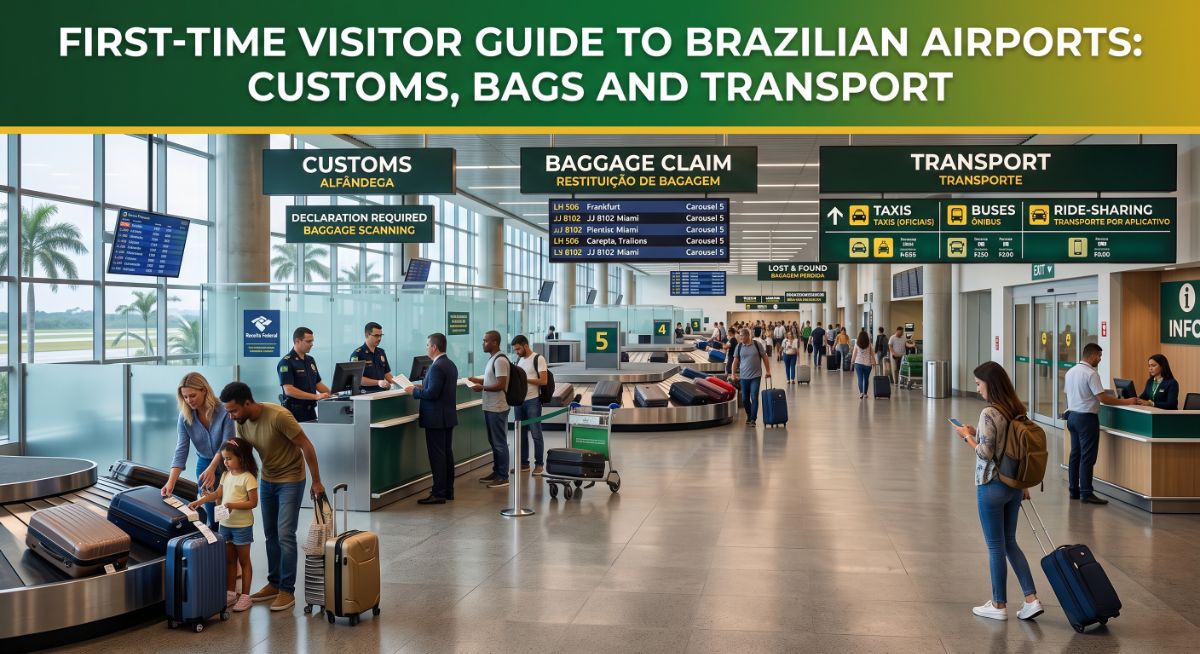
First-Time Visitor Guide to Brazilian Airports: Customs, Bags and Transport
Stepping off a long-haul intercontinental flight into a major Brazilian airport is an exhilarating sensory shift. Whether your landing gear touches down at São Paulo–Guarulhos (GRU), Rio de Janeiro–Galeão (GIG), or Brasília (BSB), you are entering the largest aviation network in Latin America. After enduring ten or more hours in the air, however, the process of clearing federal police border control, collecting checked baggage, navigating domestic re-check procedures, and sorting out ground transportation can feel confusing for first-timers unfamiliar with Brazil’s distinct arrival workflows.
A common source of anxiety for international travelers is managing domestic flight connections. In Brazil, regardless of whether your bags were checked through to your final destination (such as Salvador, Florianópolis, or Manaus), every passenger entering the country must clear border control and physically retrieve all checked luggage at their initial port of entry for customs clearance. Add in the search for functioning currency exchange desks, finding designated rideshare pickup islands, and avoiding aggressive lobby solicitors, and your arrival can quickly become overwhelming. This practical 2026 arrival guide outlines every stage from the runway to your hotel curb—including customs declarations, baggage re-check protocols, currency considerations, and transport options—so you can start your Brazilian journey smoothly and securely.
Arrival Stage Blueprint: From Deplaning to Hotel Check-In
Understand each operational checkpoint upon landing at an international airport in Brazil:
| Arrival Stage | Responsible Authority / Area | Key Documents Required | Crucial Traveler Protocol |
|---|---|---|---|
| 1. Border Control | Polícia Federal (Federal Police) | Valid passport, entry visa/e-Visa, return flight ticket | Proceed through the non-resident (Estrangeiros) queue; retain your physical entry stamp. |
| 2. Baggage Claim | Arrival Carousel Hall | Airline luggage claim stickers | Mandatory for all arrivals. You must collect your bags here even if on a connecting ticket. |
| 3. Customs Inspection | Receita Federal (Federal Revenue) | Passport, electronic customs declaration (e-DBV if applicable) | Select “Nothing to Declare” (green channel) unless carrying cash > R$ 10,000 or undeclared commercial goods. |
| 4. Domestic Re-Check | Connecting Airline Transit Counters (LATAM, Gol, Azul) | Ongoing boarding pass & passport | Drop checked bags at the transit transfer belt before heading through domestic security. |
| 5. Ground Transit | Curbside, Rail Platforms, or App Pickup Islands | Smartphone app (Uber/99) or prepaid taxi voucher | Head strictly to designated app waiting bays or official cooperative desks; ignore lobby solicitors. |
1. Clearing Border Control: Polícia Federal Protocols
Upon stepping off your aircraft, follow overhead bilingual signage reading Controle de Passaporte / Immigration. All international arrivals are processed by the Polícia Federal (Federal Police), Brazil’s national border and law enforcement authority.
- Lane Selection: Dedicated lanes operate for Brazilian passport holders (Brasileiros), Mercosur citizens, and all other international visitors (labeled Estrangeiros). Join the Estrangeiros queue with your passport open to the photo page.
- Document Readiness: While Brazilian immigration officers are generally welcoming and efficient, have your primary travel documents accessible in your carry-on bag: your valid passport (with at least six months of validity), printed e-Visa or consular visa approval (if your nationality requires one), confirmed return flight ticket, and the address of your first hotel. Avoid fumbling with locked smartphones at the counter, as photography and mobile phone use are strictly prohibited inside the immigration secure zone.
- Entry Authorization & Stamps: Ensure the officer places a legible physical ink entry stamp in your passport, noting your permitted period of stay (typically up to 90 days for tourism). Keep this document safe throughout your trip, as domestic airlines and hotels will verify it alongside your passport photo page.
2. The Luggage Rules: Mandatory Collection at First Port of Entry
The single most critical operational rule that catches international travelers off guard in Brazil is the luggage transit regulation.
If you fly from New York, London, Paris, or Lisbon to an onward Brazilian destination (for example, flying Lisbon > São Paulo > Rio de Janeiro on a single ticket), your checked luggage will not transfer automatically to your second flight. Brazilian customs laws require that all incoming goods clear inspection at the initial entry airport.
- Step 1: Clear immigration and head to the baggage carousels. Retrieve every piece of checked luggage belonging to your party.
- Step 2: Walk with your luggage through customs inspection (Receita Federal).
- Step 3: Once outside the customs sliding doors, look for the designated connecting flights baggage drop area (Conexões / Connecting Flights Drop-off) or proceed up to your domestic airline’s departure check-in counters (LATAM, Gol, or Azul) to hand your bags back in before clearing domestic security.
- Minimum Connection Window: Because this multi-step procedure involves border control queues, baggage reclaim, customs lines, and a change of terminal concourses, maintain a layover of at least 2.5 to 3 hours between your international arrival and any domestic connecting departure.
3. Customs Clearance: Receita Federal & Duty-Free Allowances
After collecting your luggage, you will funnel toward the Receita Federal (Brazilian Federal Revenue) inspection area. The system features two standard channels: Bens a Declarar (Goods to Declare) and Nada a Declarar (Nothing to Declare).
- Duty-Free Allowance Limits: International air passengers entering Brazil are permitted an individual tax-free personal luggage allowance of $1,000 USD (or equivalent in foreign currency) for goods acquired abroad, plus specific allowances for duty-free store purchases made inside the terminal upon landing.
- Personal Electronics Exemptions: Used personal effects—including one mobile phone, one camera, and one wristwatch currently in use—are exempt from tax and do not count toward your $1,000 allowance. However, carrying multiple laptops, brand-new unopened electronics in sealed retail boxes, or commercial quantities of identical goods will trigger inspection and duty fees.
- Cash Import Limits: If you are carrying cash (in any currency, whether US Dollars, Euros, or Brazilian Reais) exceeding R$ 10,000 (or foreign currency equivalent), you are legally required to file an electronic declaration (e-DBV) prior to passing through customs. Ordinary tourists carrying standard travel cash do not need to file.
4. Terminal Amenities: SIM Cards, Wi-Fi, and Money Exchange
Once you clear customs and enter the public arrivals hall, handle your baseline connectivity and currency needs before stepping out to the transport curb.
- Airport Wi-Fi: Major Brazilian hubs (such as GRU, GIG, and BSB) offer complimentary terminal Wi-Fi networks. They typically require a simple registration step and do not demand an active Brazilian phone number to connect, allowing you to notify contacts and hail app-based rides.
- Currency Strategy: Brazil operates on an intensely digital, cashless payment infrastructure. Standard Visa and Mastercard credit and debit cards (including travel cards like Wise and Revolut) are accepted virtually everywhere via contactless tap-to-pay terminals. Airport currency exchange kiosks (Câmbio) charge high conversion spreads; exchange only a nominal emergency amount ($20 to $50 USD) to carry small physical banknotes. When using bank ATMs (such as Banco do Brasil or Bradesco), decline on-screen Dynamic Currency Conversion prompts to ensure interbank rates.
- Local SIM Cards: Kiosks selling tourist SIM cards in international terminals often charge inflated retail packages. A faster, more economical approach is downloading an international regional eSIM to your smartphone prior to departure.
5. Airport Ground Transport: Taxis, Rideshares, and Train Links
The transition from terminal lobby to road transit is where first-timers encounter the greatest risk of tourist markups.
Avoiding Lobby Touts
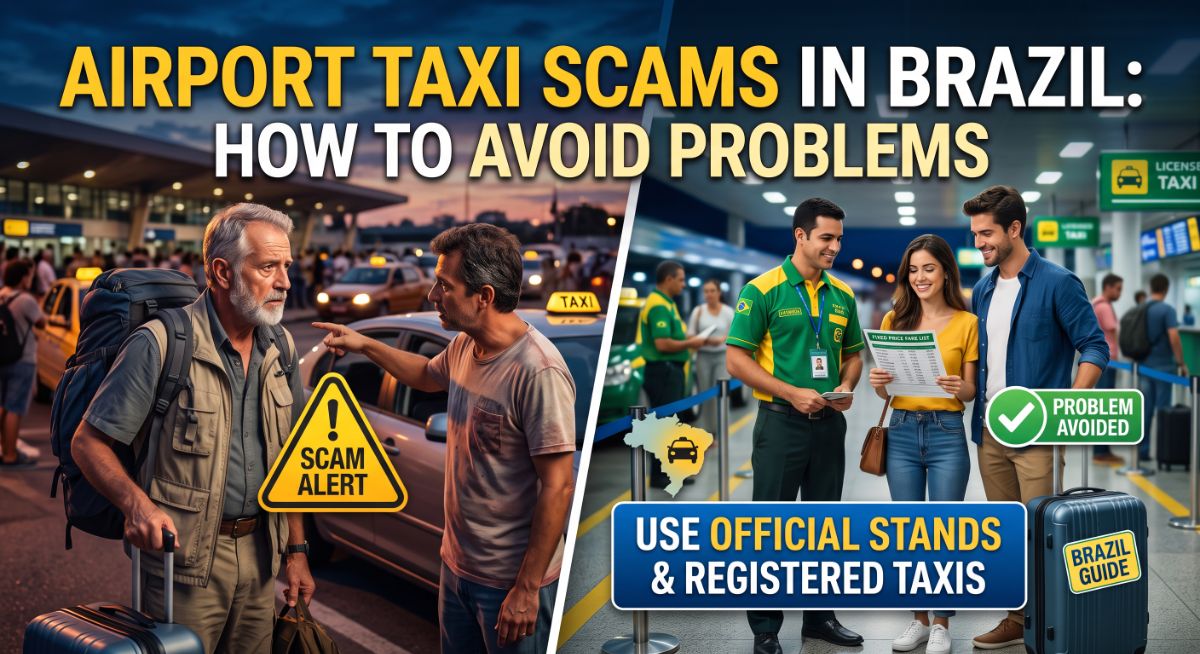
As you enter the public concourse, freelance drivers and touts will approach you offering “fast private rides” or “official airport cars.” Never negotiate with or follow these individuals. They operate unlicensed vehicles, lack metered oversight, and frequently levy unauthorized baggage and highway toll markups upon arrival.
Official Cooperative Taxis
If you prefer an immediate departure without setting up smartphone apps, locate the authorized airport taxi cooperative counter inside the terminal (such as Guarucoop at GRU or Aerotáxi at GIG). These desks calculate a regulated flat fare based on your hotel’s neighborhood, allow upfront card payment, and issue a voucher that you hand directly to an authorized driver waiting in the curbside queue.
Ridesharing Apps (Uber & 99)
Ridesharing is widely used, safe, and cost-effective across major Brazilian cities. Both Uber and Brazil’s leading local app, 99, maintain dedicated, geofenced pickup zones at primary airports.
- Follow overhead signage to Praça Pick Up or designated app-loading islands (often situated along the outer roadway curb or adjacent parking garages).
- Because many compact economy cars (UberX) in Brazil feature trunk space reduced by natural gas fuel tanks (GNV), request Uber Comfort or Uber Black if you are traveling with two or more large checked suitcases.
Essential First-Arrival Street Smarts
Keep Valuables Inside the Terminal: While Brazilian airport terminals are heavily monitored by federal agents and private security, the exterior curbsides can be hectic. Pack your passport, laptop, wallet, and expensive jewelry safely inside your carry-on backpack before exiting the sliding glass doors to the street curb. Avoid walking outside while loosely holding a high-end smartphone.
Verify Your Terminal for Return Flights: Major airports like São Paulo (GRU) have three geographically separated terminals linked by shuttle buses, while Rio (GIG) operates distinct international and domestic zones. When returning to the airport at the end of your holiday, confirm your airline’s departure terminal before entering your rideshare so you are dropped off at the correct check-in hall.
Authoritative Travel & Border Control Resources
Check official customs regulations, flight tracking, and border entry guidelines via authorized government portals:
- Review customs allowances, prohibited agricultural items, and traveler declaration forms on the Receita Federal Official Customs Portal.
- Access border control rules, passport inspection norms, and visa guidelines through the Polícia Federal Official Webpage.
- Explore flight operations, terminal maps, and passenger amenities at the GRU Airport Official Portal and the RIOgaleão Official Website.
Post Comment