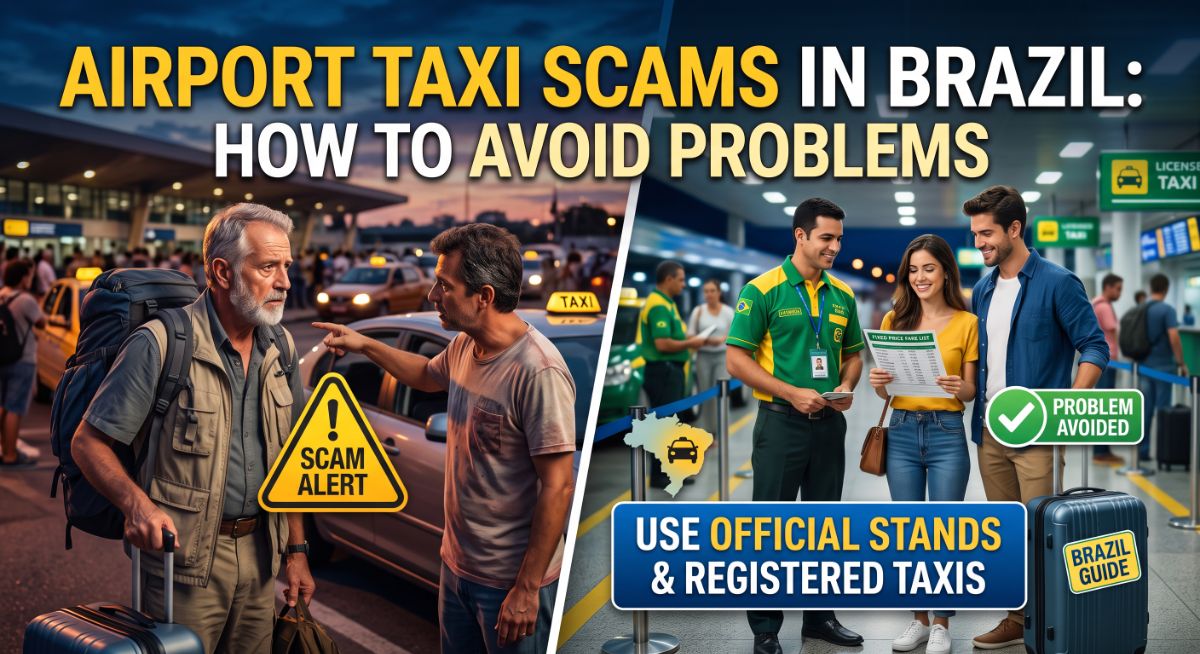
Airport Taxi Scams in Brazil: How to Avoid Problems
Landing in Brazil after an exhausting intercontinental flight is an exhilarating sensory transition, but stepping past customs doors into the public arrival hall immediately exposes you to one of the most persistent hurdles for foreign visitors: aggressive ground transport solicitation. At major aviation gateways like São Paulo–Guarulhos (GRU), Rio de Janeiro–Galeão (GIG), Brasília (BSB), and Salvador (SSA), weary travelers hauling suitcases are prime targets for predatory drivers looking to exploit jet lag, language barriers, and unfamiliarity with the Brazilian Real (BRL).
While Brazil boasts highly regulated official taxi cooperatives and ubiquitous rideshare networks, unregulated touts and dishonest drivers continue to operate schemes that turn a simple airport transfer into an expensive or distressing ordeal. From fixed “broken meters” and altered card machine displays to fabricated highway tolls and unlicensed curbside diversions, these traps rely entirely on catching tourists off guard. Avoiding airport transit fraud does not require paranoia; it requires understanding the regulatory framework, knowing which vehicle lines to trust, and enforcing strict payment hygiene. This definitive 2026 survival guide breaks down the most common airport taxi scams in Brazil, provides immediate countermeasures, and outlines the safest ways to reach your hotel curb.
Common Brazil Airport Transit Traps vs. Legitimate Solutions
Identify common curbside scams, their warning signs, and the verified operational countermeasures:
| Scam / Tactic | How It Works | Warning Red Flag | Immediate Safe Countermeasure |
|---|---|---|---|
| The “Official” Hallway Tout | Individuals with fake badges steer you to unmarked cars in general parking. | Approaching you inside the terminal whispering “Taxi, Uber, or Special Car”. | Ignore completely. Walk directly to indoor cooperative desks or app bays. |
| Card Terminal Decimal Manipulation | Driver enters extra zeros (e.g., typing R$ 1,200.00 instead of R$ 120.00) on a handheld POS device. | Screen tilted away, cracked display, or claims that contactless tap is broken. | Verify the screen amount yourself before tapping or inserting your card. |
| “Broken Meter” / Fixed Tourist Price | Driver refuses to turn on the taximeter, demanding an arbitrary cash fare upon arrival. | “Meter is broken today” or claiming a flat tourist rate applies. | Exit the vehicle before departure if the meter is not engaged in regular street cabs. |
| The “Bandeira 2” Day Surcharge | Illegally running the higher night rate (Bandeira 2) during standard daytime hours. | The physical or digital meter shows digit “2” on a weekday morning or afternoon. | Demand switching to “Bandeira 1” (standard Mon–Sat 06:00 to 20:00/21:00). |
| Fictitious Toll & Luggage Fees | Adding invented road tolls (pedágio) or extortionate per-bag surcharges to the fare. | Demanding sudden cash for “airport entrance luggage fees” at drop-off. | Prepay at official cooperative desks where tolls and luggage are built in. |
1. The Anatomy of the Arrival Hall Solicitation Scheme
The most widespread trap occurs before you even step outside into the tropical air. As soon as you exit customs control, you cross into the public arrivals hall, where dozens of well-dressed individuals hold clipboards or wear counterfeit lanyard IDs printed with words like “Transporte Executivo”, “Airport Transfer”, or “Informações Turísticas”.
They deliberately target disoriented travelers, stepping directly into your walking path with friendly English greetings: “Where are you heading, my friend?” or claiming that “the municipal taxi line is suspended due to a strike” or “Uber drivers are not allowed into the airport today”. If you follow them, they guide you past authorized curbside ranks into general parking garages to board private, unmetered personal vehicles. Once you arrive at your destination, they demand three to four times the standard rate (often claiming the agreed price was in US Dollars or Euros rather than Reais) and refuse to open the trunk until payment is made.
The Golden Rule: Never speak to, negotiate with, or acknowledge anyone who solicits ground transportation inside the airport concourse. Legitimate taxi drivers in Brazil are strictly forbidden by federal and municipal airport regulations from soliciting passengers inside terminal lobbies; they remain by their vehicles in authorized outdoor ranks.
2. Payment Machine Fraud: Screen Tampering & Card Swapping
Card fraud on portable point-of-sale (POS) terminals (locally called maquininhas) represents the costliest scam targeting arriving tourists in Brazil. Honest merchants and cooperative desks use these devices safely every day, but dishonest curbside operators exploit tourist fatigue.
- The Extra-Zero Ploy: When you arrive at your hotel, the driver enters the charge into a portable terminal. If the fare was R$ 130.00, the driver types R$ 1,300.00 or tilts the machine so the LCD screen is unreadable in the glare. If you tap or enter your PIN without checking the digital display, the transaction clears instantly, leaving you with an agonizing chargeback dispute with your home bank.
- The Card-Swapping Sleight of Hand: If you hand your physical credit or travel card to the driver so they can insert it into the terminal slot, the driver drops the card below dashboard level for a fraction of a second, memorizes the 3-digit CVV, and hands you back a duplicate plastic card of the same color from the same issuing brand (e.g., returning another customer’s canceled black card while pocketing yours).
- The Countermeasure: Never surrender physical possession of your payment card. Insist on holding the terminal yourself. Inspect the screen carefully to confirm the currency symbol (R$), the digits, and the decimal point before tapping via Apple Pay, Google Wallet, or physical contactless chip. If the driver insists that contactless payment is broken and demands your PIN on a machine with a scratched-out display, refuse and ask the hotel doorman or reception staff to assist.
3. Meter Manipulation: Understanding “Bandeira 1” vs. “Bandeira 2”
If you take a standard metered municipal taxi (such as Rio de Janeiro’s yellow cabs or São Paulo’s white municipal fleet) from the official curbside queue, you must monitor the digital taximeter.
- Bandeira 1 (Standard Daytime Rate): This is the default legal tariff. It applies from Monday through Saturday between 06:00 and 20:00 (or 21:00, depending on the municipality).
- Bandeira 2 (Night & Holiday Surcharge): This legal tariff incurs a roughly 20% to 30% increase per kilometer. It is legally permitted only from 20:00/21:00 to 06:00 on weeknights, all day Sunday, on official public holidays, and throughout the entire month of December (a statutory concession permitted to provide drivers with a holiday bonus).
- The Scam: Dishonest drivers flip the switch to Bandeira 2 at 10:00 AM on a regular Tuesday morning, banking on foreign arrivals not knowing what the small illuminated digit “1” or “2” next to the currency reading means. Always ensure the meter starts on Bandeira 1 during normal daytime hours.
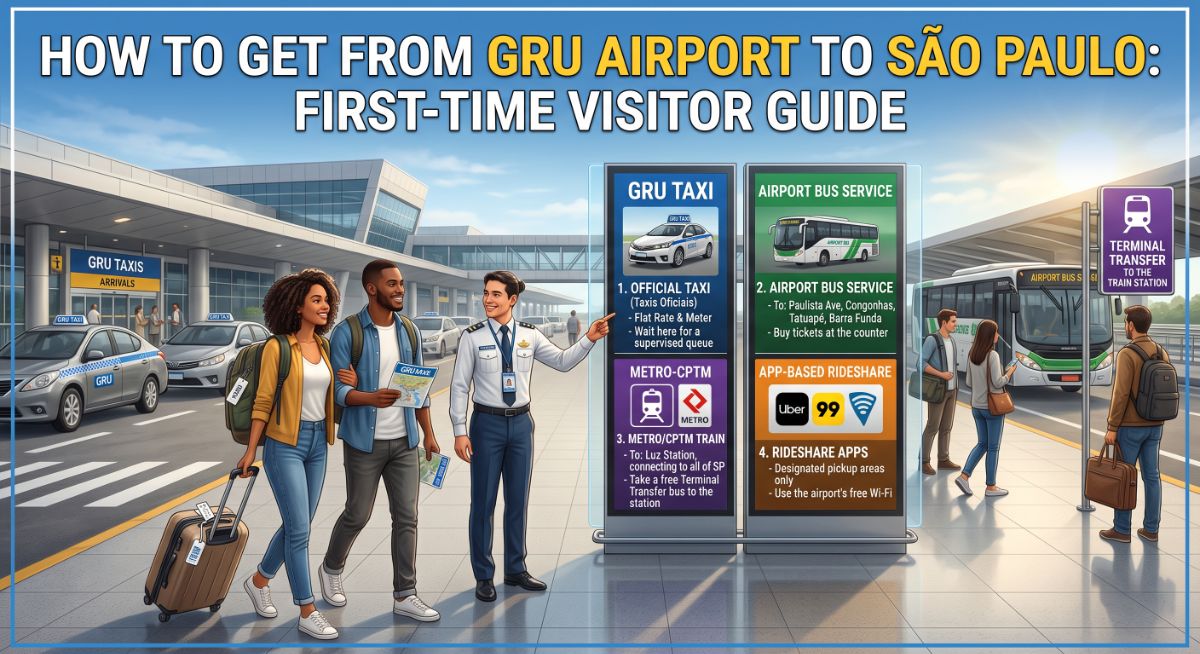
4. The Safest Solutions: How to Book Stress-Free Airport Transit
You can eliminate 100% of curbside vulnerability by using the two authorized transit systems designed specifically for airport passengers:
Option A: The Indoor Prepaid Taxi Cooperative (Best for Absolute Safety)
Every major international airport in Brazil hosts authorized, exclusive taxi cooperatives with enclosed physical desks inside the arrivals hall (such as Guarucoop at GRU or Aerotáxi at GIG):
- Walk directly to their branded indoor service counter before stepping outside.
- Provide your destination hotel address. The counter staff computes a fixed, non-negotiable flat rate printed directly on a paper voucher based on municipal zoning tables.
- You pay the exact amount at the indoor desk using an international credit card, travel debit card, or cash.
- A uniformed cooperative attendant escorts you across the sidewalk directly into the waiting vehicle in the dedicated cooperative lane. You hand the voucher to the driver; no cash or cards ever change hands inside the car.
Option B: App-Based Rideshares (Uber and 99)
Ridesharing apps eliminate physical cash handling, lock in digital routes via GPS, and provide transparent upfront pricing:
- Connect to the free terminal Wi-Fi or your international eSIM upon landing.
- Request your ride only after collecting all checked bags.
- Head exclusively to the designated app waiting zone (look for signs reading Ponto de Encontro / Praça Pick-up).
- Order Upgraded Categories: Many compact economy cars (UberX) in Brazil feature compressed natural gas (GNV) fuel tanks taking up half the trunk. If you have two large rolling suitcases, request Uber Comfort or Uber Black to ensure an SUV or sedan with a full-sized trunk.
- Always match the driver’s face, car make, and license plate on your screen before opening vehicle doors.
Essential Brazil Arrival Street Smarts
The “Front Pocket & Closed Windows” Rule: While airport terminals are strictly monitored by federal authorities, exterior roadways can be hectic. Pack your passport, laptop, and wallet inside a zipped backpack before exiting the terminal doors. When traveling in a taxi or rideshare along highway corridors (such as Rio’s Linha Vermelha or São Paulo’s Marginal Tietê), keep vehicle windows closed, run the air conditioning, and avoid holding your smartphone loose against the glass during slow traffic.
Tolls (Pedágio) are Electronic: On major airport highways, tolls are almost universally equipped with automated electronic transponders (such as Sem Parar or ConectCar). In Uber and 99, all legitimate highway tolls are automatically computed and billed directly into the app receipt. Never hand physical cash to an app driver claiming they need money for a toll plaza.
Authoritative Travel & Airport Safety Portals
Review verified consumer protection guidelines, airport directories, and transport oversight portals in Brazil:
- Review consumer rights and airport services via the Agência Nacional de Aviação Civil (ANAC – Brazil).
- Check terminal layouts, cooperative taxi locations, and passenger alerts on the GRU Airport Official Website and RIOgaleão (GIG) Official Portal.
- Access international travel advisory and safety bulletins through the U.S. Department of State Brazil Travel Advisory.
Post Comment