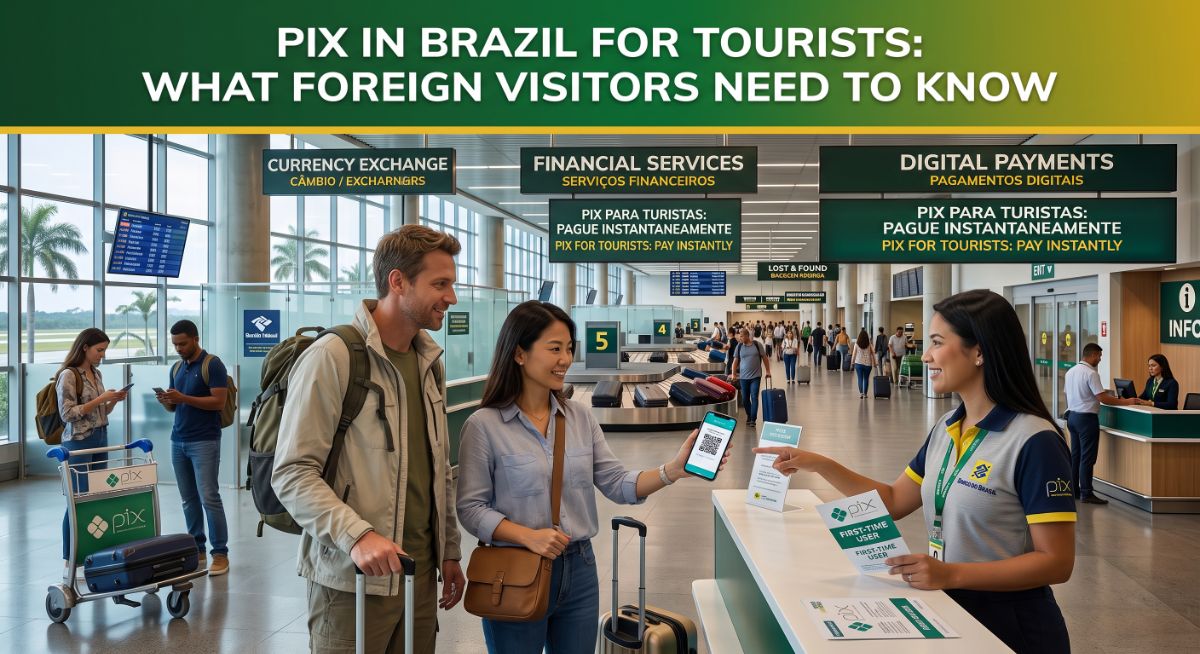
Pix in Brazil for Tourists: What Foreign Visitors Need to Know
Walking through any Brazilian city—whether ordering an acaí bowl at an Ipanema beach kiosk, purchasing handcrafts in Salvador, buying fresh produce at a neighborhood street market in São Paulo, or paying for an artisanal caipirinha—you will immediately encounter a small green-and-teal logo featuring a diamond shape and a QR code with the word Pix. Locals do not reach for physical wallets or cash; they point their smartphones, scan the code, authenticate, and the transaction settles in seconds. For international visitors, the ubiquity of this instant payment system is striking.
However, the question that quickly follows for arriving tourists is practical: Can an international visitor actually use Pix? The reality is nuanced. Pix was built and regulated by the Central Bank of Brazil (Banco Central do Brasil) natively around the Brazilian financial ecosystem, relying heavily on national tax identification numbers (CPF) and domestic bank accounts. While foreign tourists cannot simply download a local banking app and start transferring funds immediately, modern travel-fintech solutions and alternative payment workarounds mean you do not need to feel excluded from Brazil’s cashless economy. This detailed 2026 guide explains exactly how Pix works, why foreign visitors face barriers, the best alternative ways to pay, and how to navigate street payments effortlessly.
Payment Methods in Brazil: Tourist Usability Comparison
Compare how different payment instruments function for international travelers across Brazilian retail and street markets:
| Payment Method | Acceptance Rate Across Brazil | Accessibility for Foreigners | Transaction Speed & Fees | Overall Tourist Verdict |
|---|---|---|---|---|
| Contactless Cards (Visa/Mastercard) | 98%+ (Nearly universal) | Immediate. Works via physical card, Apple Pay, or Google Wallet. | Instant; standard bank interbank/FX rates apply. | The Primary Tourist Method. Accepted even by coconut vendors on the sand. |
| Native Brazilian Pix | 100% nationwide | Difficult / Restricted. Requires a valid CPF and a Brazilian checking account. | Instant (real-time 24/7); zero consumer fees. | Not necessary for most trips unless doing long-term stays or renting off-platform. |
| Fintech Pix-Bridge Apps | 100% (Wherever Pix QR codes exist) | Moderate; requires passport verification & external balance loading. | Fast; includes convenience spreads or platform commissions. | Helpful backup for informal sellers who refuse card payment machines. |
| Physical Cash (Brazilian Reais – BRL) | High (Though declining in major centers) | Immediate from airport or local bank ATMs. | Manual; merchants often lack change for R$ 50/100 notes. | Essential Backup Only. Keep R$ 100 to R$ 200 in small bills for emergencies. |
1. What Is Pix and Why Did It Take Over Brazil?
Introduced in late 2020 by the Central Bank of Brazil, Pix is a public, real-time instant payment rail that operates 24 hours a day, 365 days a year. Transactions clear in less than three seconds directly between bank accounts, free of charge for individual users.
Because traditional debit and credit card point-of-sale (POS) terminals impose processing fees and delay payouts for merchants, Brazilian merchants—from high-end restaurants to street fruit carts and app couriers—rapidly embraced Pix. Sellers often offer discounts ranging from 5% to 10% for customers choosing Pix over standard credit cards. Transactions are completed by scanning a dynamic or static QR code (Pix Copia e Cola or terminal QR) or by entering a Chave Pix (Pix Key), which can be an email, phone number, random cryptographic key, or national tax ID.
2. The Core Hurdle for International Travelers: The CPF and Local Bank Account
Foreign tourists landing in Brazil frequently attempt to download prominent digital bank apps (such as Nubank, Inter, or Mercado Pago) hoping to top up a wallet and scan Pix codes. This attempt hits two regulatory walls:
- The CPF Requirement: Brazil’s financial system is tied to the CPF (Cadastro de Pessoas Físicas), the individual taxpayer identification registry. Opening a legitimate, full-service transactional account in Brazil legally requires an active CPF. While foreigners can technically obtain a CPF via Brazilian consular services or Federal Revenue offices, the process is unnecessary for an ordinary leisure vacation.
- Regulatory Residency Verification: Under Central Bank Know-Your-Customer (KYC) directives, opening an account at a registered Brazilian financial institution requires proof of local fiscal residency or specialized foreign-resident documentation. Standard foreign passports and tourist visas do not meet the criteria for instant retail bank onboarding.
3. Do You Actually Need Pix as a Short-Term Tourist?
The short answer for 95% of international visitors is no. While Pix is everywhere, Brazil’s card acceptance infrastructure is among the most sophisticated in the world.
Practically every street stall, beach tent (barraca), taxi, and craft vendor carries a portable, wireless payment terminal (commonly provided by operators such as PagBank, Stone, Cielo, or Rede). These terminals universally accept:
- Contactless Payments (NFC): Apple Pay, Google Wallet, and physical tap-to-pay chip cards from international issuers.
- Major Global Card Brands: Visa and Mastercard enjoy near-100% coverage nationwide. American Express is accepted in established restaurants, hotels, and supermarkets, but may occasionally fail at smaller beach carts or casual kiosks.
- Multi-Currency Travel Cards: Travel debit cards (such as Wise or Revolut) work seamlessly across Brazilian POS terminals when loaded with Brazilian Reais (BRL) or set to auto-convert from US Dollars, Euros, or British Pounds.
4. Bridging Solutions: How Tourists Can Access Pix in 2026
If you encounter a niche scenario where a vendor’s card terminal is down, a small tour guide in a remote area (like Chapada Diamantina or the Amazon basin) demands a deposit via Pix, or an Airbnb host requests an energy fee via QR code, there are modern workarounds:
International Fintech Pix-Bridge Providers
Several global travel-fintech services and specialized remittance apps now offer foreign-friendly Pix integration. These platforms allow tourists to register using their foreign passport, link a foreign debit card or bank account, and execute payments to Brazilian Pix QR codes or keys:
- How They Work: You scan the merchant’s Pix QR code using the provider’s mobile app. The platform converts your home currency balance at their quoted exchange rate, settles the Pix transfer instantly through an authorized Brazilian banking partner, and issues a standard payment confirmation screen to show the vendor.
- Fee Considerations: These services incorporate a conversion markup or convenience commission. While slightly more expensive than direct interbank card swipes, they serve as a problem solver when cash or cards cannot be used.
The Friendly Local Assist
For one-off transactions (such as tipping or purchasing a minor souvenir from a seller whose card machine ran out of battery), polite communication works wonders. You can hand physical cash in Brazilian Reais to your hotel front-desk clerk, a local dining companion, or an Airbnb host and ask them to execute the Pix payment on your behalf: “Você pode fazer um Pix para ele e eu te dou o dinheiro em espécie?” (Could you send a Pix to him and I will give you cash?).
5. Payment Terminal Etiquette: The “Crédito vs. Débito” Question
When you present an international bank card or phone to pay at a terminal in Brazil, the server or cashier will routinely ask you a quick question: “Crédito ou débito?” (Credit or debit?).
- Always Select “Crédito”: Even if your foreign card is technically a checking debit card (like a Wise debit card or your standard home checking card), foreign-issued cards must almost always be processed over the “Crédito” (Credit) network in Brazil to route through international clearing houses.
- Never Hand Over Your Card: Brazil has largely phased out magnetic stripe swiping. Always retain control of your card: hold it yourself, tap it on the terminal screen, or insert the chip yourself. Never allow a vendor to take your card out of your sight to swipe behind a counter.
- Verify the Screen Amount: Before tapping or entering your PIN on a portable terminal, look at the digital display to ensure the decimal point is in the right place (e.g., verifying that a R$ 25.00 purchase has not been entered as R$ 250.00).
Essential Brazil Payment Street Smarts
Carry a Lean Cash Buffer in Small Banknotes: While cards cover almost all scenarios, keep roughly R$ 100 to R$ 150 in physical cash split into R$ 5, R$ 10, and R$ 20 notes. Small informal beach vendors or remote transit ticket windows occasionally struggle with cell signal drops on their wireless card machines.
Decline Dynamic Currency Conversion (DCC): If a payment machine or ATM screen asks whether you want to be billed in your home currency (USD, EUR, GBP) or in local currency (BRL), always choose BRL. Selecting your home currency allows the terminal operator to impose an unfavorable retail conversion margin, adding 5% to 8% to the cost of your purchase.
Authoritative Financial & Regulatory Portals
Review regulatory frameworks, consumer payment systems, and official guidance via verified Brazilian sources:
- Learn how the national instant payment architecture functions on the Banco Central do Brasil Official Pix Information Portal.
- Consult tourist consumer rights and travel transaction guidelines via the Visit Brasil Official Tourism Portal.
- Access international travel finance advice and exchange rate regulations through the Ministério da Fazenda (Ministry of Finance) Official Site.
Post Comment