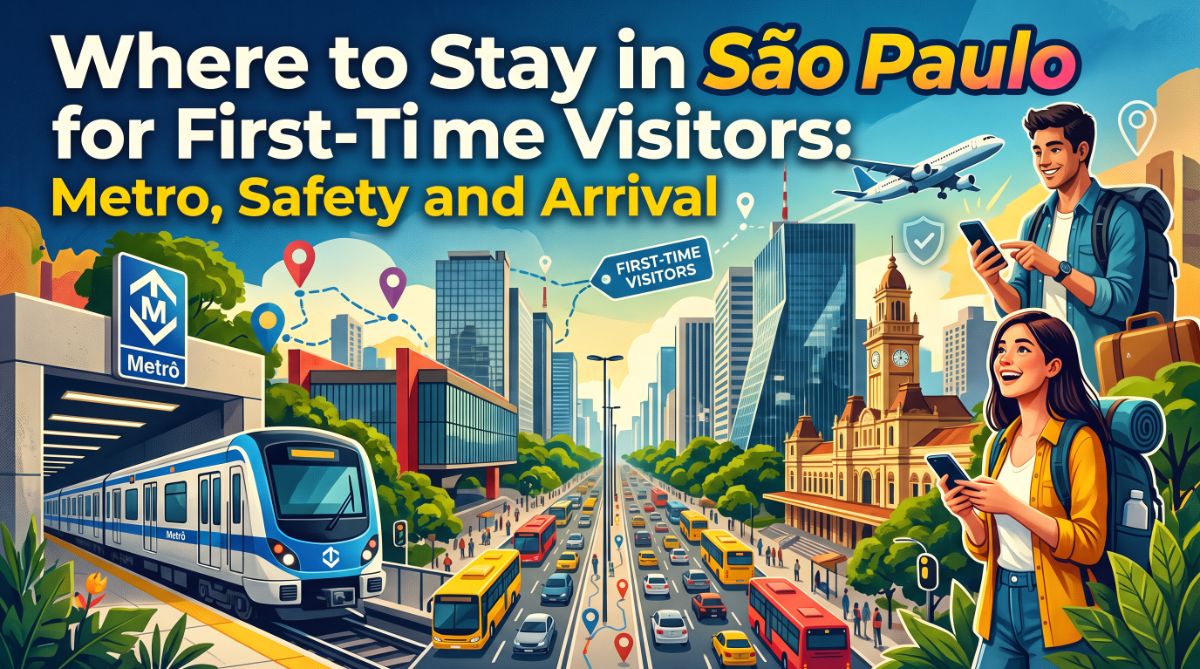
Where to Stay in São Paulo for First-Time Visitors: Metro, Safety and Arrival
Arriving in São Paulo for the first time is an encounter with sheer metropolitan magnitude. As the Southern Hemisphere’s largest metropolis—home to over 12 million residents in the city proper and over 22 million across the greater metro basin—”Sampa” does not ease you in gently. It greets you with an endless concrete ocean of skyscrapers, a legendary dining scene spanning Michelin-starred venues to 24-hour padarias, and road traffic that can paralyze major expressways for hours. For international travelers landing at Guarulhos (GRU) or Congonhas (CGH), where you choose to stay determines whether your trip is an effortless cultural feast or an exhausting daily transit ordeal.
A classic rookie misstep in São Paulo is selecting lodging based solely on cheap nightly rates or proximity to historic landmarks in the city center (Centro Histórico). While Centro boasts architectural gems like the Theatro Municipal and the Sé Cathedral, it empties after dusk and suffers from elevated street crime, making it stressful for newcomers. True safety, walkability, and efficiency in São Paulo lie along the city’s modern southwestern transit corridors—anchored by Avenida Paulista, Jardins, Pinheiros, and Vila Madalena. Paired with the clean, punctual, and safe São Paulo Metrô, choosing the right neighborhood turns this concrete giant into a remarkably navigable playground. This comprehensive 2026 accommodation guide compares the best districts, breaks down subway lines, analyzes airport transfers, and provides essential street-smart rules.
São Paulo Neighborhood Comparison: Best Bases for First-Timers
Compare safety profiles, transit connectivity, dining, and lifestyle across São Paulo’s premier tourist districts:
| Neighborhood / District | Safety Profile | Metrô Station Access | Atmosphere & Lifestyle | Best For / Verdict |
|---|---|---|---|---|
| Avenida Paulista & Bela Vista | High (Constant police presence, vibrant 24/7) | Line 2-Green & Line 4-Yellow (Consolação, Trianon-MASP, Brigadeiro, Paulista) | Cultural core, museums (MASP, IMS), shopping, corporate energy | #1 Overall Choice for First-Timers. Unbeatable transit crossroads; completely walkable day and night. |
| Jardins (Cerqueira César & J. Paulista) | Very High (Affluent, private security) | Line 2-Green (Consolação/Trianon) & Line 4-Yellow (Oscar Freire) | Tree-lined sidewalks, luxury boutiques, Latin America’s top restaurants | Foodies, luxury travelers, and those wanting a peaceful, upscale urban sanctuary. |
| Pinheiros | High (Active, young professional) | Line 4-Yellow (Fradique Coutinho, Faria Lima, Pinheiros) | Trendy gastrobars, specialty coffee, art galleries, craft brewpubs | Solo travelers, digital nomads, and younger couples who prioritize dining and nightlife. |
| Vila Madalena | Moderate to High (Lively nightlife, stay alert late) | Line 2-Green (Vila Madalena – sits at the top of steep hills) | Bohemian, street murals (Beco do Batman), traditional botecos | Night owls, backpackers, and craft beer lovers; expect steep hill climbs to transit. |
| Itaim Bibi & Vila Olímpia | Very High (Modern business district) | Poor Metrô access (Line 9-Emerald commuter rail only) | Tech headquarters, modern condos, upscale lounges | Business trips and long stays; too car-dependent for casual sightseeing. |
| Centro Histórico & República | Low at night (Elevated street crime, pickpocketing) | Line 1-Blue, 3-Red & 4-Yellow (Sé, República, Luz) | Colonial architecture, historic theaters, gritty street life | Avoid for lodging. Visit during daytime for historic tours, but base elsewhere. |
1. Avenida Paulista: The Gold Standard for First-Time Visitors
If you have never set foot in São Paulo, booking a hotel along or within two blocks of Avenida Paulista is the smartest decision you can make. Towering along the highest ridge of the city, Paulista functions as São Paulo’s financial spine, cultural heartbeat, and safest pedestrian artery.
- Supercharged Transit Connectivity: Underneath the avenue runs Metrô Line 2-Green (stations: Brigadeiro, Trianon-MASP, and Consolação). At Consolação, an underground tunnel links directly to Line 4-Yellow (Paulista Station). This dual-line access allows you to zip north to Centro, west to Pinheiros, or south toward Ibirapuera Park in under 15 minutes without surface traffic friction.
- 24/7 Security and Foot Traffic: Because of international bank headquarters, foreign consulates, and luxury hotels, Avenida Paulista enjoys heavy, permanent patrol by the Military Police, Civil Police, and municipal guards (GCM). The wide sidewalks are bustling from 06:00 to midnight with runners, executives, and street performers.
- Cultural Institutions on Your Doorstep: Staying here puts you within walking distance of the MASP (São Paulo Museum of Art) with its iconic red concrete stilts, Japan House, SESC Paulista (featuring a free observation deck), and Instituto Moreira Salles (IMS).
- Paulista Aberta on Sundays: Every Sunday, the entire 2.8 km avenue is completely closed to motor vehicles and transformed into an enormous open-air public park filled with live bands, craft markets, food trucks, and cyclists.
2. Jardins: Quiet Luxury, Safe Strolls, and World-Class Dining
Located just down the gentle southern slope from Avenida Paulista lies Jardins (specifically the sub-districts of Cerqueira César and Jardim Paulista). This is São Paulo at its most refined: manicured leafy streets, quiet residential pockets, and upscale townhouse architecture.
- The Culinary Capital of the Continent: Jardins is the epicenter of South American gastronomy. Legendary dining institutions—such as Alex Atala’s D.O.M., Michelin-starred Maní, acclaimed Italian dining at Fasano, and bustling bakeries like Padaria Bela Cintra—are concentrated along Rua Oscar Freire, Rua Bela Cintra, and Rua Haddock Lobo.
- Walkability & Peace of Mind: If street safety is your top concern, Jardins provides the lowest street friction in central São Paulo. Many street corners feature private security booths, luxury shopping foot traffic keeps sidewalks active, and residential streets are serene at night.
- Transit Access: Stations along the northern edge (Consolação and Trianon-MASP on Line 2-Green) and the stylish Oscar Freire Station on Line 4-Yellow ensure you can reach anywhere in the city within a few stops.
3. Pinheiros & Vila Madalena: Trendsetters, Boutiques, and Boteco Nightlife
For younger couples, solo travelers, and food lovers seeking a vibrant, authentic neighborhood buzz rather than corporate towers, the western district of Pinheiros and its bohemian neighbor Vila Madalena are unmatched.
- Pinheiros (The Modern Culinary Hub): Anchored by Rua dos Pinheiros, Rua Artur de Azevedo, and Praça Benedito Calixto (famous for its Saturday antique and flea market), Pinheiros is packed with third-wave specialty coffee roasters, natural wine bars, craft breweries, and indie design boutiques. Line 4-Yellow runs through its core (Fradique Coutinho and Faria Lima stations), connecting you to Avenida Paulista in 6 minutes.
- Vila Madalena (Bohemian Nightlife): Known worldwide for Beco do Batman (Batman’s Alley)—a dynamic, constantly evolving labyrinth of outdoor graffiti murals—Vila Madalena is the bar hopping (boteco) capital of Brazil. Every evening, cold chopp (draft beer), caipirinhas, and live samba spill onto the sidewalks along Rua Aspicuelta.
- The Vila Madalena Topography Trap: While vibrant, Vila Madalena is built on exceptionally steep hills. Vila Madalena Metrô Station sits at the high northern edge; walking back to your accommodation late at night can mean an exhausting uphill hike. The smart move: Lodge in flat, accessible Pinheiros near Line 4-Yellow, and take an inexpensive 5-minute Uber into Vila Madalena for nightlife.
4. Areas to Avoid for Nighttime Lodging: Centro Histórico & República
While guidebooks rightfully highlight downtown historical landmarks—including the Neo-Gothic Sé Cathedral, the Pátio do Colégio (founding site of the city), the Martinelli Building, and the art-nouveau Theatro Municipal—Centro Histórico and Praça da República are not recommended as your lodging base.
- The Post-Workday Exodus: Centro is a bustling commercial and administrative hive from 09:00 to 18:00 on weekdays. Once offices shutter, the wide avenues empty rapidly. At night and across weekends, wide avenues become desolate, significantly elevating the risk of opportunistic armed robberies, aggressive begging, and muggings.
- Proximity to Cracolândia: Sections of central districts (particularly around Luz, Campos Elíseos, and Santa Ifigênia) feature migratory open-air drug scenes (Cracolândia). Navigating these streets after dark, especially with luggage or smartphones out, presents serious safety risks. The rule: Visit Centro by Metrô during daytime hours for guided architecture tours, but retreat to Paulista, Jardins, or Pinheiros before sundown.
5. Mastering the São Paulo Metrô: The Best Transit in South America
São Paulo’s vehicular traffic is infamous, with rush-hour gridlock (locally tracked as lentidão) frequently exceeding 200 kilometers of combined backups. The São Paulo Metrô is your secret weapon: it is clean, air-conditioned, intensely policed, and punctual.
- The Core Tourist Lines:
- Line 4-Yellow (Linha 4-Amarela): A state-of-the-art, fully automated driverless line linking Luz (Centro), República, Paulista (Consolação), Oscar Freire (Jardins), Fradique Coutinho (Pinheiros), and Vila Sônia. This is the primary line for visitors.
- Line 2-Green (Linha 2-Verde): Runs directly underneath Avenida Paulista, heading southeast toward Vila Prudente and west toward Vila Madalena.
- Line 1-Blue (Linha 1-Azul): The north-south spine, connecting the central Tietê Bus Terminal to Centro, Liberdade (the Japanese/Asian cultural district), and south toward Congonhas Airport connections.
- Fares & Contactless Entry: A single subway ride costs R$ 5.00 (~$0.95 USD). Automated turnstiles at major stations support direct contactless tap-to-pay using physical Visa and Mastercard credit/debit cards or mobile wallets (Apple Pay / Google Wallet). Alternatively, purchase physical QR-code paper tickets at bilingual automated station kiosks using cash or cards.
- Operating Hours: The subway runs daily from 04:40 to 00:00 (midnight), extending to 01:00 on Saturday nights. Outside these hours, rely exclusively on registered rideshares (Uber and 99).
6. Arrival Logistics: Guarulhos (GRU) vs. Congonhas (CGH)
Understanding which airport you land at shapes your arrival transfer strategy:
From São Paulo–Guarulhos International Airport (GRU)
Located in the neighboring municipality of Guarulhos, roughly 25 to 30 kilometers northeast of central Paulista:
- Official Cooperative Taxi (Guarucoop): Book at the indoor counters inside the arrivals hall before exiting to the street. They charge a fixed, non-negotiable flat rate (typically R$ 130 to R$ 170 / ~$25 to $32 USD to Paulista/Jardins) paid by card or cash at the desk. Driver takes you directly to the dedicated curbside lane.
- Ridesharing (Uber / 99): Fares range from R$ 90 to R$ 140 depending on surge. Pickups occur at dedicated, signposted Ponto de Encontro / Praça Pick-up bays outside Terminal 2 and Terminal 3. Select Uber Comfort or Uber Black if carrying two large suitcases to ensure a vehicle with a full trunk (avoiding compact cars with bulky natural gas tanks).
- The Express Train (Expresso Aeroporto – Line 13-Jade): Connects the GRU Airport train station (accessed via free shuttle bus from terminals) directly to Palmeiras-Barra Funda and Luz stations in central São Paulo in roughly 35 minutes for just R$ 5.00. Ideal for budget travelers arriving during peak afternoon highway gridlock (17:00 to 19:30).
From Congonhas Airport (CGH)
Situated directly inside the southern urban core, Congonhas primarily handles domestic trunk routes (such as the Rio–SP shuttle):
- Congonhas sits just 8 to 10 kilometers from Paulista and Jardins. An Uber or official municipal white taxi takes only 15 to 25 minutes outside rush hours, costing roughly R$ 30 to R$ 50 (~$6 to $10 USD).
Essential São Paulo Arrival Street Smarts
The “Pedestrian Cell Phone Snatch” Rule: The most prevalent crime targeting tourists in São Paulo is opportunistic smartphone snatching by thieves operating on bicycles, electric scooters, or foot (the infamous Gangue da Bicicleta), particularly along Avenida Paulista, Praça da República, and Rua dos Pinheiros. Never stand on a street corner or curb with your phone held loosely in one hand checking maps. If you need to order an Uber or verify directions, step inside a hotel lobby, bank vestibule, pharmacy (Droga Raia / Drogasil), or cafe before unlocking your device.
Window Safety in Highway Traffic: When traveling in a taxi or Uber along major thoroughfares (such as Marginal Tietê, Marginal Pinheiros, or Avenida 23 de Maio), keep vehicle windows rolled up and doors locked, particularly during stop-and-go rush-hour traffic. Keep backpacks and laptops placed on the floorboard at your feet rather than resting on your lap in plain view through the side glass.
Official Transit & Tourism Portals
Verify live
Post Comment