What Foreigners Should Know Before Arriving in Brazil [2026 Guide]
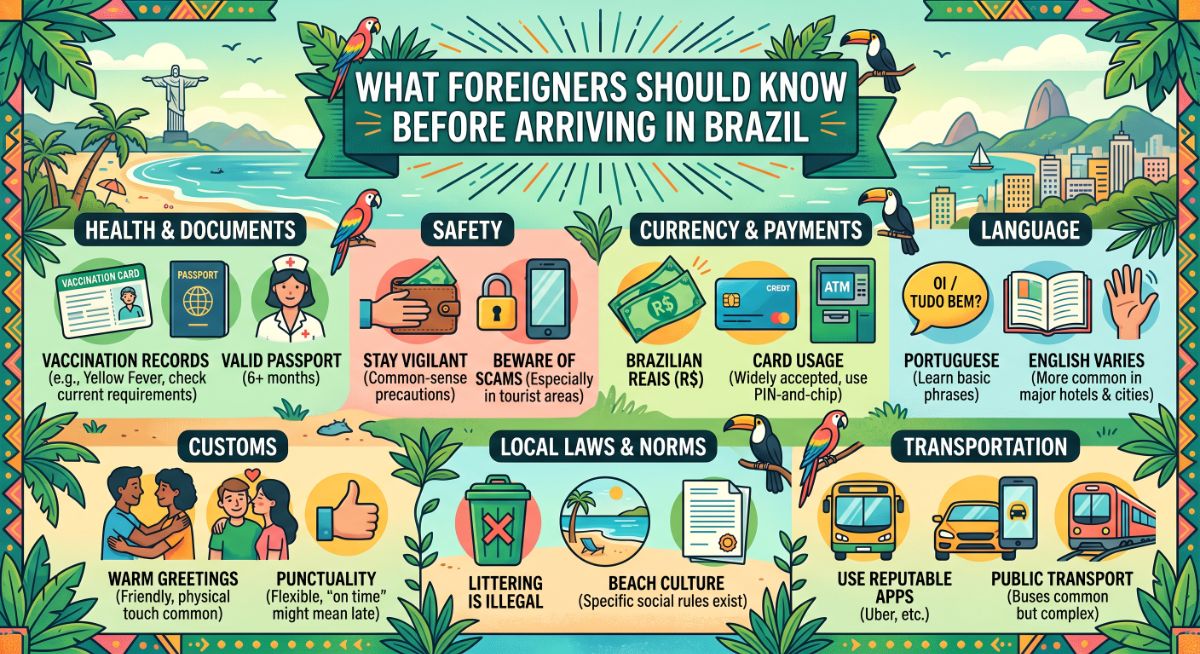
Planning a trip to Brazil stirs up vivid mental postcards: the dramatic granite peaks framing Rio de Janeiro, the rhythmic pulse of Salvador’s Pelourinho, endless Amazonian waterways, and the legendary warmth of the Brazilian people. Yet beneath the tropical allure and postcard-perfect imagery lies a continental-sized nation with its own distinct operational logic. For international tourists landing in South America’s economic powerhouse for the first time, the transition from international arrivals to daily life can be disorienting without adequate context.
Many travelers arrive holding outdated assumptions—expecting Spanish to be widely spoken, assuming cash is the dominant payment method, or viewing safety through sensationalized extremes that fail to reflect actual day-to-day realities. In truth, Brazil operates on one of the most technologically sophisticated domestic banking infrastructures in the world, maintains complex fiscal identification systems that can baffle outsiders, and requires distinct street smarts rather than constant paranoia. Arriving unprepared can result in blocked cards, communication breakdowns, and transit headaches. This comprehensive guide outlines the foundational logistics, cultural realities, and operational nuances every international visitor must understand before landing in Brazil in 2026.
Brazil Travel Realities: Common Assumptions vs. Actual Facts
A breakdown of prevalent international misconceptions and the practical realities on the ground:
| Logistical Area | Common Tourist Expectation | Actual Reality on the Ground | Actionable Advice for Visitors |
|---|---|---|---|
| Language & Communication | “Spanish or English will work everywhere.” | Portuguese is the sole language. English proficiency is low outside luxury hotels. | Download offline Portuguese language packs on Google Translate before flying. |
| Payments & Cash | “I must carry thick wads of cash / exchange US Dollars.” | Brazil is hyper-cashless. Contactless card readers are ubiquitous. | Use multi-currency debit cards (Wise, Revolut) via Apple/Google Pay. Keep small cash. |
| The CPF Barrier | “A passport number is sufficient for all bookings.” | Many Brazilian websites, bus lines, and concert tickets require a CPF (tax ID). | Buy interstate bus tickets via international aggregators (e.g., Busbud) that accept passports. |
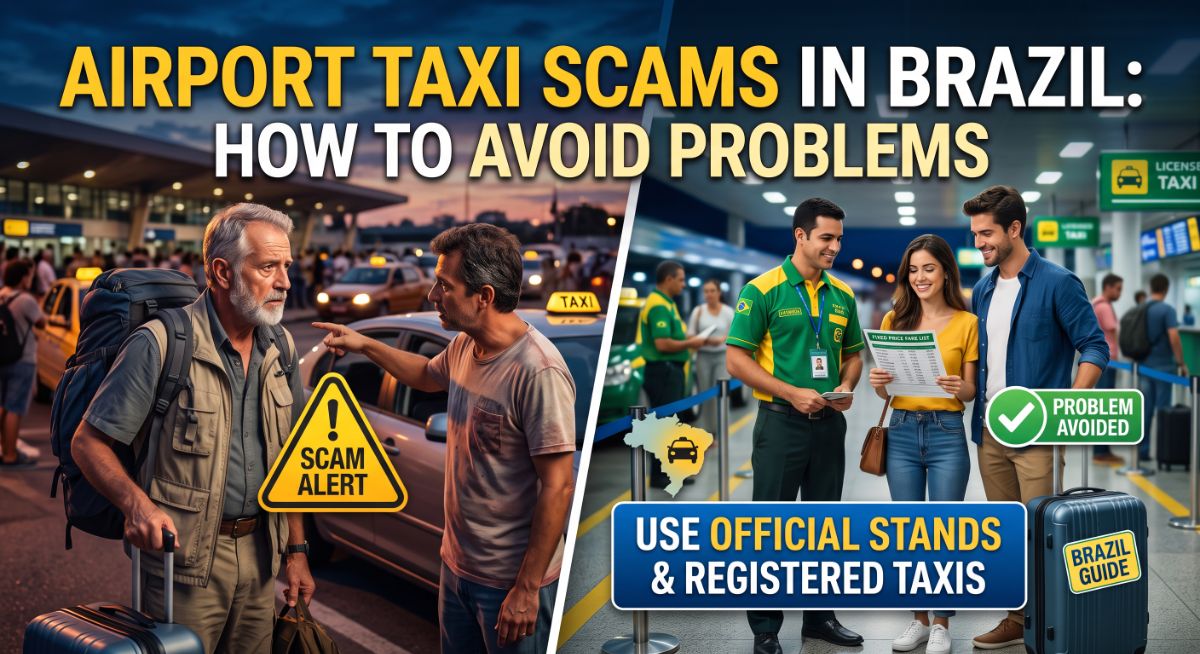
| Urban Ground Transit | “Hailing street taxis is standard and safe.” | Ridesharing apps (Uber and 99) dominate and offer superior safety and pricing. | Install Uber and 99 in advance; verify license plates inside designated pick-up zones. |
| Power & Plugs | “One standard plug fits all South America.” | Brazil uses the unique 3-pin Type N plug. Voltage varies by city (110V vs. 220V). | Pack universal Type N/Europlug adapters and check devices for dual-voltage (100–240V). |
1. The Financial Landscape: Cards, Pix, and the Cashless Economy
One of the biggest surprises for international travelers is how digital Brazil’s economy has become. From coconut vendors on the beaches of Rio to fruit stalls in municipal markets, virtually every commercial entity operates a wireless payment terminal (popularly called a maquininha). Understanding how monetary transactions work will save you substantial conversion fees and daily friction.
Contactless Payments Over Physical Currency
Carrying large quantities of cash is unnecessary and discouraged from a safety standpoint. Visa and Mastercard credit and debit cards enjoy near-universal acceptance across the country. American Express is accepted at higher-end establishments and large supermarket chains, but rarely at smaller independent kiosks. Contactless (tap-to-pay) functionality using physical cards, Apple Pay, or Google Wallet is the industry standard. When paying at terminals, the cashier will typically ask: “Crédito ou débito?” (Credit or debit?). If you are using an international multi-currency travel card (such as Wise or Revolut), always instruct the merchant to process it as crédito, as foreign debit cards are routed through international credit rails.
What About Pix?
While exploring Brazil, you will see the word Pix everywhere—on menus, street signs, and taxi dashboards. Pix is the instant central bank digital payment network used by virtually all citizens. However, Pix requires a registered Brazilian bank account linked to a national tax ID. As a foreign visitor, you cannot directly pay via Pix unless you use specialized third-party fintech workarounds designed for tourists. You do not need to stress about this: every merchant offering Pix also possesses a card terminal accepting standard international credit cards.
2. The Language Divide: Why Portuguese Matters
Assuming that basic Spanish will seamlessly carry you through Brazil is a frequent point of misunderstanding. While Spanish and Portuguese are romance languages sharing linguistic roots, spoken Brazilian Portuguese features distinct nasal vowels, contracted rhythms, and idiomatic phrasing that can be difficult for Spanish speakers to parse—and vice versa.
English Proficiency Realities
Outside of major international airport hubs, five-star hotels, and specialized tour guides in destinations like Rio or the Pantanal, fluent English is uncommon among general service workers, taxi drivers, and restaurant staff. Approaching locals by speaking slow Spanish can sometimes be perceived as dismissive of Brazil’s national identity. Making the modest effort to learn foundational Portuguese greetings—such as “Por favor” (please), “Obrigado/Obrigada” (thank you), “Com licença” (excuse me), and “A conta, por favor” (the bill, please)—is received with genuine appreciation.
3. The CPF Phenomenon: Navigating Brazilian Digital Barriers
During your travels, you will repeatedly encounter an acronym that dictates Brazilian daily administration: CPF (Cadastro de Pessoas Físicas). This 11-digit fiscal identification number is tied to every citizen and legal resident. In Brazilian commercial software, the CPF field is almost always mandatory.
Where Foreigners Hit the CPF Wall
- E-commerce & Concert Tickets: Purchasing tickets online for cultural events, football matches, or domestic bus lines on national platforms (like Sympla or Ingresse) often blocks users without a CPF.
- Interstate Long-Distance Buses: While major booking engines cater to foreign passports, local bus company sites frequently reject non-resident checkouts. Use global aggregators like Busbud or purchase physical tickets at the central bus station (Rodoviária) counter using your passport.
- Supermarkets & Pharmacies: Cashiers will routinely ask: “CPF na nota?” (CPF on the receipt?). This is simply a consumer tax rebate program for locals. Politely reply with “Não, obrigado” (No, thank you) to proceed.
4. Domestic Transit: Continental Distances and Flying vs. Busing
Brazil is the fifth-largest nation in the world by land area, spanning four distinct time zones. It is larger than the continental United States (excluding Alaska) and dwarfs Western Europe. Underestimating travel distances between marquee destinations is an itinerary-wrecking mistake.
Domestic Flights
For cross-regional travel (such as traveling between São Paulo and the Amazon, or Rio and Iguaçu Falls), commercial flights operated by LATAM, Gol, or Azul are essential. Most long-haul domestic routes route through transfer mega-hubs: São Paulo (Guarulhos-GRU or Congonhas-CGH), Campinas (Viracopos-VCP), or Brasília (BSB). When planning connections between domestic and international segments, maintain a minimum layover window of 3 hours, especially when transiting through São Paulo.
Intercity Bus Travel
For distances under 500 kilometers (310 miles)—such as moving between Rio de Janeiro and Paraty, or São Paulo and Curitiba—Brazil’s long-distance executive bus network is exceptional. Premium service classes like Leito (fully reclining sleeper seats) provide airline-grade comfort, air conditioning, and secure undercarriage luggage compartments for a fraction of airline fares.
5. Electrical Grid Nuances: Plugs and City-Specific Voltages
Brazil’s electrical infrastructure features two unique quirks that catch international tourists off guard: non-standardized plugs and dual grid voltages depending on the municipality.
- The Type N Socket: Brazil officially utilizes the Type N plug, consisting of three round pins arranged in a flattened triangular profile. While Europlugs (Type C, two round pins) fit effortlessly into Type N wall outlets, standard North American flat-blade plugs (Type A/B) and UK three-pin plugs require a mechanical adapter.
- The Voltage Split: Unlike nations with a unified national voltage, Brazil operates on both 110V/127V and 220V depending entirely on the regional power concession. São Paulo, Rio de Janeiro, and Belo Horizonte operate predominantly on 110V/127V, whereas Brasília, Salvador, Fortaleza, and Recife run on 220V. Modern personal electronics (laptops, smartphones, camera chargers) are dual-voltage (100–240V) and safe everywhere, but high-draw grooming tools (hairdryers, curling irons) will burn out if plugged into the incorrect voltage without a transformer.
Essential Street Smart Guidelines for Travelers
The “Step-Inside” Smartphone Rule: Smartphone theft by opportunists on bicycles or electric scooters is the most frequent petty crime affecting tourists in major urban hubs. Never walk along busy avenue curbs while casually holding your device. If you need to consult Google Maps, confirm an address, or hail an Uber, step inside a café, pharmacy, bank lobby, or metro station entrance first.
WhatsApp is the Universal Operating System: In Brazil, WhatsApp is used for virtually all commercial and customer communication. Hotels, boutique tour guides, beach kiosks, and upscale restaurants communicate, send menus, and confirm reservations via WhatsApp. Ensure you have an active account tied to your international or travel SIM card before touching down.
Official Brazilian Travel & Consular Resources
Consult authorized government platforms for up-to-date entry rules, sanitary guidelines, and tourist assistance:
- Review visa policies, consular advisories, and border requirements at the Brazilian Ministry of Foreign Affairs (Itamaraty).
- Access travel inspiration, safety bulletins, and cultural guides via the Official Visit Brasil Tourism Portal.
- Check national customs duty limits and declaration rules through the Brazilian Federal Revenue Service (Receita Federal).
Post Comment