Online Check-in Not Working: What to Do Before Going to the Airport [2026 Guide]
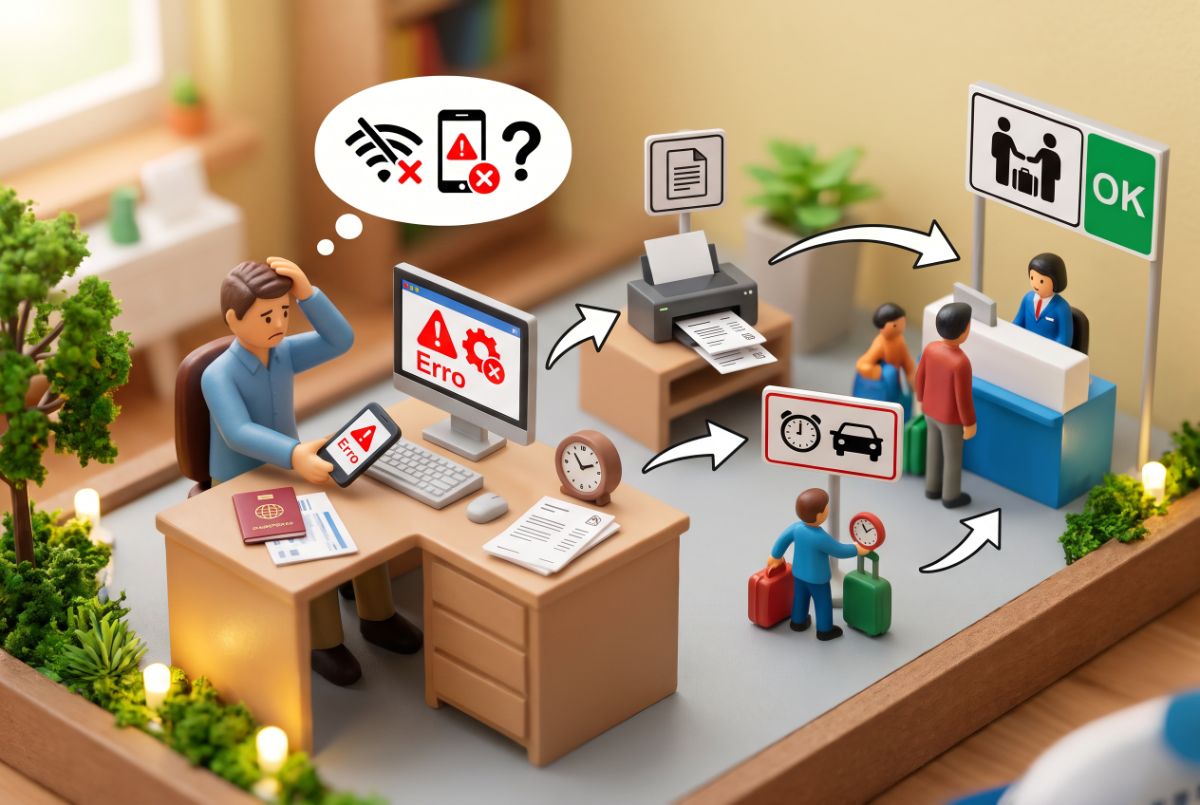
Departure is 24 to 48 hours away. You open your airline’s mobile app to confirm your seats, review baggage allowances, and download boarding passes. After filling in your travel details and clicking the final button, a bright red alert appears: “We are unable to complete your online check-in. Please see an airport customer service agent.” Your stomach drops. Worst-case scenarios race through your mind: “Was my flight canceled? Did the airline overbook and give away my seat? Am I going to get hit with surprise airport counter check-in fees or miss my flight entirely?”
While an unexpected system error is stressful, a failed online check-in rarely means your ticket has been canceled. The vast majority of check-in blocks stem from standard security protocols, minor name formatting mismatches, mandatory physical document inspections (visas, passports, and entry permits), or routine aircraft gauge changes. However, ignoring the message and arriving at the terminal on a tight schedule can turn a routine check-in hold into an involuntary boarding denial. This comprehensive 2026 traveler guide details why online check-in fails, the exact technical fixes to attempt before heading out, and how to protect your booking at the airport counter without paying penalties.
Common Online Check-in Errors & Actionable Solutions Compared
Identify the root cause of your check-in lock, assess risk levels, and take action before leaving for the terminal:
| Root Cause | What It Means in Practice | Risk Level | Action Before Leaving Home | Traveler Verdict |
|---|---|---|---|---|
| Mandatory Document / Visa Verification | Destination country mandates human inspection of visas, eTAs, or passport validity prior to issuing boarding passes. | Low / Routine | Gather your physical passport, visas, and onward ticket confirmations into a travel folder. | Standard Procedure. Common on international routes to the US, Europe, Canada, and Australia. Your seat is safe. |
| Mobile App Glitch or Corrupted Cache | The airline’s app crashed, experienced an API timeout, or cached outdated itinerary data. | Low | Clear browser cache, switch to an incognito desktop window, or reinstall the app. | Quick Fix. Roughly 40% of check-in errors are resolved by switching from mobile apps to desktop browsers. |
| Name Discrepancy or Compound Surnames | Reservation systems merged hyphenated names or truncated long surnames without spaces. | Moderate | Review your e-ticket receipt. Try entering combined surnames or just the final family name. | Call phone reservations if the system fails to recognize your last name. |
| Codeshare / Partner Airline Booking | You booked through one airline (e.g., Delta), but the first flight is operated by a partner (e.g., Air France). | Low | Locate the operating carrier’s specific PNR locator and check in on their website. | Platform Mismatch. Check-in must always be completed via the airline actually flying the first leg. |
| Schedule Changes, Aircraft Swaps, or Overbooking | The carrier swapped aircraft to a smaller layout, altered connection times, or sold out all seat assignments. | High / Critical | Head to the airport 60 to 90 minutes earlier than normal and capture error screenshots. | Requires Rapid Action. Unassigned passengers who arrive early secure remaining seats ahead of late arrivals. |
1. Four Technical Troubleshooting Steps to Try at Home
Before heading to the airport early, run through these standard technical workarounds:
- Use a Desktop Browser in Private/Incognito Mode: Airline mobile apps frequently suffer from local cache bottlenecks after updates. Open Chrome, Safari, or Firefox in Incognito/Private mode on a laptop or desktop computer (ensuring ad-blockers and VPNs are turned off) and attempt check-in directly through the airline’s official desktop website.
- Test Name Variations on Compound Surnames: Global Distribution Systems (GDS engines like Amadeus, Sabre, and Travelport) do not support hyphens, apostrophes, accents, or special characters. Furthermore, middle names and secondary surnames often get concatenated into one continuous string.
- If your legal name is Sarah Jane Miller-Smith, attempt entering
MILLERSMITH,MILLER SMITH, or simplySMITHin the surname field. - In the first name field, if Sarah is rejected, test
SARAHJANE.
- If your legal name is Sarah Jane Miller-Smith, attempt entering
- Identify the Operating Carrier PNR (Codeshare Flights): When booking multi-airline itineraries (such as United flights operated by Lufthansa), the marketing carrier’s confirmation code differs from the operating carrier’s system code. Check your initial confirmation email for a notation reading “Operating Airline Confirmation” or “Partner Record Locator”. Head directly to the operating airline’s portal to check in.
- Check for Secondary Security Selection (The “SSSS” Code): On flights to or from the United States, the Transportation Security Administration’s Secure Flight system randomly tags selected passengers for secondary screening. When selected, the airline’s automated system suppresses mobile and digital boarding passes, requiring you to collect a physical paper boarding pass stamped with “SSSS” at the check-in desk. This is a routine screening requirement and does not mean your seat is compromised.
2. How to Verify Your Ticket Is Valid, Confirmed, and Issued
The most common fear among stranded flyers is that their reservation was canceled due to payment processing failures. You can verify your ticket’s validity from home using one key metric:
- Locate Your 13- or 14-Digit E-Ticket Number: The 6-character alphanumeric code (e.g., K9XYZ2) is merely a booking reference (PNR). The only legally binding proof that your flight has been paid for and issued is the electronic ticket number (e-ticket), which always starts with a 3-digit carrier prefix followed by 10 digits (e.g., Delta:
006-, United:016-, British Airways:125-, Air France:057-, Lufthansa:220-). - If your booking receipt lists a specific 13-digit e-ticket number beside your name, your contract of carriage is active and legally binding. The airline is legally required to transport you or provide standard statutory delay and bumping compensation.
- If the booking displays “Ticketing in progress”, “Pending”, or lacks an e-ticket number entirely, call the booking agency or carrier immediately—the ticket was never finalized.
3. Document Everything to Avoid Low-Cost Airline Desk Fees
On ultra-low-cost carriers (ULCCs like Ryanair, Wizz Air, Frontier, and Spirit), completing online check-in is mandatory. Failing to present a digital boarding pass at the counter often incurs mandatory airport check-in fees ranging from $30 to $65 / €30 to €60 per passenger:
- Take Clear Time-Stamped Screenshots: If the mobile app or web portal fails, immediately take full-screen screenshots displaying the specific error message, your booking reference, and the device’s clock proving you attempted check-in before the free cutoff window closed.
- Record a brief screen video demonstrating that you entered your details correctly and that the platform rejected the request.
- At the airport desk, present your screenshots to the agent to prove the failure was caused by the airline’s technical infrastructure. If the agent insists on charging an airport check-in fee, pay using a credit card under protest, secure an itemized receipt, and submit an online refund dispute citing provider service failure.
4. The Airport Arrival Playbook: Protecting Against Involuntary Bumping
If online check-in failed because your flight is oversold or has undergone an equipment down-gauge (switching to an aircraft with fewer seats):
- Arrive at the Airport Significantly Earlier:
- Domestic Flights: Arrive 2.5 to 3 hours prior to departure (instead of the usual 90 minutes).
- International Flights: Arrive 3.5 to 4 hours before scheduled takeoff.
- The Counter Priority Rule: When an airline oversells a flight and cannot secure voluntary volunteers to take later flights, gate agents must initiate involuntary denied boarding (bumping). Under standard airline customer service plans, unassigned passengers are prioritized for boarding based on their check-in time at the airport. Arriving early places you ahead of other unassigned flyers.
- Try Airport Self-Service Kiosks First: Before waiting in a long customer service line, try using a physical touchscreen kiosk in the departures hall. Kiosks connect via local terminal area networks that can often print boarding cards even when public web servers are under heavy load.
Essential Airport Check-in Street Smarts
Call Phone Support While En Route to the Airport: If you are traveling to the airport by taxi, train, or rideshare, call the airline’s customer support line hands-free. Phone reservation agents have direct terminal access and can often finalize the check-in process manually, assigning your seat and emailing a digital PDF boarding pass directly to your inbox before you reach the curbside check-in desks.
Know Your Rights If Involuntarily Bumped: If you arrive at the airport within the required check-in window and are denied boarding due to overbooking, do not settle for a simple apology. Under US DOT rules, EU 261 regulations, and global aviation statutes, airlines must provide mandatory cash compensation (often up to 400% of the one-way fare, capped up to $1,550 in the US or €600 in Europe) paid immediately, along with alternate transportation.
Authoritative Aviation Consumer Protection Resources
Review passenger rights, carrier obligations, and government aviation guidelines through verified regulators:
- Review consumer protections, denied boarding compensation, and overbooking rules via the US Department of Transportation (Aviation Consumer Protection).
- Check air passenger rights regarding check-in deadlines and denied boarding under European Commission Official Air Passenger Rights (EU 261).
- Explore security screening protocols, document requirements, and SSSS secondary screening on the Transportation Security Administration (TSA Travel Guidelines).
- Review international e-ticketing and check-in standards on the International Air Transport Association (IATA Passenger Standards).

Post Comment