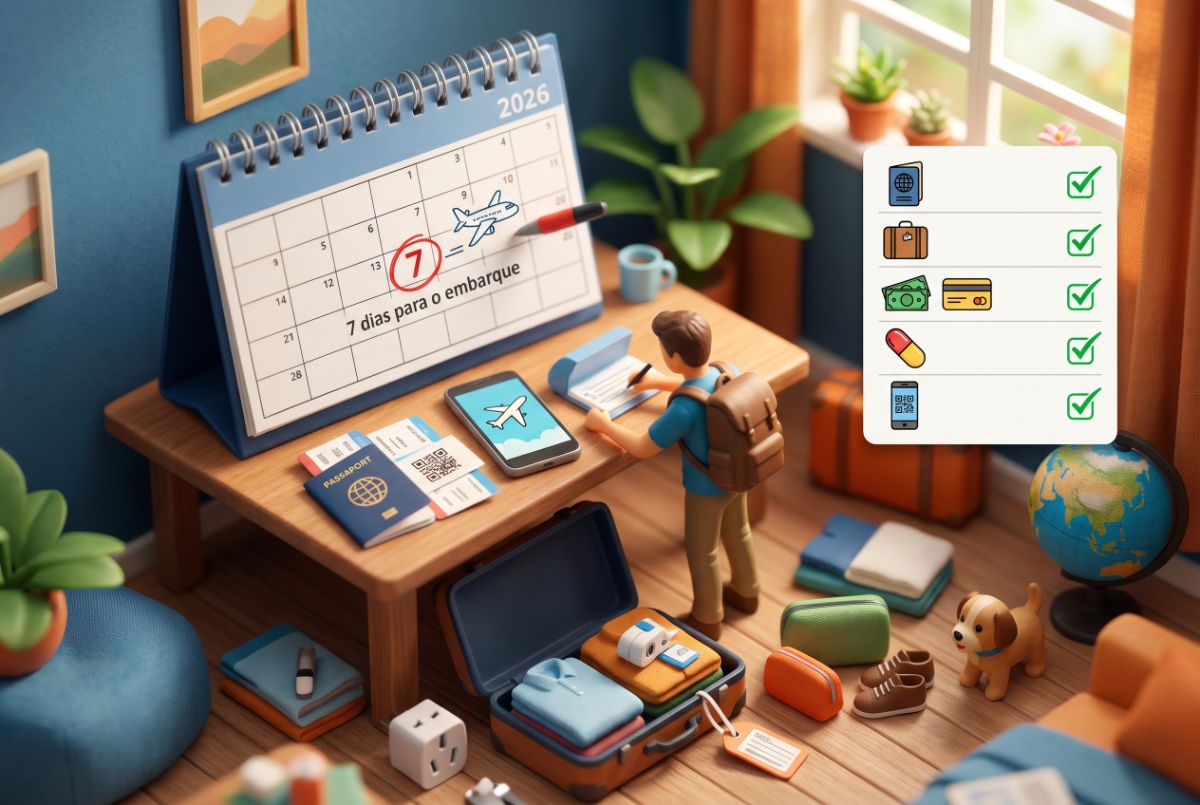
First International Trip: What to Do 7 Days Before Your Flight [2026 Countdown Checklist]
Departure day is exactly seven days away. Alongside the thrill of getting your passport stamped for the first time comes that familiar nagging feeling that a critical detail is slipping through the cracks. During this final countdown week, practical questions fire off back-to-back: “Does my passport validity meet the strict six-month entry rule at my destination? Do I need printed copies of my travel insurance and hotel confirmations for border agents? Will my bank cards work abroad without triggering an instant fraud lock? And what happens if airport security spots a forgotten power bank in my checked suitcase?”
In international aviation and border control, mistakes made during the final seven days are the hardest to fix at the check-in counter. Overlooking a mandatory electronic travel authorization (such as the UK ETA, Canadian eTA, US ESTA, or European ETIAS), leaving mobile roaming unconfigured, or packing oversized liquids in your carry-on can lead to denied boarding before takeoff or detention at immigration upon landing. This structured 2026 countdown guide organizes everything you need to complete during the final 7 days before your first international flight—broken down day by day to eliminate administrative, financial, and airport security surprises.
7-Day International Flight Countdown: Critical Tasks & Deadlines
Follow this operational timeline covering mandatory milestones, deadlines, and potential risks at each stage:
| Countdown Window | Operational Focus | Mandatory Actions | Risk If Overlooked | Practical Verdict |
|---|---|---|---|---|
| Day -7 & Day -6 | Passports, Electronic Visas & Travel Insurance | Verify 6-month passport validity, apply for electronic travel authorizations (ESTA/eTA/UK ETA/ETIAS), and finalize travel medical insurance. | Critical / Denied Boarding at airline check-in desk | Never leave electronic travel permits to the last day; manual security reviews take up to 72 hours. |
| Day -5 & Day -4 | Banking, Multi-Currency Cards & Local Cash | Set travel notices on credit cards, fund multi-currency accounts (Wise/Revolut), and pick up small-denomination foreign cash. | Card frozen by automated fraud detection on your first overseas purchase | Always carry at least two independent payment methods (e.g., physical debit/credit card + mobile wallet). |
| Day -3 | Connectivity (eSIM) & Printed Immigration Folder | Install international data eSIM, download offline maps, and print hard copies of your border control documents. | No cellular data or dead phone battery while standing in the immigration queue | Border officers strongly prefer printed paper confirmations during entry interviews. |
| Day -2 | Luggage Weight, 3-1-1 Liquids & Lithium Batteries | Weigh bags at home, pack liquids under 100 ml (3.4 oz), and move all power banks/batteries to carry-on bags. | Confiscation of toiletries at security or checked bag pulled off flight | Spare lithium batteries and power banks are strictly banned from checked luggage. |
| Day -1 (24 Hours Out) | Online Check-in & Carry-On Survival Kit | Complete online check-in, confirm departure terminal, and pack a 24-hour change of clothes in your personal item. | Losing preferred seats or facing long airport counter delays | Arrive at the international terminal 3 to 3.5 hours before scheduled departure. |
1. Days -7 & -6: Passports, Electronic Authorizations & Travel Insurance
Start with legal entry requirements and medical coverage—any gap here stops you before you ever reach the boarding gate:
- The Six-Month Passport Validity Rule: Most countries outside North America and Western Europe require your passport to remain valid for at least six months beyond your planned date of arrival (while the European Schengen Area mandates at least three months beyond your scheduled departure date). Airlines enforce this strictly at check-in and will deny boarding if your passport expires too soon.
- Electronic Travel Authorizations (Mandatory Even for Visa-Exempt Travelers): Many countries now require visa-free tourists to register online prior to departure:
- United States (ESTA): Required for citizens of Visa Waiver Program countries entering or transiting the US.
- United Kingdom (UK ETA): Mandatory digital travel authorization required for visa-exempt visitors entering or transiting the UK.
- Canada (eTA): Required for visa-exempt foreign nationals flying into or transiting through Canadian airports.
- European Union (ETIAS): Verify active implementation requirements prior to traveling to Schengen Area countries.
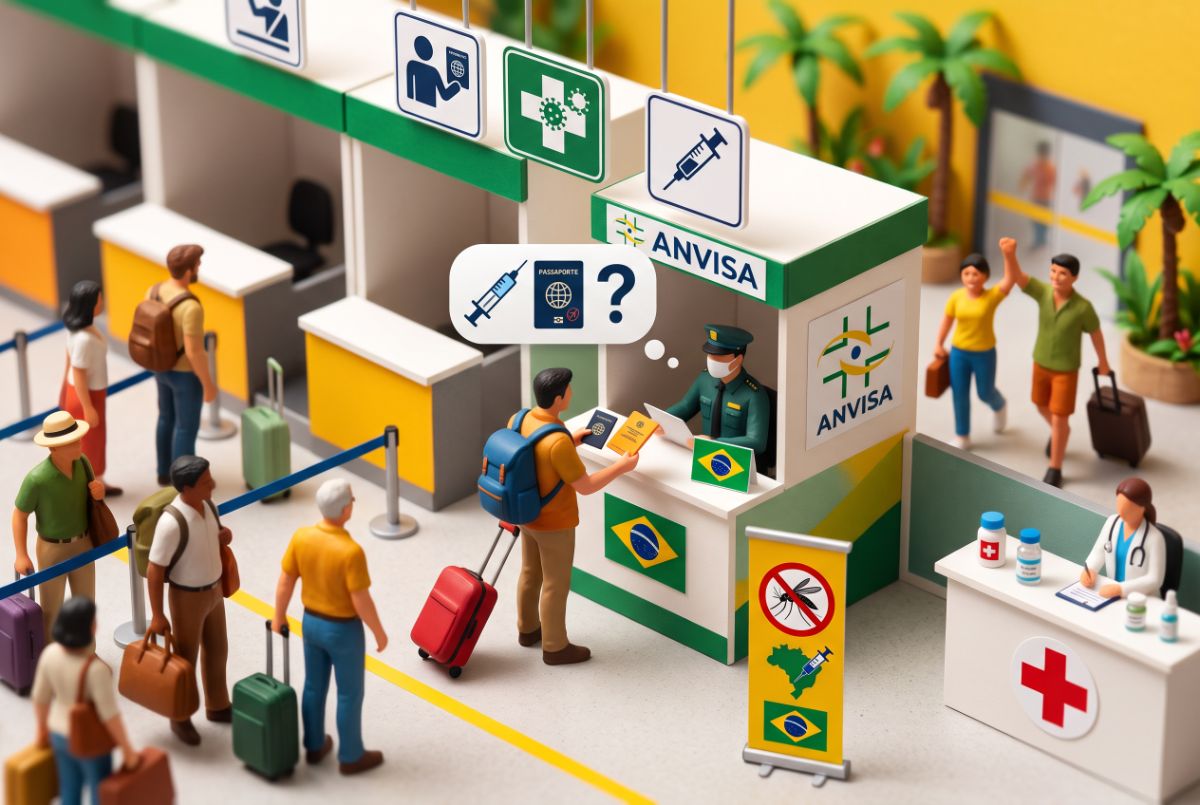
- International Vaccination Certificates: If traveling to or transiting through regions in South America, Central America, or Sub-Saharan Africa, confirm whether a Yellow Fever International Certificate of Vaccination (ICVP) is required. Vaccines must be administered at least 10 days prior to arrival.
- Comprehensive Travel Medical Insurance: For the 29 European countries in the Schengen Zone, holding travel medical insurance with a minimum coverage of €30,000 (including emergency medical repatriation) is a statutory entry requirement. For trips to the US, aim for at least $100,000 in medical coverage due to steep healthcare costs.
2. Days -5 & -4: Financial Protection, Global Cards & Local Cash
Being locked out of your bank account on day one abroad is an avoidable rookie mistake. Safeguard your funds with three steps:
- Set Travel Notifications on Traditional Bank Cards: Log into your banking apps and submit a Travel Notice listing exact departure/return dates and every country on your itinerary—including layover countries where you might buy coffee or airport transit tickets.
- Fund a Multi-Currency Travel Card (Wise, Revolut, or Charles Schwab): Load funds onto a low-fee multi-currency debit card to lock in interbank exchange rates and avoid 3% foreign transaction fees. Add your virtual card to Apple Pay or Google Wallet as a backup in case your physical card is misplaced.
- Carry Emergency Cash in Small Denominations: Bring a physical cash reserve ($200 to $400 USD or Euros in small bills—10s, 20s, and 50s) split across two separate locations (such as a hidden money belt and your carry-on backpack). High-value notes like €200 or €500 bills are routinely refused by taxis, cafes, and ticket machines across Europe.
3. Day -3: Connectivity (eSIM) & Your Printed “Immigration Folder”
Standing at a border control booth is the worst moment to rely on spotty airport Wi-Fi to load heavy PDF attachments on a dying smartphone:
- Assemble a Physical Immigration Folder: Print clean paper copies of your core travel proofs and keep them inside a slim plastic sleeve in your carry-on bag:
- Confirmed Return or Onward Flight Ticket (displaying your 6-character booking reference and 13-digit e-ticket number).
- Accommodation Confirmations covering every night of your stay (showing full street addresses, hotel phone numbers, and guest names). If staying with friends or family, carry a signed Invitation Letter alongside a copy of your host’s ID or utility bill.
- Travel Insurance Certificate printed in English or the destination’s official language.
- Proof of Financial Means (a recent bank or multi-currency account statement showing sufficient funds for your trip, should border agents request proof of subsistence).
- Purchase & Install an International Data eSIM: If your phone supports eSIM technology (iPhone XS/11 or newer, recent Samsung Galaxy S, or Google Pixel devices), purchase an international data plan online three days out. Scan the installation QR code while connected to your reliable home Wi-Fi, leaving the secondary data line switched off until your plane touches down abroad.
- Download Offline Maps & Translation Packs: Save your destination’s metropolitan map area inside Google Maps for offline GPS navigation, and download the local language pack in Google Translate.
4. Day -2: Packing, Weighing Bags & Airport Security Rules
Waiting until the night before departure leads to forgotten essentials and costly overweight baggage charges at the terminal:
- Verify Baggage Weight & Dimensions:
- Carry-On Cabin Bag: Standard international limits sit at 7 kg to 10 kg (15 to 22 lbs) and maximum dimensions of 55 cm x 35 cm x 25 cm (22 x 14 x 9 inches). European and Asian carriers enforce cabin weight checks far more strictly than US airlines.
- Checked Hold Luggage: Standard economy allowance is 23 kg (50 lbs). Weigh your suitcase with a handheld digital luggage scale before zipping it up; overweight fees on international flights typically run $100 to $200 per bag.
- The 3-1-1 Carry-On Liquids Rule (100 ml / 3.4 oz): Every liquid, gel, aerosol, cream, toothpaste, and perfume packed in your carry-on must be in containers of 100 ml (3.4 ounces) or less, fitting comfortably inside one single clear, quart-sized (1-liter) resealable plastic bag. Containers larger than 100 ml—even if mostly empty—will be confiscated and discarded at security checkpoints.
- Lithium Batteries & Electronics Rule: Power banks, spare lithium-ion camera batteries, laptops, and e-cigarettes are strictly prohibited in checked luggage due to fire risks in the aircraft cargo hold. Pack all batteries and portable chargers exclusively in your carry-on bag.
- Prescription Medications: Carry daily prescriptions in their original pharmacy-labeled packaging alongside a signed doctor’s prescription or medical note (essential if carrying injectable medications or controlled substances).
5. Day -1 (24 Hours Before Departure): Online Check-in & Final Prep
In the final 24 hours before takeoff, lock down your airport arrival logistics:
- Complete Online Check-in at the 24-Hour Mark: Open your airline’s app or website exactly 24 hours prior to departure to confirm seat assignments and generate boarding passes. Note: On many international routes, the app will issue a check-in confirmation requiring a quick stop at the airport counter for physical passport verification.
- Verify Your Departure Terminal: Major international hubs (such as JFK, Heathrow, Charles de Gaulle, or Guarulhos) operate multiple terminals separated by shuttles or trains. Double-check your exact departure terminal on your booking confirmation.
- Prep Your Flight Outfit & Carry-On Survival Kit: Dress in breathable layers (long-haul cabins frequently run cold), pack graduated compression socks to prevent leg swelling, bring wired headphones or an airplane dual-prong audio adapter, carry a black ballpoint pen (for customs declaration forms), and pack one complete change of underwear and a fresh shirt in your carry-on in case your checked suitcase is delayed.
Essential First-Time International Flyer Street Smarts
Arrive 3 to 3.5 Hours Before International Takeoff: For your first trip abroad, arrive at the airport at least 3 hours ahead of departure. International departures require extra buffer time for physical passport and visa verification at check-in, TSA/security screening (removing laptops and 3-1-1 liquid bags), outbound passport control in many countries, and long walks to widebody gates.
Tag Your Suitcase Inside AND Out: Attach a sturdy luggage tag displaying your name, email, and mobile number with international country code on the outside handle—and place a printed sheet of paper with your full contact details and first hotel address right on top of your clothes inside the bag. If the outer tag gets torn off on automated conveyor belts, baggage handlers can immediately identify your suitcase upon inspection.
Authoritative Government Travel & Aviation Portals
Verify entry mandates, electronic travel authorizations, and security screening rules through official channels:
- Check official passport requirements, travel advisories, and visa rules via the U.S. Department of State (International Travel Portal).
- Review carry-on liquid restrictions, battery rules, and prohibited items on the Transportation Security Administration (TSA What Can I Bring?).
- Verify European entry requirements and ETIAS rollout updates on the European Union Official Travel Portal (ETIAS & Schengen Rules).
- Review global health notices and travel vaccination recommendations via the Centers for Disease Control and Prevention (CDC Travelers’ Health).

Post Comment