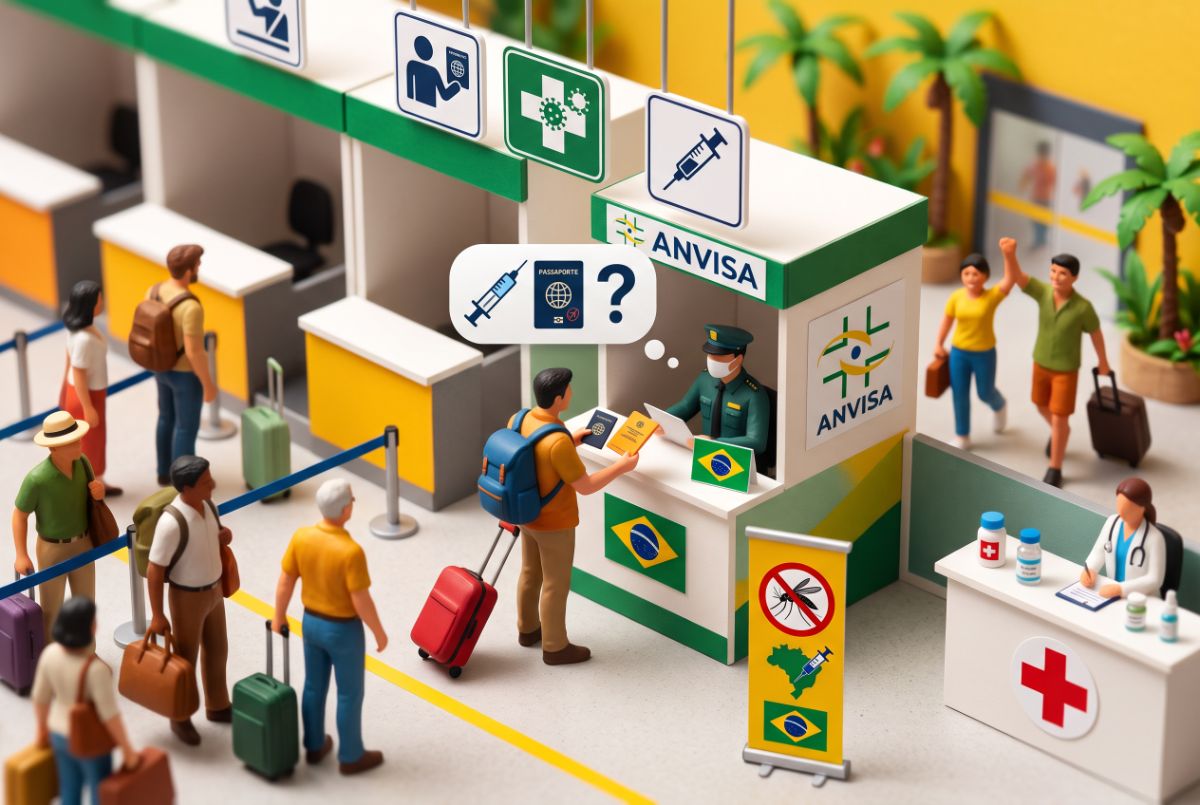
Do Foreign Tourists Need Yellow Fever or Other Vaccines to Enter Brazil? [2026 ANVISA & CDC Guide]
Planning an international trip to Brazil often triggers a wave of confusing pre-departure health questions: “Will Brazilian Federal Police officers at São Paulo (GRU) or Rio de Janeiro (GIG) ask for a Yellow Fever certificate at passport control? Is COVID-19 vaccination proof still checked? And if a vaccine isn’t legally required at the border, do I still need shots before visiting Rio de Janeiro, Iguaçu Falls, or the Amazon?”
The short legal answer under ANVISA (Brazil’s National Health Surveillance Agency) regulations is clear: Brazil does not require foreign tourists to present proof of Yellow Fever, COVID-19, or any other vaccination to enter the country. However, confusing “not legally required at immigration” with “not medically recommended” is a major mistake. Both Brazil’s Ministry of Health and the US CDC strongly recommend Yellow Fever immunization for popular tourist destinations—including Rio de Janeiro state, São Paulo state, Iguaçu Falls, the Pantanal, and the Amazon basin. Furthermore, if your itinerary continues onward from Brazil to neighboring South American, Caribbean, or Asian countries, border agents at your next destination may legally demand your Yellow Fever certificate. This practical 2026 health and entry guide separates strict Brazilian border laws from regional medical recommendations.
Brazil Entry Vaccines: Legal Border Rules vs. Medical Recommendations
Compare official Brazilian immigration requirements against travel-medicine recommendations by destination and itinerary:
| Vaccine / Health Item | Legally Required to Enter Brazil? | Medically Recommended? | Key Risk Regions in Brazil | Timing & Validity Rule |
|---|---|---|---|---|
| Yellow Fever (Febre Amarela) | No (ANVISA does not require ICVP at Brazilian borders) | Yes (for most major tourist routes) | Rio de Janeiro (city & state), São Paulo state, Iguaçu Falls, Brasília, Minas Gerais, Pantanal, Amazon | Single dose provides lifelong protection; must be taken at least 10 days before travel. |
| COVID-19 Vaccine / PCR Test | No (all COVID border mandates permanently lifted) | Routine up-to-date booster advised by CDC | Crowded airports, Carnival/New Year’s events, domestic flights | No certificates or tests checked at airline check-in or immigration. |
| Hepatitis A & Typhoid | No | Yes (Hepatitis A) nationwide; Typhoid for rural/street-food travelers | Nationwide (food and waterborne transmission) | Schedule 4 to 6 weeks prior to departure. |
| Routine Vaccines (MMR, Tdap, Hepatitis B) | No | Yes (Brazilian Ministry of Health & CDC standard advice) | Nationwide (measles, tetanus, diphtheria) | Confirm childhood immunization records are current before flying. |
| Malaria & Dengue Prevention | No | Antimalarial pills only for the Amazon basin; mosquito repellent everywhere | Malaria: Amazon states only (not Rio/SP/Iguaçu). Dengue: Urban & coastal areas | No routine traveler vaccine; use DEET/Icaridin repellent daily. |
1. Yellow Fever Vaccine: When You Need It (and When Onward Flights Demand It)
Understanding Yellow Fever rules for Brazil requires distinguishing between entering Brazil and leaving Brazil for another destination:
- Entering Brazil Directly (No Certificate Checked): Whether you fly to Brazil from the United States, Canada, Europe, Asia, or anywhere else, Brazilian immigration authorities and airlines will not ask for a Yellow Fever certificate upon arrival.
- Where Yellow Fever Vaccination Is Medically Advised Inside Brazil: While yellow fever is rarely seen in major coastal northeast cities (such as Fortaleza, Natal, Recife, or Maceió), transmission risk exists in forested, rural, and bordering urban zones across much of central, northern, and southeastern Brazil. Health authorities recommend vaccination at least 10 days before arrival if your itinerary includes:
- Rio de Janeiro (including Rio city, Niterói, Ilha Grande, Paraty, and Búzios)
- São Paulo State (especially outside central São Paulo city, including coastal rainforest parks)
- Iguaçu Falls (Foz do Iguaçu / Paraná state)
- The Amazon & Pantanal (Manaus, Belém, Cuiabá, Campo Grande, Bonito)
- Minas Gerais & Brasília (Ouro Preto, Belo Horizonte, Chapada dos Veadeiros)
- The “Onward Flight” Trap (ICVP Yellow Card Required by Third Countries): Because the World Health Organization classifies Brazil as a country with yellow fever transmission risk, dozens of countries require an International Certificate of Vaccination or Prophylaxis (ICVP) from any traveler arriving from—or transiting more than 12 hours through—Brazil. If your trip continues from Brazil to countries such as Colombia, Bolivia, Costa Rica, Panama (jungle areas), Aruba, Curaçao, South Africa, India, or Thailand, airline check-in agents will deny boarding without a valid yellow ICVP card issued at least 10 days earlier.
2. Who Should NOT Get the Yellow Fever Vaccine? (Medical Exemptions)
The Yellow Fever vaccine contains a live attenuated virus and carries strict medical contraindications. Consult a travel-medicine physician before getting vaccinated if you fall into any of these groups:
- Adults aged 60 and older receiving the vaccine for the first time (due to higher risk of rare severe adverse reactions).
- Infants under 9 months of age (strictly contraindicated under 6 months).
- Pregnant women and breastfeeding mothers (especially nursing infants under 6 months).
- Immunocompromised travelers (individuals undergoing chemotherapy, taking immunosuppressive biologics/steroids, or living with severe immune deficiencies).
- Severe egg allergy sufferers (anaphylactic reaction to egg proteins).
Tip for Exempt Travelers: If your doctor advises against the shot and you are flying onward from Brazil to a country that mandates the Yellow Fever certificate, request an official signed and stamped Medical Contraindication / Exemption Letter on clinic letterhead.
3. Other Recommended Travel Vaccines & Mosquito Protection
Beyond Yellow Fever, travel clinics routinely advise the following precautions for Brazil:
- Hepatitis A & Typhoid: Hepatitis A is recommended for virtually all travelers to Brazil, as the virus can spread through contaminated ice, unpeeled produce, or street food even in major cities. Typhoid vaccination is advised if you plan to explore small towns, rural areas, or eat extensively from street vendors.
- Routine Childhood Boosters (MMR & Tdap): Brazil’s Ministry of Health specifically advises foreign visitors to ensure routine vaccinations against measles, mumps, rubella (MMR), tetanus, diphtheria, and polio are up to date.
- Dengue & Zika Mosquito Precautions (No Routine Tourist Vaccine): Urban mosquitoes (Aedes aegypti) transmit Dengue, Zika, and Chikungunya in Brazilian cities and beach towns—particularly during the rainy summer months (December to April). Pack EPA-registered insect repellent containing DEET (20%–30%) or Icaridin/Picaridin (20%) and apply it during daytime hours when Aedes mosquitoes are most active.
- Malaria Pills (Only for Amazon Jungle Trips): There is zero malaria risk in Rio de Janeiro, São Paulo, Salvador, Florianópolis, or Iguaçu Falls. Prescription antimalarial medication (such as Atovaquone-Proguanil) is necessary only if your itinerary includes rural or forested areas of the Amazon basin.
Essential Brazil Travel Health & Vaccine Street Smarts
Remember the 10-Day Countdown Rule: An International Certificate of Vaccination (ICVP) for Yellow Fever becomes legally valid exactly 10 days after the injection date. Getting vaccinated 3 days before your flight will not satisfy airline check-in agents if you connect onward to a country requiring proof. Once issued, however, a single Yellow Fever vaccine dose is valid for life—even if your older yellow card lists a 10-year expiration date.
Buy High-Strength Repellent Locally at Brazilian Pharmacies (“Farmácias”): If you forget insect repellent or run out, walk into any Brazilian pharmacy chain (Drogasil, Raia, Pacheco, Pague Menos) and ask for Exposis Extreme (25% Icaridin)—widely regarded by Brazilian travel doctors as the gold-standard repellent against tropical mosquitoes and safe to apply over sunscreen.
Authoritative Health & Brazilian Border Portals
Verify current entry health regulations, country-specific Yellow Fever rules, and travel clinic directories through official government sources:
- Review official Brazilian traveler health and entry rules via the ANVISA (Brazilian Health Regulatory Agency).
- Check official consular vaccination guidelines on the Ministry of Foreign Affairs of Brazil (Consular Portal).
- Explore destination-specific vaccine and malaria maps on the CDC Travelers’ Health: Brazil Portal.
- Verify which countries mandate Yellow Fever certificates for travelers arriving from Brazil via the World Health Organization (WHO Yellow Fever Portal).


Post Comment