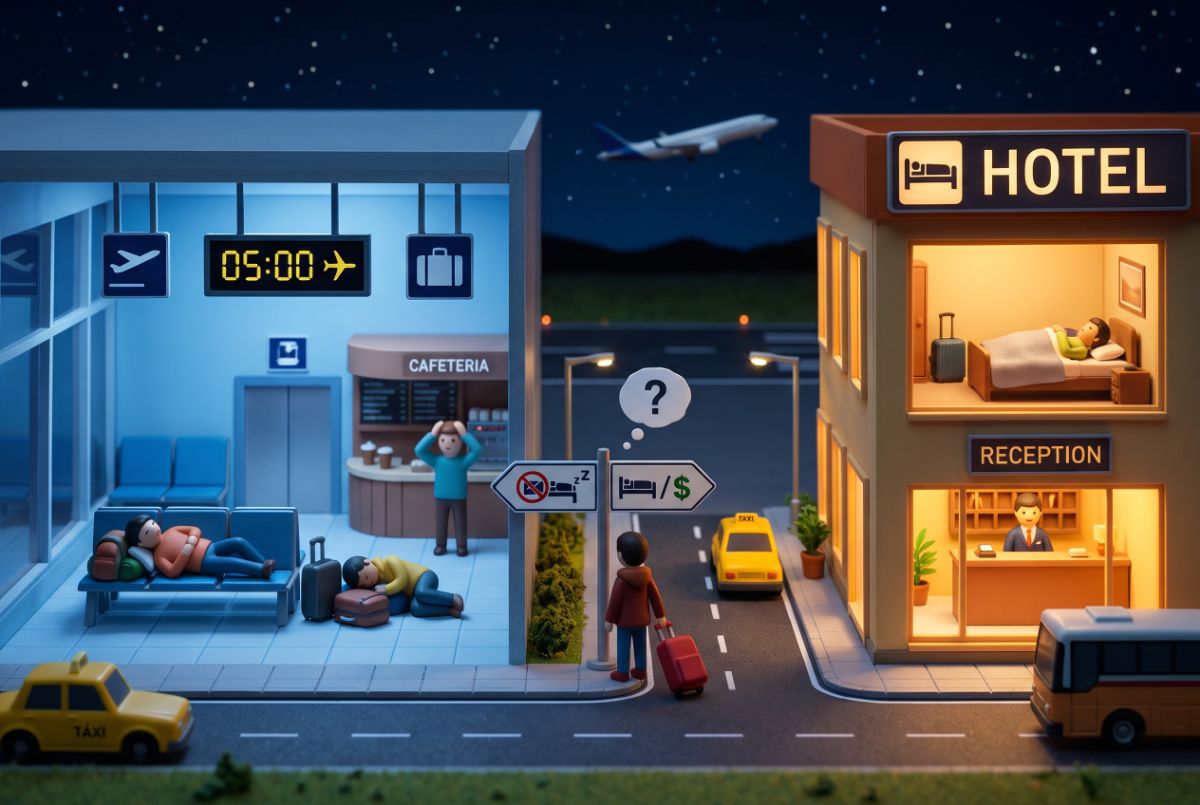
5 AM or 6 AM Flight: Sleep in the Airport or Book a Hotel?
Booking a flight departing at 5:00 AM or 6:00 AM often scores unbeatable promotional fares, but as departure day approaches, an unforgiving logistical reality sets in. Consider the brutal math of the early-morning alarm: to catch a 6:00 AM domestic departure (or a 5:30 AM international flight), airlines require passengers curbside two to three hours before takeoff—between 3:00 AM and 3:30 AM. Factoring in waking up, packing last-minute toiletries, and catching a 40-minute cab ride, your alarm must sound around 2:00 AM. The unavoidable question hits every traveler: Is it worth paying for a full hotel night just to sleep for two hours, or should you head to the terminal late at night and sleep in the airport for free?
This decision goes beyond simple thriftiness versus comfort. It directly impacts your physical well-being, luggage security, early-morning transport reliability, and the operational reality of the airport itself. While some premier international hubs offer carpeted quiet zones, armrest-free padded loungers, and modular pay-per-hour sleep pods, smaller secondary airports lock their perimeter doors at midnight, eject landside passengers into the cold, or blast overhead cleaning equipment and security announcements non-stop. This comprehensive 2026 travel analysis compares the true financial costs, sleep quality, transit hotel alternatives, and essential survival rules for pulling an overnight airport stay without wrecking your first vacation day.
Early Morning Flight: Overnight Airport Stay vs. Hotel Options
Compare real expenses, usable sleep hours, logistical risks, and comfort across all overnight strategies:
| Overnight Strategy | Average Price Range (USD) | Usable Sleep Hours | Logistical & Transit Risk | Operational Verdict |
|---|---|---|---|---|
| Sleeping in the Public Terminal Concourse | $0 / Completely Free | 1 to 3 hours (Fragmented, light sleep) | Zero risk of missing flight due to highway traffic. Constant vigilance required for bags. | Best for Tight Budgets. Great for solo backpackers; terrible for families, seniors, or business trips. |
| Standard Downtown City Hotel | $90 – $220 USD (Full overnight rate) | 2.5 to 4 hours maximum | High 2:30 AM transit risk. Lack of rideshare drivers, pre-booked taxi no-shows, or nocturnal highway closures. | Worst Value for Money. You pay for an entire night, wake up at 2:00 AM, and forfeit the complimentary breakfast. |
| Terminal-Connected Hotel (Walking Distance) | $140 – $280 USD | 5 to 6 solid, restful hours | Zero risk. Indoor climate-controlled walkway straight to airline check-in desks. | The Smart Premium Choice. Sleep until 3:45 AM, take a hot shower, and take an elevator straight down to the gate. |
| Pay-By-The-Hour Sleep Pods & Micro-Cabins | $35 – $75 USD (3 to 6-hour block) | 3 to 5 comfortable hours | Located directly inside terminal grounds (Airside or Landside). | The Golden Middle Ground. Pay strictly for hours used (YOTELAIR, Minute Suites, Aerotel, nap pods). |
1. The Biological and Practical Reality of Sleeping in a Terminal
The romantic notion of “saving cash by bunking down on an airport bench” quickly collides with standard terminal operations between midnight and 5:00 AM:
- The Myth of Overnight Silence: Commercial airports do not turn off. The early hours are specifically reserved for industrial motorized floor buffers, fire alarm testing, concession restocking, and loud automated safety announcements cycling every 15 minutes. Without high-density foam earplugs or active noise-canceling headphones, restorative deep sleep is biologically impossible.
- Hostile “Anti-Sleep” Architecture: Most commercial airports deliberately install metal tandem seating with fixed, non-removable armrests between every single chair. This prevents passengers from lying down across multiple seats, forcing travelers to either sit bolt upright for six hours or stretch out on cold linoleum or stone floors.
- Aggressive Air Conditioning: During overnight hours, central HVAC chillers run at daytime capacity. With passenger density dropping near zero, terminal ambient temperatures plummet rapidly, turning jackets, hoodies, and travel blankets into vital survival tools.
- Overnight Security Checkpoint Closures: At mid-sized airports, security screening checkpoints (TSA/security lanes) routinely shut down between 11:00 PM and 3:30 AM or 4:00 AM. You cannot clear security early to sleep near your departure gate; you are confined to the unvetted, public check-in hall (Landside), where local foot traffic is unrestricted.
2. When Does Sleeping in the Airport Make Strategic Sense?
Despite the physical toll, camping out at the airport terminal overnight can be the winning tactical play under specific circumstances:
- Ultra-Strict Budget Travel: For students, gap-year backpackers, and solo travelers, pocketing $120 to $200 instead of burning it on a 3-hour hotel stay makes an undeniable difference to your overall travel fund.
- Internationally Recognized “Sleep-Friendly” Mega-Hubs: Hubs designed from the ground up for massive intercontinental layovers provide dedicated free rest zones with ergonomic padded recliners (such as Singapore Changi, Seoul Incheon, Doha Hamad, Munich, and Helsinki).
- Zero Risk of Missed Morning Departures: If you are departing from a city plagued by 3:00 AM taxi shortages, unreliable rideshare matching, transit strikes, or nocturnal highway construction, being physically inside the terminal building guarantees you make your boarding call.
3. The Smart Middle Ground: Terminal Hotels and Hourly Cabins
If your budget allows some flexibility, modern transit accommodations solve the early-flight dilemma without the waste of a standard downtown hotel room:
- Terminal-Connected Hotels (Direct Walking Distance): Properties physically connected to the passenger building (such as the TWA Hotel at JFK, Hilton Frankfurt Airport, CitizenM Schiphol, or Sofitel London Heathrow). You check in around 9:00 PM, get 6 hours of genuine, uninterrupted bed rest, take a refreshing shower at 3:45 AM, and walk to the security line in under 5 minutes without ever stepping outside.
- Hourly Micro-Hotels and Sleep Cabins: Chains like YOTELAIR (Europe and Asia), Minute Suites (across US hubs), and Aerotel sell blocks of 2, 4, or 6 hours. You receive a clean, comfortable bed, private charging outlets, high-speed Wi-Fi, absolute darkness behind a locked soundproof door, and en-suite rain shower suites for a fraction of a full hotel rate.
4. The Terminal Sleep Survival Kit: What to Pack in Your Personal Item
If you commit to staying overnight in the terminal, never rely on luck. Pack these essential survival items inside your carry-on backpack:
- Contoured 3D Eye Mask & High-Decibel Earplugs: An absolute necessity to block brilliant stadium-style terminal LED lighting and continuous overhead flight announcements. High-grade industrial foam earplugs or active noise-canceling earbuds playing continuous brown noise are non-negotiable.
- Luggage Cable Lock or Carabiner Strap: Opportunistic theft is the primary hazard when sleeping in public landside halls. Loop your backpack strap around your leg or arm, or use a flexible steel cable lock to anchor your suitcase frame directly to the airport bench. Any tug on your bag will wake you immediately.
- Thermal Fleece Layer with Hood and Warm Wool Socks: A fleece hoodie protects your neck and head from direct HVAC cold drafts, while warm socks keep your feet insulated while resting.
- Fully Charged High-Capacity Power Bank: Do not depend on finding an accessible, working wall outlet near your chosen bench. Terminal outlets are frequently occupied or turned off for overnight maintenance.
Essential Overnight Airport Street Smarts
Always Check Sleeping in Airports Before You Commit: Not every commercial airport stays open 24/7. Hundreds of regional airports in Europe and North America lock their doors 60 minutes after the final evening arrival (around 11:30 PM or midnight) and force travelers onto the outdoor pavement until 4:00 AM. Check the independent database Sleeping in Airports to confirm overnight terminal policy before you show up.
Arrive by 10:00 PM to Claim Prime Rest Spots: If you plan to sleep in the terminal, do not arrive at 1:00 AM. The quietest carpeted corners, padded benches without armrests, and spaces behind terminal pillars fill up fast with savvy travelers between 9:30 PM and 10:30 PM. Arriving early secures the best real estate near restrooms and security guards.
Authoritative Overnight Travel Resources & Directories
Review comprehensive terminal sleep guides, transit hotel directories, and passenger amenity maps via verified resources:
- Review crowd-sourced terminal sleep reviews, quiet zones, and overnight closure alerts on Sleeping in Airports (Terminal Sleep & Layover Directory).
- Explore modular hourly sleep pod locations and cabin bookings at YOTELAIR Official Airport Hotels.
- Check hourly private suites, workstations, and shower reservations via Minute Suites (US Airport Locations).
- Review global airport passenger services and terminal facility standards on the International Air Transport Association (IATA).

Post Comment