Can You Take Duty-Free Liquids on a Connecting Flight? The STEB Bag Rule Explained [2026 Guide]
Browsing the duty-free shops at an international departures terminal is one of the most rewarding rituals of air travel. Picking up a limited-edition single malt scotch, regional wines, artisanal olive oil, or designer fragrances at tax-free prices feels like a smart purchase. Intuitively, travelers assume that because these items were bought inside the airport’s secure sterile concourse, they have passed all necessary security checks and are cleared to travel in cabin luggage all the way home. Yet, during the aircraft transfer at a layover hub, that assumption often crashes into reality: an airport security officer points at the 750 ml bottle on the X-ray conveyor belt and declares it must be confiscated and thrown into the trash.
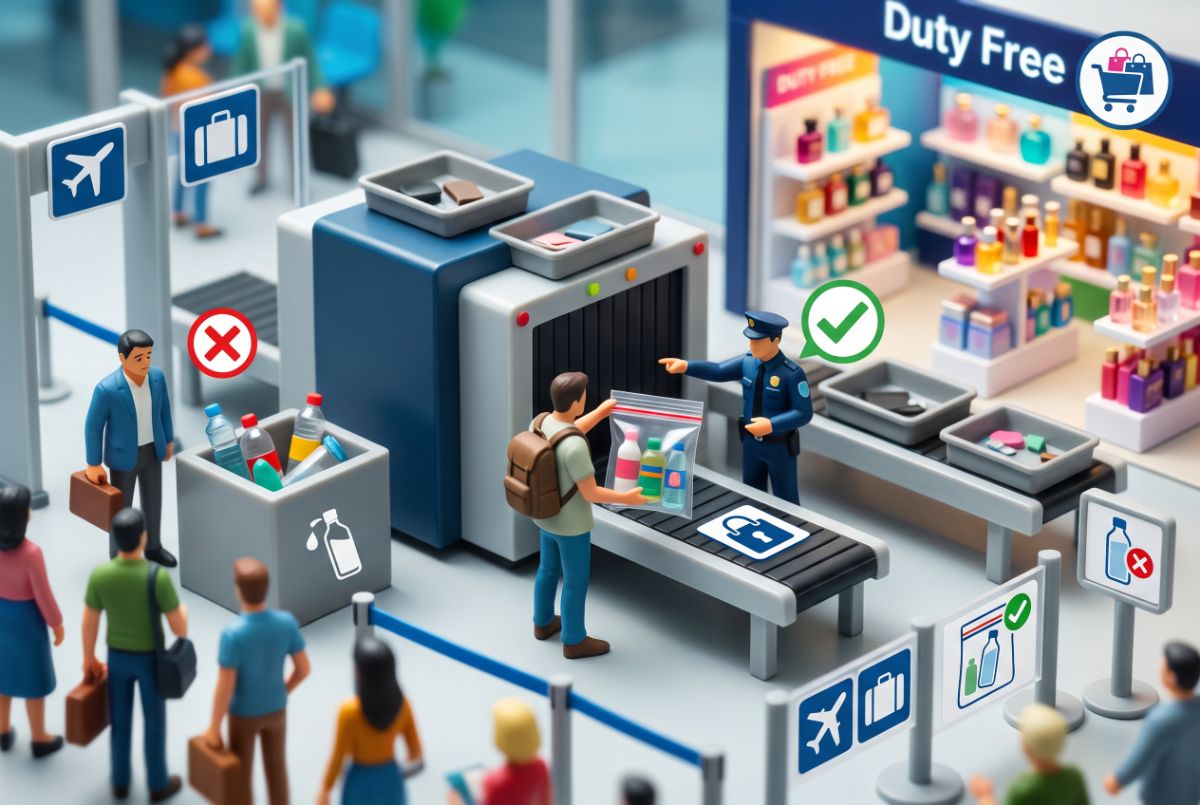
This costly scenario unfolds hundreds of times daily across major hubs in Europe, North America, and Asia. When you switch planes, many international airports require transit passengers to clear security screening again, where the universal liquids rule (containers capped at 3.4 oz / 100 ml packed into a single 1-quart bag) takes effect once more. The only legal safeguard allowing liquids larger than 100 ml to pass this second checkpoint is an official STEB (Security Tamper-Evident Bag)—a specialized transparent, tamper-proof plastic bag sealed with red security tape and displaying the purchase receipt inside. However, layovers involving domestic flight connections in the United States or other border-controlled countries follow different customs protocols. This comprehensive 2026 aviation guide breaks down ICAO, IATA, TSA, and European transport mandates to guarantee your duty-free purchases reach your home bar intact.
Duty-Free Liquids on Connecting Flights: Route Rules Compared
Compare rescreening conditions, STEB bag acceptance, and required traveler actions across common layover routes:
| Layover / Itinerary Type | Can You Carry Bottles Through Security? | Is a Sealed STEB Bag Mandatory? | Confiscation Risk | Required Traveler Action |
|---|---|---|---|---|
| Connecting via European Hub (e.g., SIN > FRA > LHR) | Yes (if sealed in an official STEB) | 100% Mandatory with receipt visible inside | Low (cleared via dedicated liquid scanners) | Keep the seal intact, notify origin cashier, and place the STEB bag into a separate scanner bin. |
| Inbound to US Connecting Domestically (e.g., LHR > MIA > MCO) | No for standard domestic carry-on | STEB helps only at select advanced checkpoints | Very High / Certain if carried in hand | Collect checked bags at customs, pack bottles into checked suitcases, and re-check bags. |
| International Transit without Landside Entry (e.g., JFK > DOH > BKK) | Yes (with STEB) | Mandatory under ICAO aviation standards | Minimal | Present the intact sealed bag at the international airside transit security checkpoint. |
| Gate Screening Checkpoint (e.g., Singapore Changi / US flights) | Yes (if bought inside terminal) | Delivered directly to aircraft door | Moderate | Shops pack purchases in STEBs and staff deliver them to the jet bridge after the gate X-ray. |
1. What Exactly Is a STEB Bag?
The acronym STEB stands for Security Tamper-Evident Bag. Developed jointly by the International Civil Aviation Organization (ICAO) and IATA, it is the worldwide standard for transporting duty-free liquids across multiple flight legs:
- Physical Design: A heavy-duty, transparent plastic bag printed with standardized security border markings and a specialized closure flap. Across the top runs an adhesive red tamper-evident strip printed with “DO NOT OPEN”. Any attempt to peel, pull, or tear this flap triggers irreversible chemical distortion, revealing warning words like “STOP” or “VOID”.
- Receipt Visibly Displayed: For a STEB to be recognized by transit security officers, the itemized cash register receipt must be sealed inside the bag facing outward. This allows checkpoint screeners to verify the purchase date, store code, origin airport, and exact item names without breaking the seal.
- The 48-Hour Validity Window: Under standard international aviation guidelines, goods enclosed in a STEB must have been purchased within 48 hours of reaching the transit security inspection checkpoint.
2. What to Tell the Cashier at Duty-Free Checkout
One of the most frequent mistakes happens right at the cash register when paying for your goods:
- If you do not specify that your journey involves a layover, retail staff may place your liquor or perfume into a standard, open-handled promotional shopping bag. Standard unsealed plastic bags offer zero exemption at transit checkpoints.
- When checking out, hand over your boarding pass and say clearly: “I have a connecting flight at [Airport Name]. Please seal this in an official STEB bag.”
- The clerk will place the bottles into the approved bag, position the printed receipt so it is clearly readable through the plastic, and engage the permanent heat-weld or tamper-evident seal before handing it to you.
3. The Big US Trap: When a STEB Bag Cannot Save Your Bottles
Here is the critical catch where travelers lose expensive bottles despite having them sealed in compliant bags:
Connecting to a Domestic Flight in the United States
If you fly from Europe, Asia, or South America into a US gateway (such as Miami, New York JFK, or Atlanta) with an onward domestic connection to another US city:
- Every arriving international passenger must clear US Customs and Border Protection (CBP) inspection, collect all checked luggage from the baggage carousel, and clear customs before continuing.
- To reach your domestic gate, you must pass through a standard TSA domestic security checkpoint.
- The TSA Dilemma: TSA regulations allow duty-free liquids in STEBs through security only if the checkpoint possesses specialized bottle scanners (Liquid Explosive Detection Systems) and the liquid passes optical density tests. Opaque ceramic containers, dark metallic bottles, and specific liquor proofs frequently trigger optical errors. If the scanner fails, TSA officers are required by federal law to confiscate the bottle.
- The Foolproof Solution: Because you already have physical custody of your checked suitcases at the customs baggage claim, open your checked bag right there, wrap your duty-free bottles securely inside clothing, and zip it shut before placing the suitcase onto the airline’s Connecting Flights / Baggage Re-Check conveyor belt. Checked luggage in the cargo hold has no volume cap on liquids (up to standard airline alcohol proof limits).
4. How STEB Screening Works at Transit Checkpoints
When approaching an international flight connections security screening point in Europe, the Middle East, or Asia:
- Remove the STEB from Your Daypack: Do not leave the sealed bag buried inside your carry-on luggage. Take it out and place it into a separate plastic tray on the X-ray belt, alongside laptops and tablets.
- Non-Invasive Bottle Scanning: Modern checkpoints use computed tomography (CT) scanners or standalone bottle testing devices. Officers place the sealed bag into an optical chamber that analyzes fluid density through the glass without puncturing the plastic.
- What Happens if an Alarm Sounds: If a bottle requires secondary manual screening, the officer will unseal the bag in your presence, run a chemical test on the vapor or container exterior, and reseal the bottle inside a new official airport STEB stamped with the transit airport’s authentication seal.
5. Dealing with Gate Security Checkpoints
Certain international gateways operate decentralized security screening at individual departure gates rather than in a central screening hall (e.g., Singapore Changi Terminals 1, 2, and 3, or US-bound high-security flights):
- If you buy liquids at terminal shops before entering the boarding gate area, you cannot carry them through the gate door scanner yourself.
- Instead, the duty-free shop takes your flight details, seals the items in an approved STEB, and transfers the package via an internal secure runner directly to the boarding door. You collect your sealed purchase on the jet bridge or from cabin crew as you step onto the aircraft.
Essential Duty-Free Transit Street Smarts
Never Break the Seal During Your Flight: Opening a STEB onboard to sample alcohol or try a perfume invalidates the security guarantee instantly. Even a minor tear in the plastic or a peeled red tape edge flags the package as compromised, resulting in confiscation at your next connection checkpoint.
Buy at Your Final Layover Airport: If your journey includes multiple stops (for example: Rome to Frankfurt to New York to Chicago), avoid lugging bottles across multiple terminals. Make your duty-free purchases at your final international hub (Frankfurt). Better yet, many international arrival halls feature duty-free stores right after customs where you can buy bottles with zero subsequent security checkpoints.
Authoritative Transit Regulations & Liquid Guidelines
Verify official passenger screening standards and duty-free liquid protocols via recognized aviation authorities:
- Review international STEB packaging guidelines through the International Air Transport Association (IATA Transit Guidelines).
- Check official US screening policies for duty-free liquids at the Transportation Security Administration (TSA Liquids Rule).
- Review European Union civil aviation security mandates via the European Commission Aviation Security Portal (DG MOVE).
- Review worldwide airport facility security standards on the International Civil Aviation Organization (ICAO).

Post Comment