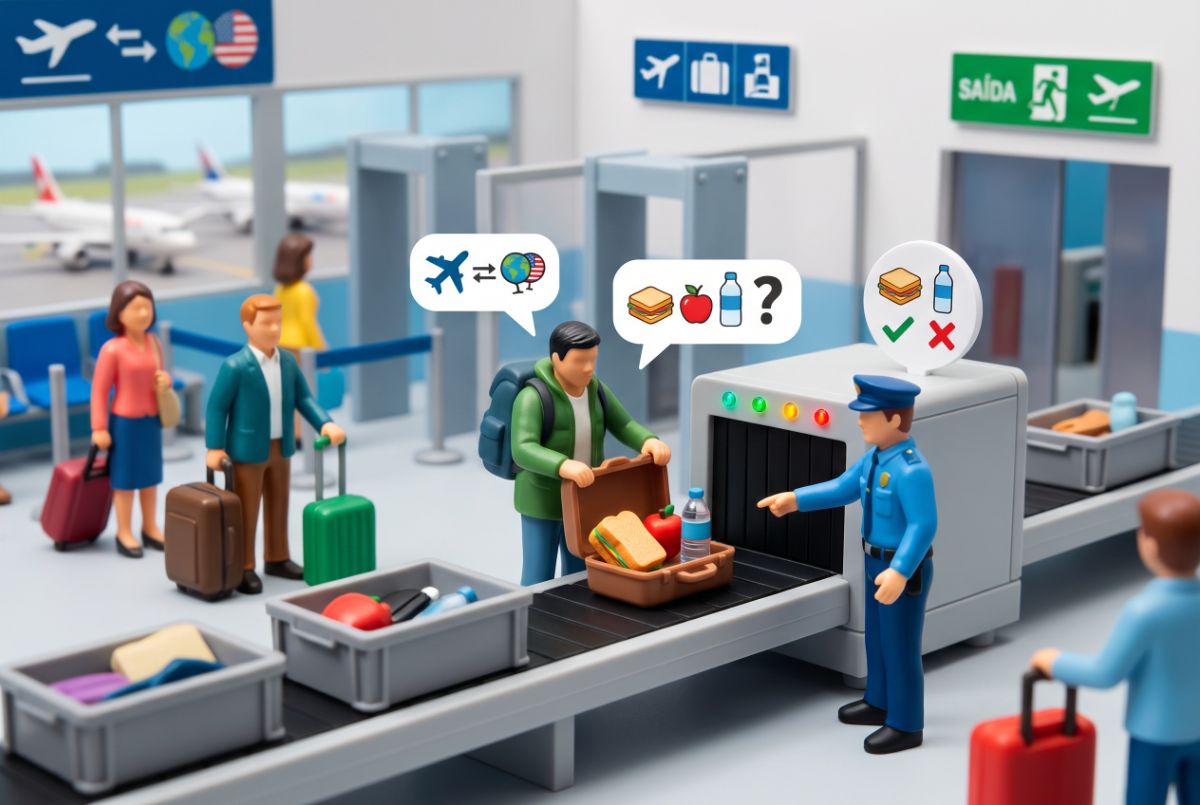
Can You Bring Food Through Airport Security in Carry-On? Domestic & International Rules [2026 Guide]
Between exorbitant prices at terminal food courts and airlines downsizing free onboard meal services, packing your own snacks has become an essential strategy for comfortable, cost-effective air travel. Whether you are assembling homemade sandwiches, packing fruit and crackers for young children, or carrying gourmet culinary souvenirs like cheeses, artisanal pastries, and specialty spreads back from vacation, the question arises as you pack your cabin bag: “Will airport security confiscate my snacks at the X-ray scanner, or will border customs seize them when I touch down?”
The short answer is yes, you can bring food through airport security in your carry-on luggage—provided you understand the strict distinction between solid food items and spreadable liquids, as well as the divide between security screening and international customs biosecurity. While airport security checkpoints (such as TSA in the US or CATSA in Canada) focus strictly on physical threats to aviation safety, international customs agencies (such as CBP, CBSA, or Australian Biosecurity) enforce strict agricultural and environmental laws. An artisanal delicacy cleared by security scanners upon departure can be confiscated and result in steep fines upon international arrival. This comprehensive 2026 travel guide details domestic versus international food carriage rules, breaks down the TSA liquid-food boundary, and protects your food from the checkpoint waste bin.
Bringing Food on Planes: Carry-On Rules Compared
Compare security screening rules, volume limits, and international customs restrictions by food category:
| Food Category | Domestic Flights (Security Screening) | International Flights (Checkpoint X-Ray) | International Arrival (Customs Clearance) | Operational Verdict |
|---|---|---|---|---|
| Solid & Dry Foods (Bread, chips, nuts, baked goods, cookies) | 100% Permitted | 100% Permitted | Generally allowed (sealed commercial packages) | The Safest Bet. Completely exempt from liquid volume caps; ideal for in-flight snacking. |
| Creamy, Spreadable & Gel Foods (Peanut butter, Nutella, hummus, jam) | Restricted to 3.4 oz / 100 ml containers | Restricted to 3.4 oz / 100 ml containers | Subject to dairy and regional restrictions | Treated as Liquids. Any container larger than 100 ml (even if half-full) will be confiscated at the checkpoint. |
| Fresh Fruits & Raw Vegetables | Permitted (exceptions apply: Hawaii/Puerto Rico) | Clears X-ray departure screening | Strictly Prohibited | Eat or discard before landing. Fresh produce cannot cross international agricultural borders. |
| Meats, Cured Charcuterie & Soft Cheeses | Permitted domestically | Clears X-ray (if solid) | Heavily Regulated / Banned | Unpasteurized soft cheeses and artisanal cured pork are confiscated upon international arrival. |
| Infant Formula, Breast Milk & Baby Food | Medically Exempt from 3-1-1 Rule | Exempt from 100 ml limits | Permitted for traveling infants | Humanitarian Exemption. Allowed in reasonable flight quantities; subject to manual inspection. |
1. Checkpoint Security: The “Solid vs. Liquid” Rule
At security checkpoints globally—overseen by agencies like the TSA (Transportation Security Administration) in the United States, CATSA in Canada, and civil aviation regulators across Europe—officers enforce liquid safety thresholds regardless of whether an item is edible:
- The 3.4 oz (100 ml) Liquid Boundary: Aviation regulations define a liquid broadly: if you can pour it, pump it, squeeze it, spread it, or if it melts at room temperature, it is classified as a liquid or gel.
- Classified as Liquids / Gels: Peanut butter, Nutella, cream cheese, hummus, pâté, yogurt, applesauce, honey, salad dressing, salsa, maple syrup, soups, and soft cheeses (such as Brie, Camembert, and fresh burrata).
- The Container Rule: These items must be in individual containers measuring 3.4 ounces (100 milliliters) or less, and all containers must fit inside a single, transparent, quart-sized zip-top bag. A 12-ounce jar of peanut butter that is 90% empty will be confiscated because security measures the container’s stamped volume capacity, not the remaining contents.
- Solid Foods That Breeze Through: Hard and dry foods pass through security without volume caps. You can carry roasted nuts, granola bars, potato chips, pretzels, whole fruit, solid chocolate bars, and dry pastries in your personal backpack.
- Hard Cheeses vs. Soft Cheeses: Blocks of hard cheese (such as aged Cheddar, Parmesan, Manchego, or Gouda) are categorized as solid food and can be brought in your carry-on in any reasonable quantity. Soft, creamy cheeses are treated as gels and are restricted to 3.4 oz.
2. International Travel: The Customs & Biosecurity Barrier
The single most expensive misconception among international travelers is assuming that passing the departure security scanner gives you legal clearance to carry those foods into your destination country:
- Checkpoint X-Rays vs. Border Customs: Security screeners search exclusively for dangerous materials (explosives, weapons, flammables). Customs and border protection officers (such as CBP in the US, CBSA in Canada, or the Department of Agriculture in Australia) screen specifically for foreign agricultural pests, non-native plant diseases, and livestock viruses (like Foot-and-Mouth Disease and African Swine Fever).
- The Fresh Produce Ban: Almost every sovereign nation strictly prohibits arriving passengers from carrying fresh, raw fruits, whole vegetables, seeds, or cut salads off an international flight. An apple or orange picked up in the terminal lounge and carried through customs can trigger an immediate border citation.
- The Meat & Dairy Quarantine: Transporting fresh meats, uncured poultry, and unpasteurized artisanal dairy products across international borders is heavily restricted or banned outright. Sealed, commercially packaged shelf-stable snacks (like industrially packaged chocolate, dry crackers, and factory-sealed cookies) are generally permitted.
- The Golden Rule: “Consume It or Toss It”: If you packed fresh fruit, charcuterie sandwiches, or cured meats for your flight, eat them completely or throw them into the aircraft trash bin before landing. Anything consumed at 35,000 feet is legal; carrying it past the international arrivals gate constitutes an illegal agricultural importation.
3. Infant Food and Medically Necessary Liquid Exemptions
Civil aviation authorities maintain clear humanitarian exemptions for passengers traveling with infants or medical conditions:
- Infant Nutrition Exemption: When traveling with babies or toddlers, breast milk, prepared formula, cow’s milk, sterilized nursery water, and jarred baby purees are fully exempt from the 3.4 oz (100 ml) liquid limitation. You are legally allowed to pack these liquids in reasonable quantities suited to your flight itinerary and potential delay buffers.
- Checkpoint Screening Procedure: Do not hide baby food inside packed bags. Remove bottles, pouches, and cooling gel packs from your diaper bag and place them into a separate bin on the conveyor belt. Inform the screening officer: “I have medically exempt liquids for my child.” Officers will run bottles through optical scanners or conduct chemical vapor tests over the open bottle tops.
- Medically Necessary Liquid Diets: Liquid medications, special nutritional shakes, and electrolyte solutions required for medical conditions are also exempt from standard volume caps, though keeping a physician’s note handy accelerates clearance.
4. How to Pack Food in Your Cabin Bag Without Delays
To prevent your carry-on from being pulled aside for manual inspection, follow these packing protocols:
- Organize Food in Clear, Transparent Pouches: Dense organic matter (such as large blocks of cheese, thick bread loaves, or dense chocolate cakes) can appear indistinguishable from plastic explosives on older 2D X-ray monitors. Packing your food together in a single clear packing cube or gallon-sized ziploc bag allows you to slide it out into an inspection bin quickly if requested.
- Avoid Pungent or Strongly Odored Foods: Cabin air is recirculated, and strong food odors spread fast across rows. Avoid packing hard-boiled eggs, canned tuna, garlic-heavy dishes, or strongly aromatic cheeses. Opt for neutral, low-crumb options like nuts, dried fruit, protein bars, and flatbread sandwiches.
- Declare All Food on Arrival Forms: When filling out international customs declaration cards (or answering questions at electronic passport kiosks), always select “YES” if you are carrying any food products, even factory-sealed candy or coffee beans. If you declare an item and it turns out to be prohibited, the customs officer simply confiscates and incinerates it without penalty. If you select “NO” and a sniffer dog flags your bag, you face confiscation plus on-the-spot civil fines ranging from $300 to $1,500.
Essential Airport Food Street Smarts
The Empty Insulated Water Bottle Hack: Airport security will dump out any bottle containing liquid water. The most effective travel hack is carrying a high-quality empty stainless steel bottle through security. Once you clear the checkpoint, head to the nearest airport filtered bottle-refill station or ask a cafe barista to fill it with cold drinking water for free before boarding.
Solid Ice Packs vs. Slushy Gel Packs: If you are transporting perishable food with ice packs, the ice packs must be frozen completely solid when passing through security. If they are partially melted, slushy, or contain pooled liquid, security screeners are required to confiscate them under liquid rules.
Authoritative Security Screening & Agricultural Portals
Verify specific food items, liquid guidelines, and border declaration mandates through official government directories:
- Search individual food items and security rules on the TSA What Can I Bring? (Official Food Screening Portal).
- Check agricultural declaration criteria and prohibited foods via U.S. Customs and Border Protection (CBP Agriculture Guidelines).
- Review Canadian baggage screening rules and liquid exemptions at the Canadian Air Transport Security Authority (CATSA).
- Explore European Union passenger aviation screening rules through the European Commission Aviation Security Directory.

Post Comment