What Does Self-Transfer Mean on Flights? Risks and Essential Precautions [2026 Guide]
When searching for international or multi-city airfares on platforms like Skyscanner, Google Flights, or Kiwi.com, you will frequently encounter remarkably cheap itineraries marked with a prominent yellow or red warning: “Self-transfer”, “Autonomous transfer”, or “Separate tickets”. The combined fare often undercuts traditional legacy carrier flights by 30% to 50%. For budget-conscious travelers, clicking “Book” feels like scoring an undeniable travel hack.
However, many travelers complete the checkout process without fully understanding what a self-transfer legally and logistically demands. With a self-transfer, you personally assume 100% of the operational risk for making your connection. Your checked bags are not transferred automatically between aircraft, airlines have no legal obligation to rebook you if an incoming flight is delayed, and missed connections are treated as passenger no-shows. Understanding transit visa rules, calculating realistic layover windows, and traveling carry-on-only can make the difference between huge savings and an expensive travel ordeal. This comprehensive 2026 aviation guide breaks down how self-transfers work, highlights the core risks, and provides essential precautions to protect your trip.
Single-Ticket Connection vs. Self-Transfer (Separate Tickets)
Compare carrier liability, luggage transit, and compensation rules between traditional and autonomous connections:
| Travel Operational Factor | Single-Ticket Connection (Same PNR) | Self-Transfer (Separate Tickets) | Practical Impact on Traveler |
|---|---|---|---|
| Contract of Carriage | Single unified contract covering your origin to your final destination. | Two or more independent contracts with no legal connection. | Airline #2 bears zero responsibility for delays or disruptions caused by Airline #1. |
| Missed Connection Protection | Free rebooking on the next available flight. | None. Officially recorded as a passenger no-show. | You must pay out-of-pocket for change fees or buy a brand-new ticket. |
| Checked Luggage Handling | Transferred between aircraft automatically by ground handling crews. | Must be collected at baggage claim and re-checked landside. | Requires clearing immigration, waiting at carousels, and re-clearing security. |
| Transit Visa Requirements | Often exempt if remaining within the airside international transit zone. | Mandatory regular visa/entry permit if collecting luggage landside. | Lacking entry papers for the layover country results in denied boarding at origin. |
| Duty of Care (Meals & Hotels) | Mandatory meal vouchers and lodging for extended delays (e.g., EU261). | Ineligible for downstream missed flights. | All emergency lodging, transfers, and meals come directly from your pocket. |
1. What Exactly Is a Self-Transfer Flight?
In standard commercial aviation, booking a trip involving connections through an airline alliance (such as Star Alliance, SkyTeam, or oneworld) links every flight under a single Passenger Name Record (PNR). If you fly Chicago > Frankfurt > Rome on a single ticket, both flights exist under the same reservation umbrella.
- The Virtual Interlining Reality: A self-transfer (also known as virtual interlining) occurs when you stitch together independent flights on carriers that have no formal partnership or codeshare agreement (for example, flying EasyJet from Manchester to Athens, followed by a separate Aegean Airlines ticket to Santorini).
- Unlinked Ticketing: Even if you bought the itinerary in one click through an online travel aggregator, your credit card technically paid for two separate tickets. As far as the second carrier’s flight manifest is concerned, your trip begins at the layover airport. They have no idea—and no obligation to care—that your inbound flight touched down three hours late.
2. The Four Primary Failure Points of Self-Transfer Travel
Knowing where autonomous connections break down helps you spot flawed itineraries before booking:
- 1. The Cascade Effect of Flight Delays: A minor 30-minute departure delay on your inbound leg can derail your entire journey. Boarding gates for your second flight close strictly 15 to 20 minutes before takeoff. If you are not physically at the gate when it closes, your seat is given away or marked as a no-show, forfeiting the fare.
- 2. Auto-Cancellation of Return Flights: If your second ticket was purchased as a round-trip (e.g., London to New York and back), missing the outbound flight due to an inbound delay triggers an automated sweep. Airlines cancel the downstream return ticket unless you contact them and pay hefty penalty fees before departure.
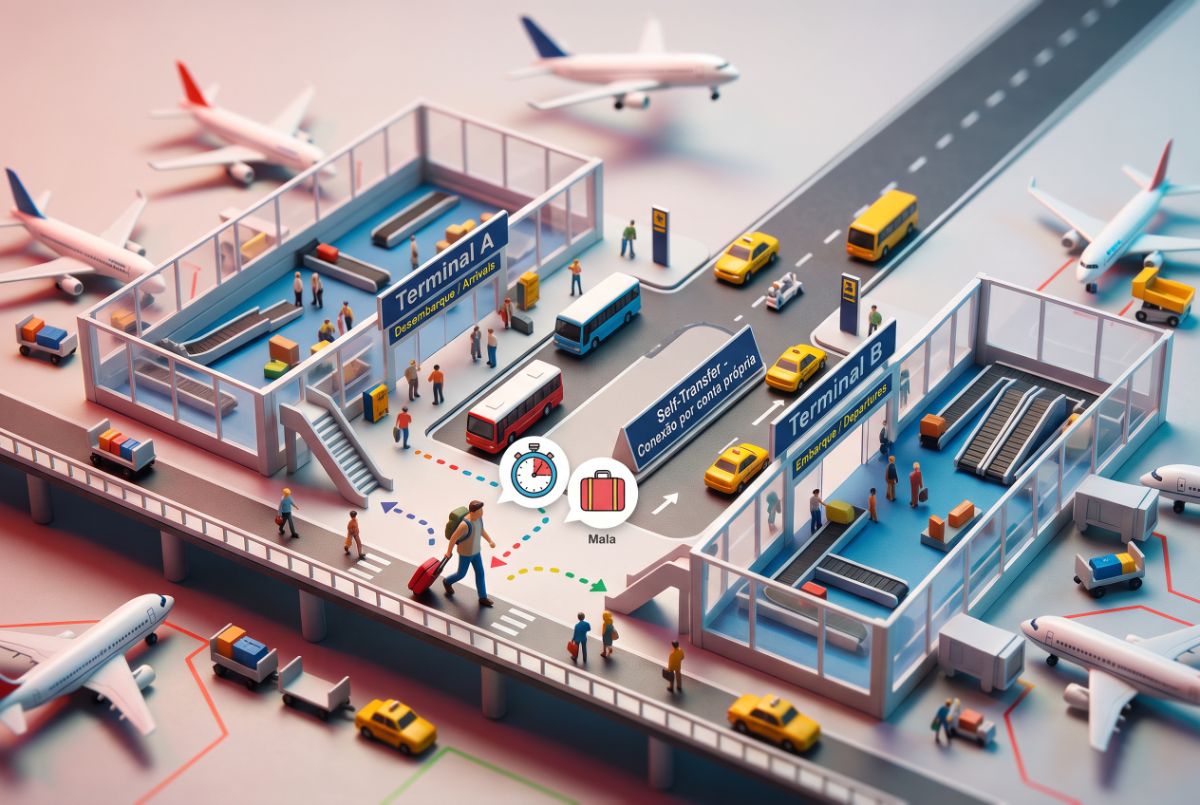
- 3. The Baggage Carousel Bottleneck: With checked luggage on a self-transfer, your bags do not move between planes. You must deplane, clear border control, wait for luggage at the carousel (which can take 30 to 50 minutes), pass through customs, head up to departures, wait in a new check-in line (which closes strictly 60 minutes before departure), and clear security. In busy international hubs, doing this in under two hours is virtually impossible.
- 4. The Landside Transit Visa Trap: Because retrieving checked baggage requires exiting the secure airside transit zone into the public arrivals lobby (landside), you must formally enter the connection country. If you require a tourist or transit visa to enter that nation and do not hold one, the check-in desk at your origin airport will deny you boarding immediately.
3. Crucial Precautions: How to Book and Fly a Self-Transfer Safely
If the fare discount is large enough to justify a self-transfer, implement these practical safety buffers:
- Build Generous Ground Time Buffers:
- Domestic / Regional Routes: Allow a minimum buffer of 3.5 to 4 hours between landing and your next departure.
- International Routes: Budget no less than 5 to 6 hours of clear connection time. If your itinerary involves changing terminals or crossing cities to a secondary airport (such as London Gatwick to Heathrow), make it an overnight layover.
- Travel Carry-On Only (One Bag Travel): Skipping checked luggage eliminates the single biggest risk factor of self-transfers. With only a personal item and an overhead cabin bag—and your mobile boarding pass for Flight #2 already saved to your phone—you never need to visit a baggage carousel, clear landside customs, or stand in departure check-in queues. Simply follow the airside Flight Transfers signs to your next gate.
- Scrutinize Aggregator “Connection Guarantees”: Platforms like Kiwi.com offer proprietary protections (e.g., Kiwi Guarantee) promising to rebook you or issue refunds if delays break your connection. Read the fine print carefully: you are typically required to contact their support team exclusively through their app immediately upon delay, and you may be forced to accept lengthy reroutes (sometimes with 24+ hour layovers).
- Secure Travel Insurance with Trip Delay Provisions: Most standard travel insurance policies explicitly exclude “Missed Connection” coverage when itineraries are booked on separate tickets. However, robust travel policies and premium credit cards offer Trip Delay reimbursement starting after 4 to 6 hours of covered delay, reimbursing unexpected meals, transport, and overnight hotel expenses.
4. When Is a Self-Transfer Worth the Risk?
Self-transfers can be a viable strategy when approached with the right schedule and expectations:
- Massive Cost Discrepancies: If booking separate tickets cuts total travel costs by 50% or more, the savings easily justify the operational risk—provided you budget sufficient buffer time between flights.
- Intentional Multi-Day Stopovers: Turn your layover into a bonus city break. Booking an intentional 24- or 48-hour stay in your transit city removes all time-crunch anxiety while allowing you to explore an additional destination.
- Remote Island and Regional Routes: When flying to smaller islands or regional airfields in Greece, Southeast Asia, or South America, local low-cost carriers often do not maintain interline agreements with major transatlantic or transpacific airlines. Booking separate tickets is often the only way to reach those destinations.
Essential Self-Transfer Street Smarts
Set Up Push Alerts on Both Airline Apps: Download the mobile applications for both carriers and enable live flight notifications. Airlines often shift departure schedules weeks or days in advance. Catching a schedule change early gives you time to adjust your connection window before no-show penalties apply.
Double-Check Three-Letter Airport Codes: Never assume a connection occurs within the same facility simply because the city name matches. In multi-airport metropolitan hubs (such as Tokyo NRT vs. HND, Paris CDG vs. ORY, or New York JFK vs. EWR), a self-transfer often requires an overland journey of 30 to 60 miles through heavy highway traffic.
Authoritative Passenger Rights & Flight Portals
Review official consumer protection rules, baggage conventions, and air passenger rights through recognized resources:
- Review international passenger guidelines and baggage transfer agreements via the International Air Transport Association (IATA).
- Check passenger delay compensation criteria and airline duties under European Union Official Air Passenger Rights (EC 261/2004).
- Verify airline cancellation dashboards and consumer protections at the U.S. Department of Transportation Aviation Consumer Support.


Post Comment