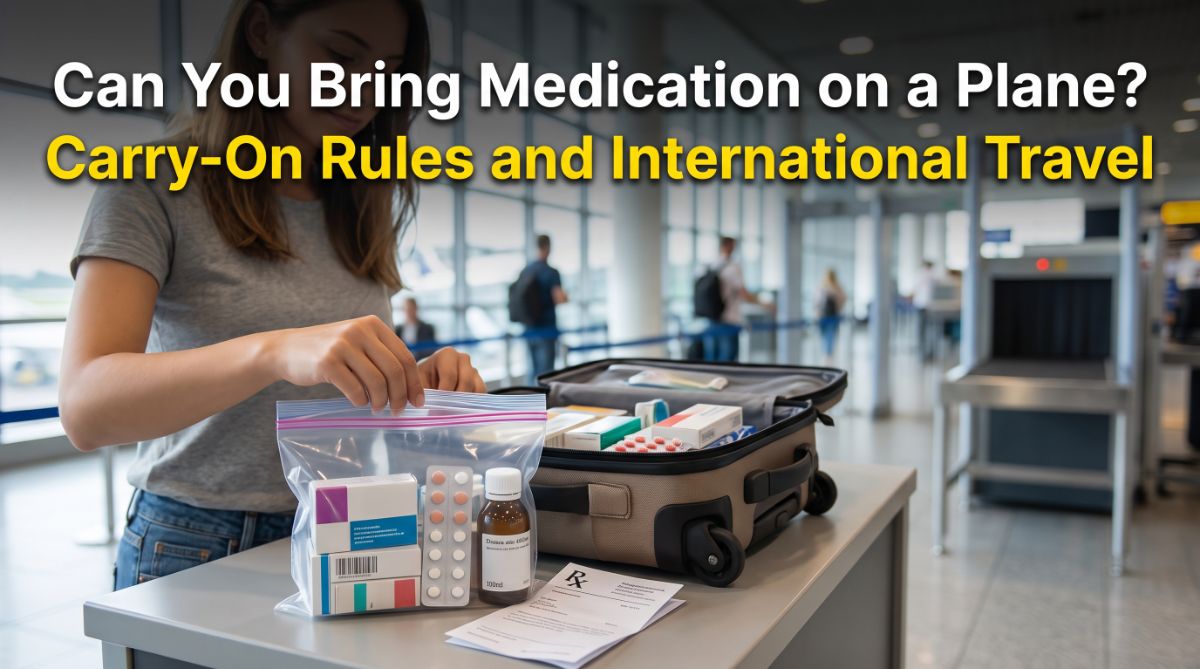
Can You Bring Medication on a Plane? Carry-On Rules and International Travel [2026 Guide]
Packing essential prescriptions for an upcoming flight often sparks immediate travel anxiety: “Can I bring my prescription pills and liquid medications in my carry-on bag, or will TSA confiscate them at airport security?” Whether managing daily treatments—such as blood pressure medication, diabetes care, thyroid pills, or asthma inhalers—relying on occasional pain relievers, traveling with temperature-sensitive biologics, or carrying controlled substances like ADHD stimulants, the fear of airport checkpoint delays or foreign customs seizures is completely understandable.
The foundational rule of civil aviation security is unambiguous: always pack vital medications in your carry-on luggage or personal item, never in checked bags under the plane. Placing critical prescriptions in the cargo hold exposes them to sub-zero temperatures and severe pressure changes, alongside the persistent risk of lost or delayed luggage stranding you without healthcare in an unfamiliar city. However, gliding through security screening lanes without confrontation requires mastering the TSA’s “medically necessary liquids” exemption, packaging standards, cooling pack protocols, and foreign narcotics bans. This definitive 2026 guide breaks down global security directives, border rules, and practical packing strategies to keep your healthcare intact while in transit.
Flying with Medication: Screening Rules by Drug Category
Compare security screening rules, documentation needs, and container limits across all major medical items:
| Medication Category | Allowed in Carry-On? | Doctor’s Note / Prescription Required? | Packaging Condition | Airport Security (TSA/CATSA/EU) Protocol |
|---|---|---|---|---|
| Solid Pills & Capsules (OTC / Rx) | Yes (Unlimited quantity) | Recommended, but not legally required for standard domestic flights. | Original amber pharmacy bottle with patient name and dosage clearly printed. | Stays inside your carry-on backpack or roller bag during X-ray screening. |
| Medically Necessary Liquids & Syrups | Yes (Exempt from 3.4 oz / 100 ml rule) | Strongly recommended for containers exceeding 100 ml (3.4 oz). | Original manufacturer or pharmacy bottle with legible labels intact. | Must be removed from baggage and declared to officers in a separate bin. |
| Controlled Substances (ADHD / Pain / Sedatives) | Yes (Personal medical use only) | Mandatory matching official passenger passport name (+ translation abroad). | Original pharmacy packaging with official dispensing label and prescribing physician. | Subject to inspection; keep documentation instantly accessible for customs agents. |
| Temperature-Sensitive (Insulin / Biologics / Needles) | Yes (Priority cabin carriage) | Mandatory for syringes, auto-injectors, and lancets. | Insulated cooler bag with reusable frozen gel packs (must be frozen solid). | Declare thermal pouch to screening officers prior to X-ray conveyor entry. |
1. Why You Must NEVER Pack Critical Prescriptions in Checked Luggage
Some passengers mistakenly check bulky pill bottles or liquid medications in their checked suitcases to avoid explaining them to airport security officers. This introduces severe health risks:
- Extreme Cargo Hold Temperature Swings: While cargo holds on commercial jetliners are pressurized, unheated sections frequently drop to near-freezing or sub-zero temperatures (-10°C to -30°C) during transatlantic cruise altitudes, or sit baking in 40°C+ tarmac heat during ground delays. Extreme thermal swings can denature complex protein molecules in biologics, render insulin completely ineffective, or cause liquid suspensions to separate chemically.
- The Reality of Lost Baggage: If your checked suitcase misses a connection or ends up on another continent, securing emergency prescription refills in a foreign country—especially across foreign language barriers and strict local narcotics laws—can be extraordinarily difficult, costly, or physically dangerous.
- The Golden Buffer Rule: Pack enough medication in your personal item to cover the entire scheduled duration of your itinerary, plus a mandatory extra 4- to 7-day reserve supply to safeguard against weather delays, missed connections, or unexpected airline strikes.
2. The TSA Liquid Medication Exemption: Beating the 3-1-1 Rule
Every frequent flyer knows the universal airport security liquid standard: containers must be 3.4 ounces (100 ml) or smaller and fit snugly inside a single 1-quart clear zip-top bag. However, medically necessary liquids, gels, and aerosols are formally exempt from the 3-1-1 volume restriction under TSA (USA), CATSA (Canada), and European Union aviation screening regulations.
- What Qualifies as Exempt: Prescription cough syrups, liquid suspensions, eye drops, saline solutions, contact lens fluids, topical prescription creams, and nutritional shakes for medical conditions can exceed the 3.4 oz / 100 ml limit in reasonable quantities for your trip.
- The Declaration Protocol: You must verbally declare exempt liquids to transportation security officers before your bags enter the X-ray tunnel.
- Remove the medical liquids from your backpack.
- Place them into a separate screening bin beside your shoes and electronics.
- Tell the officer: “I have medically necessary liquids over 3.4 ounces to declare.”
- Advanced Screening Procedures: Officers will inspect the bottles visually and may test the exterior surfaces using specialized liquid explosive detectors or vapor test strips. Security officers are generally prohibited from pouring out, sipping, or contaminating the medication during these non-invasive safety checks.
3. Flying with Insulin, Needles, and Cold-Chain Biologics
Managing medications that require strict temperature stability (typically between 2°C and 8°C / 36°F to 46°F)—such as insulin pens, Humira, Enbrel, or fertility hormones—requires dedicated cooling gear:
- Medical Cooler Bags and Solid Gel Packs: Use a specialized, compact insulated medical travel case fitted with reusable gel ice packs. Under TSA guidelines, gel packs or freezer blocks must be frozen solid when passing through the security checkpoint. If the packs are partially melted, slushy, or contain pooled water, screening officers may subject them to additional scrutiny or confiscate loose water.
- Never Rely on Flight Attendant Galleys: Airline flight attendants are strictly prohibited by airline hygiene guidelines and regulatory mandates from storing passengers’ personal medicines in aircraft galley refrigerators. You must remain entirely self-sufficient in maintaining your medication’s cold chain throughout your flight and layovers.
- Syringes and Auto-Injectors (EpiPens): Unused syringes and injection devices are fully permitted through security checkpoints, provided they are accompanied by injectable medication bearing professionally printed pharmaceutical labels or an official doctor’s authorization letter.
4. Controlled Substances Abroad: Navigating International Narcotics Laws
The single greatest legal hazard when flying with medication is failing to recognize that a valid prescription in your home country does not grant diplomatic immunity abroad. Medications prescribed casually in the US, UK, or Europe can be classified as illegal controlled narcotics in other parts of the world, carrying severe criminal penalties or immediate airport arrest:
- ADHD Stimulants (Adderall, Ritalin, Vyvanse): Medications containing amphetamines or methylphenidate face zero tolerance in countries like Japan and the United Arab Emirates (Dubai). In Japan, bringing Adderall into the country is strictly illegal under the Stimulants Control Law—even with a valid US doctor’s prescription—unless you have secured advance official import permission (Yakkan Shoumei) from Japan’s Regional Bureau of Health and Welfare weeks prior to flying.
- Pain Relievers & Opioids (Codeine, Tramadol): Common over-the-counter painkillers in North America or the UK that contain low doses of codeine are strictly prohibited in the UAE, Egypt, and Greece without prior electronic health ministry approval.
- Medical Cannabis & CBD Products: Despite state-level legalization in the US and parts of Europe, flying internationally with medical marijuana or CBD oils is a federal crime in the vast majority of international jurisdictions, including countries that enforce mandatory prison terms or capital punishment for drug possession (such as Singapore, Indonesia, and Malaysia). Never cross international borders with cannabis-derived products.
- The International Medical Letter: Ask your prescribing physician for a formal letter on clinic letterhead. The document should state your full legal name matching your passport, dates of travel, precise medical diagnoses, daily dosage, and crucially, the generic chemical name (INN – International Nonproprietary Name) of the drug, as brand names vary widely across global markets.
Essential Medication Transit Street Smarts
Ditch the Weekly Pill Organizer for the Flight: While seven-day plastic pill organizers are convenient for home use, traveling internationally with unlabeled, loose pills mixed into plastic compartments looks deeply suspicious to customs agents and sniffer dogs. Always transport your medications in their original amber pharmacy bottles displaying your name, the prescribing doctor, pharmacy phone number, and exact refill details.
Recalibrate Dosing Across Time Zones: Crossing six to twelve time zones disrupts continuous dosing intervals for medications like blood thinners, oral contraceptives, or basal insulin. Consult your physician or travel clinic pharmacist at least two weeks before departure to map out an adjusted hourly schedule. Keep your wristwatch set to your home time zone during transit to track your dosing intervals accurately until you arrive.
Authoritative Aviation & Health Resources
Verify official screening directives, liquid declarations, and international travel health advisories via authorized portals:
- Review medical liquid exceptions and screening guidelines on the Transportation Security Administration (TSA – Disabilities & Medical Conditions).
- Check international travel health and prescription transport advice via CDC Travelers’ Health Official Guidelines.
- Review European Union airport security rules and liquid standards at the European Commission Aviation Security Portal.


Post Comment