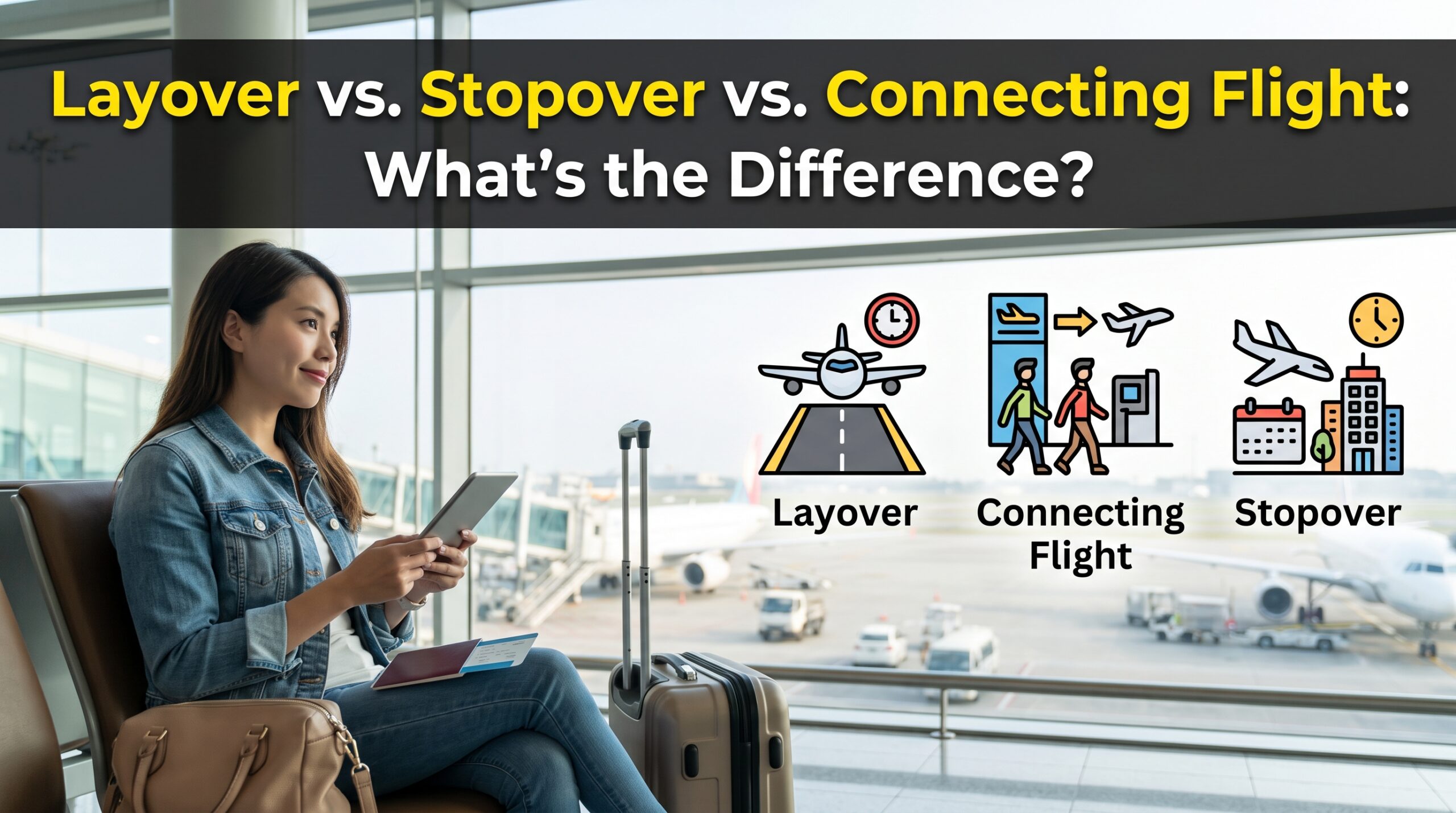
Layover vs. Stopover vs. Connecting Flight: What’s the Difference?
Booking a multi-leg flight ticket can quickly become confusing. While browsing airfare search engines or airline websites, travelers frequently encounter terms like “1 stop”, “aircraft change”, “layover”, or “extended transit”. Many passengers treat these words as interchangeable synonyms, but confusing them can lead to major travel headaches—such as rushing off a plane only to discover you were supposed to stay in your seat, missing an onward connection because you didn’t budget time to switch terminals, or failing to realize your checked bags must be rechecked.
Understanding the exact distinction between a layover, a connecting flight, and a stopover (along with direct flights that make a technical stop) gives you complete control over your route. More importantly, it unlocks one of the best travel hacks in commercial aviation: visiting two destinations for the price of one without purchasing an extra ticket. This comprehensive 2026 aviation guide clarifies technical differences, outlines what happens to your checked luggage, and explains how to pick the ideal transit window for your journey.
Technical Comparison: Layover vs. Stopover vs. Direct Flight with a Stop
Compare operational differences, durations, and baggage policies across each type of intermediate flight stop:
| Feature | Layover / Connection | Stopover (Extended Stay) | Direct Flight (with a Technical Stop) |
|---|---|---|---|
| Do You Change Planes? | Yes. You deplane and board another aircraft. | Yes. You take a different flight days later. | No. Same plane, same flight number. |
| Standard Duration | 1 to 23h59 (Under 24 hours) | 24 hours or longer (1 to 7+ days) | 30 to 60 minutes |
| Do You Leave the Aircraft? | Yes, enter airport concourse/transit area. | Yes, exit airport through customs into city. | Generally remain in your seat. |
| Checked Baggage Status | Automatically transferred to next aircraft.* | Claimed at carousel for your hotel stay. | Remains safely in the aircraft cargo hold. |
| Primary Purpose | Airline hub redistribution to route you to destination. | Intentional multi-day sightseeing at no extra fare. | Refueling or dropping off/picking up passengers. |
1. What Is a Layover (or Connecting Flight)?
In industry terms, a layover is the waiting time between two separate flights, while a connecting flight is the secondary aircraft you board to continue your journey. In common travel language, the two terms are used interchangeably.
- The 24-Hour Rule: According to international ticketing standards governed by the International Air Transport Association (IATA), an intermediate transit stop on an international itinerary is officially classified as a layover as long as it lasts under 24 hours (on domestic itineraries within the US or Europe, the threshold is typically under 4 hours).
- How It Works at the Airport: Your first flight lands at a connecting hub (such as London Heathrow, Frankfurt, Doha, or Atlanta). You deplane carrying your cabin baggage, follow signs for Flight Connections / Transfers, pass through security screening if required by local regulations, and locate your onward gate.
- Baggage Handling: If your flights were booked together under a single confirmation code (PNR), your checked luggage is transferred between planes by ground crews. Key Exception: Arriving on an international flight into the United States or Canada requires you to collect your bags at customs and drop them at the transit re-check belt, even if your total layover is only 90 minutes.
2. What Is a Stopover (The 2-in-1 Travel Hack)?
A stopover occurs when an international connection extends beyond 24 hours. Rather than spending a stressful handful of hours in a transit lounge, you intentionally schedule a stay of several days in the hub city before continuing to your final destination.
- Two Cities for the Price of One: Many major global airlines actively encourage stopovers to promote their home hubs and national tourism, allowing you to add an extended stay of 1 to 7 days with zero increase in base airfare. Acclaimed carrier programs include:
- TAP Air Portugal: Free stopover of up to 10 days in Lisbon or Porto.
- Icelandair: Free stopover of up to 7 days in Reykjavik on transatlantic flights.
- Copa Airlines: Up to 7 days in Panama City with no added fare.
- Emirates & Qatar Airways: Discounted hotel and city packages for stays in Dubai or Doha.
- Turkish Airlines: Free 4- or 5-star hotel nights in Istanbul for select transit tickets.
- What Happens to Luggage: Because your layover exceeds 24 hours, checked bags cannot be held in automated airport transit systems. You retrieve your luggage at the arrivals carousel, take it to your hotel, and check it in again when departing on your second flight.
- How to Book: Stopover perks usually cannot be added after a standard ticket has been issued. Use the airline’s official website booking tool by selecting the dedicated “Stopover” tab or the “Multi-City” route selector.
3. What Is a Direct Flight with a Technical Stop?
A persistent point of confusion among flight shoppers is the difference between a non-stop flight and a direct flight:
- Non-Stop Flight: Takes off from Point A and lands at Point B without touching the ground anywhere in between.
- Direct Flight with a Stop: Carries a single flight number (e.g., Flight 102) from start to finish, but touches down at an intermediate airport along the way. In most cases, you do not change planes. The aircraft lands for 45 to 60 minutes to refuel, take on fresh catering, or let intermediate passengers deplane while you remain comfortably in your assigned seat.
4. Choosing Your Connection Time: How Short Is Too Short?
When booking connecting flights, calculating your ground window is crucial to prevent missed flights and lost luggage:
- Minimum Connection Time (MCT): Every airport sets an official Minimum Connection Time (e.g., 45 minutes for domestic transfers, 90 minutes for international-to-domestic). Booking engines will not sell tickets tighter than the MCT, but meeting the technical minimum often leaves zero room for delays.
- Domestic Safe Buffer: Aim for at least 60 to 75 minutes for domestic-to-domestic connections within the same terminal.
- International Safe Buffer: Reserve at least 2 to 3 hours for international connections. This cushion accommodates tarmac taxi delays, passport control queues, and potential terminal transfers on automated airport trains.
- Baggage Transfer Buffer: Tight connections under 50 minutes at massive mega-hubs carry elevated risks of your luggage missing the transfer, even if you manage to board the aircraft before the doors close.
Essential Aviation Transit Street Smarts
Check Your Baggage Claim Tag (The 3-Letter Code): When the check-in agent affixes the adhesive tag to your rolling bag at your departure airport, check the bold three-letter airport code printed at the top. If it displays your final destination (e.g., HND, CDG, JFK), your bags are checked through the entire layover. If it shows the intermediate transit hub, you must pick them up at the carousel.
Single Ticket vs. “Self-Transfer”: Third-party flight aggregator websites often sell “self-transfer” bookings—combining two budget airlines on separate tickets to display a low fare. This is not an official airline connection. If the first flight is delayed by 10 minutes and you miss the second, the second carrier marks you as a no-show and owes you nothing. For peace of mind, book all segments under a single booking reference (PNR).
Authoritative Aviation & Passenger Resources
Verify airline booking rules, passenger rights, and transit standards via verified aviation portals:
- Review international ticketing standards and transit rules on the International Air Transport Association (IATA) Portal.
- Explore consumer protections for flight delays and connections via the U.S. Department of Transportation Aviation Consumer Support.
- Check European passenger connection rights and transit rules on the European Union Air Passenger Rights Guide.


Post Comment