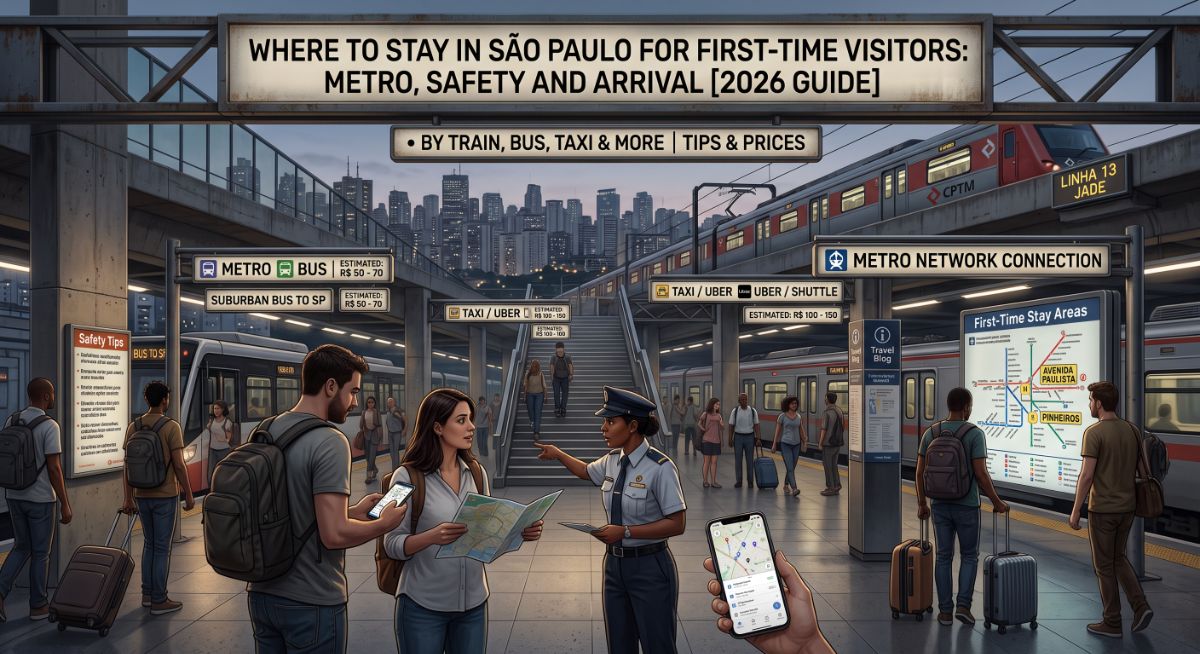
Where to Stay in São Paulo for First-Time Visitors: Metro, Safety and Arrival [2026 Guide]
Arriving in São Paulo for the first time can easily overwhelm the senses. As South America’s largest metropolis—a sprawling urban giant of over 12 million residents—the city unfolds in endless horizons of concrete towers, energetic cultural enclaves, world-class gastronomy, and notorious highway bottlenecks. For international travelers landing at Guarulhos (GRU) or Congonhas (CGH), choosing where to base yourself is not merely a question of room aesthetics or hotel loyalty points: it is the single decision that determines whether your trip feels like a seamless urban discovery or an exhausting battle against gridlocked traffic.
A frequent error among first-time arrivals is booking an attractive, budget-friendly room in neighborhoods that lack direct mass transit or require navigating unlit, deserted streets after dark. São Paulo is a patchwork of micro-cities, where walking across a single municipal avenue can shift your surroundings from a secure, pedestrian-friendly boulevard lined with 24-hour pharmacies into a deserted commercial zone prone to opportunistic street crime. To make your trip efficient, safe, and enjoyable, you must anchor yourself near the backbone of the city: the modern, clean, and reliable São Paulo Metrô. This comprehensive 2026 accommodation guide breaks down the best neighborhoods for first-timers, analyzes safety profiles, details airport arrival transit, and provides strategic recommendations to guarantee a smooth stay.
São Paulo Neighborhood Comparison: Best Bases for First-Timers
Compare key districts across safety, metro connectivity, dining culture, and airport access:
| Neighborhood / District | Safety Profile | Primary Metro Access | Vibe & Lifestyle | Best For / Verdict |
|---|---|---|---|---|
| Avenida Paulista / Bela Vista | High (Heavy police presence) | Line 2 (Green) & Line 4 (Yellow) | Cultural, vibrant, 24/7 commercial buzz | The #1 Base for First-Timers. Maximum transit connectivity and cultural access. |
| Jardins (Cerqueira César) | Very High (Upscale residential) | Line 2 (Consolação / Trianon-Masp) | Leafy, upscale, boutique dining, tree-lined | Luxury seekers, food lovers, and quiet evening strolls. |
| Pinheiros | Moderate to High | Line 4 (Yellow – Fradique Coutinho) | Hipster, trendy cafes, indie boutiques, craft bars | Couples, solo travelers, and nightlife enthusiasts. |
| Itaim Bibi / Vila Olímpia | Very High (Corporate financial hub) | Poor (No direct Metrô; CPTM rail only) | Modern, luxury dining, corporate skyline | Business travelers; relies heavily on Uber/taxis. |
| Centro Histórico (Downtown Core) | Low (Especially after 6:00 PM) | Line 1 (Blue) & Line 3 (Red) | Historic landmarks, architectural heritage | Avoid for lodging. Visit by day; high petty crime risk after dark. |
1. Avenida Paulista & Bela Vista: The Unbeatable First-Time Hub
For any traveler landing in São Paulo for the first time, the corridor along and immediately adjacent to Avenida Paulista represents the benchmark for convenience, security, and urban energy. Functioning as the city’s symbolic cultural and financial heart, this 2.8-kilometer thoroughfare sits on a high ridge that naturally bridges the historic downtown with the affluent southwest zones.
- Dual Metro Line Super-Hub: Avenida Paulista is anchored by Line 2 (Green) running directly underneath it (stations: Brigadeiro, Trianon-MASP, and Consolação). Crucially, Consolação connects via an underground pedestrian concourse to Line 4 (Yellow) at Paulista Station. The Yellow Line is São Paulo’s driverless, hyper-modern subway artery, rocketing you directly to the culinary pockets of Pinheiros or historic Luz Station in under 10 minutes.
- Safety & Walkability: Paulista boasts one of the densest police and private surveillance presences in Brazil. The sidewalks remain bustling, well-lit, and active well past midnight with theatergoers, university students, and restaurant patrons. Essential amenities like large chain pharmacies (Droga Raia, Drogasil), banks, supermarkets (Pão de Açúcar), and currency exchange counters are found every few blocks.
- Cultural Highlights on Your Doorstep: Staying here puts you within walking distance of MASP (São Paulo Museum of Art), Japan House, IMS Paulista (Instituto Moreira Salles), and Sesc Paulista with its panoramic rooftop terrace. On Sundays, the entire avenue closes to vehicle traffic, transforming into a massive, family-friendly outdoor pedestrian park filled with live music and street art.
2. Jardins: Leafy Elegance, Luxury, and World-Class Dining
Positioned directly downhill on the southern slope of Avenida Paulista, Jardins (encompassing the micro-neighborhoods of Cerqueira César, Jardim Paulista, and Jardim América) is the city’s most prestigious residential and luxury shopping district.
- Atmosphere & Pedestrian Comfort: Unlike the high-rise commercial density of Paulista, Jardins features shaded, tree-lined streets, boutique apartment buildings, and wide sidewalks. It is home to Rua Oscar Freire—Latin America’s premier luxury fashion strip—and an extraordinary density of internationally acclaimed restaurants, including D.O.M., Maní, and Fasano.
- Transit Considerations: If you base yourself in upper Jardins (within 4 to 6 blocks of Paulista, between Alameda Santos and Rua Estados Unidos), you retain effortless walking access to the Line 2 (Green) metro stations. As you venture further south toward Ibirapuera Park, metro connectivity drops, meaning you will rely primarily on short Uber rides for moving between attractions.
- Safety Profile: Jardins is widely considered one of the safest pedestrian zones in the capital. Private security kiosks sit on residential corners, and streets remain calm and pleasant for evening walks to dinner. Standard precautions regarding casual smartphone use on street corners still apply.
3. Pinheiros: The Epicenter of Trend, Nightlife, and Coffee Culture
If you prefer craft cocktail lounges, independent design boutiques, third-wave specialty coffee shops, and a bohemian-chic neighborhood vibe over corporate high-rises, Pinheiros is the premier alternative for modern travelers.
- Direct Yellow Line Integration: Pinheiros is served by Line 4 (Yellow) through stations like Fradique Coutinho and Faria Lima. This line connects you to Avenida Paulista in roughly 6 minutes without transfers, providing rapid access to the rest of the city while allowing you to retreat to a relaxed residential base.
- Culinary and Bar Scene: Streets like Rua dos Pinheiros and Rua Guajuviras are packed with outstanding casual-to-fine dining spots, artisanal bakeries, and vibrant watering holes. It also sits directly adjacent to Vila Madalena, the city’s bohemian nightlife capital famous for its open-air samba bars (botecos) and the vibrant murals of Beco do Batman.
- Safety Protocols: Pinheiros is lively and generally safe during the afternoon and evening. However, as the night progresses past 11:00 PM around bar clusters, opportunistic pickpocketing and smartphone snatching by individuals on bicycles increase. Use rideshares directly to your hotel door after late dinners.
4. Areas to Avoid for Lodging: The Downtown Core Trap
One of the most dangerous travel pitfalls in São Paulo is being deceived by low room rates in the Centro Histórico (República, Sé, and Anhangabaú). Online listings often showcase grand neoclassical facades, renovated lofts, and historic architecture at a fraction of the cost of hotels in Jardins or Paulista.
- Daytime Wonder, Nighttime Vulnerability: While historic downtown is rich in cultural treasures—such as the Theatro Municipal, Farol Santander, and the São Paulo Cathedral—the area experiences severe socioeconomic urban decay. After office workers and retailers shutter their doors around 6:00 PM, the streets empty rapidly.
- Elevated Security Risks: Downtown borders areas with substantial unhoused populations and open-air drug scenes (most notably Cracolândia, which periodically shifts across central districts). Navigating these streets after dark involves a high risk of armed muggings or aggressive harassment. First-timers should strictly visit the Centro during bright daylight hours via the metro and base their lodging securely in Paulista, Jardins, or Pinheiros.
5. Arrival Logistics: Getting from GRU and CGH to Your Hotel
Understanding which airport you arrive at dictates your transit strategy into your chosen neighborhood:
From Guarulhos International Airport (GRU)
- Express Train (CPTM Expresso Aeroporto): Running from the rail platform near Terminal 1 directly to Luz Station and Palmeiras-Barra Funda for just R$ 5.00. From Luz, you transfer directly to Line 4 (Yellow), taking you straight down to Paulista or Pinheiros without touching highway traffic. (Best for travelers landing during weekday rush hour with light bags).
- Rideshare (Uber / 99): An Uber from GRU to Avenida Paulista or Jardins typically costs between R$ 80 and R$ 130 (~$15 to $25 USD). It takes 45 minutes on off-peak weekends, but easily stretches to 1 hour and 45 minutes on rainy weekday evenings. Request Uber Comfort or Uber Black to ensure adequate luggage capacity.
- Airport Bus Service: Dedicated executive coaches run direct express routes between GRU and Avenida Paulista, making convenient scheduled drop-offs outside major hotel clusters.
From Congonhas Airport (CGH)
Congonhas is São Paulo’s domestic hub, located right inside the urban grid. It does not have direct underground metro platforms, but its proximity makes ridesharing extremely affordable and fast. An Uber from CGH to Jardins, Itaim Bibi, or Avenida Paulista takes roughly 15 to 25 minutes outside of peak traffic hours, costing between R$ 25 and R$ 45 (~$5 to $9 USD).
First-Time Arrival Pro-Tips for São Paulo
The “Front-Desk Safe” Transit Rule: The São Paulo Metrô is impeccably clean, heavily guarded, and vastly more reliable than surface traffic. However, inside subway stations and along bustling avenues, keep your phone in your front pocket or zipped cross-body bag. Step inside a shop, café, or station ticketing lobby whenever you need to consult maps or order an Uber.
Download Both Uber and 99: While Uber works reliably throughout São Paulo, 99 is Brazil’s leading local competitor. Having both apps active ensures you can price-compare during surge pricing periods and access 99Taxi, which is legally permitted to use São Paulo’s dedicated municipal bus corridors to bypass gridlocks.
Official Transit & Tourism Resources
Consult verified city portals for operational network updates, line maps, and tourist alerts:
- Review live train statuses, station directories, and maps at the São Paulo Metrô Official Web Portal.
- Check regional rail lines and express airport timetables via the CPTM Official Rail Operator Site.
- Explore cultural events, city guides, and neighborhood listings on the Official São Paulo Tourism Board (Cidade de São Paulo).


Post Comment