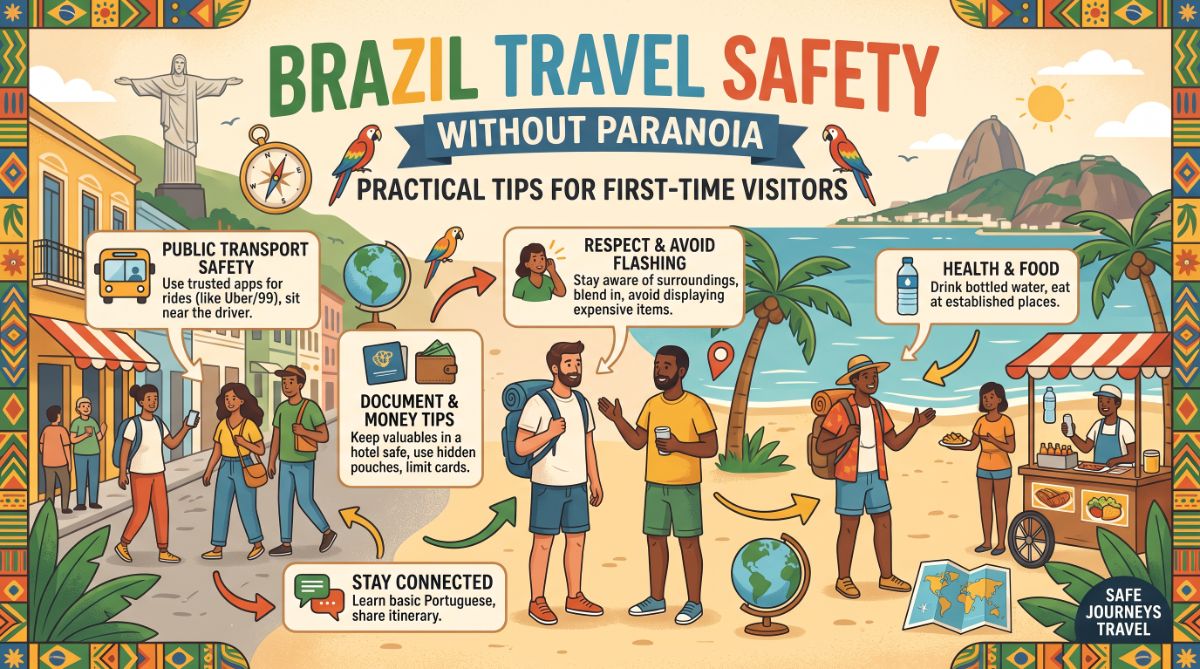
Brazil Travel Safety Without Paranoia: Practical Tips for First-Time Visitors [2026 Guide]
Planning a trip to Brazil often triggers a polarizing wave of advice. Friends warn you about worst-case scenarios, online forums present horror stories about violent crime, and sensationalized news headlines make it sound like stepping onto a Brazilian sidewalk is an immediate hazard. On the opposite extreme, seasoned travelers talk about Brazil as the warmest, most welcoming, and culturally vibrant country they have ever visited. For a first-time visitor, this contrast creates an uncomfortable dilemma: how do you enjoy the beaches, samba nights, and historic plazas without spending your entire holiday in a state of high-strung paranoia?
The truth about travel safety in Brazil lies between hyper-vigilance and careless indifference. Millions of international tourists visit destinations like Rio de Janeiro, São Paulo, Salvador, and the Pantanal every year without experiencing any negative incidents. The key is understanding that tourist-facing crime in Brazil is overwhelmingly opportunistic rather than targeted or aggressive. When you eliminate the easy opportunity, you eliminate the risk. Adopting intuitive, street-smart local habits lets you relax, connect with locals, and enjoy the country’s legendary hospitality with total confidence. This comprehensive guide outlines the exact, practical protocols to stay completely safe across Brazil in 2026 without sacrificing the joy of your trip.
Paranoia vs. Reality: Calibrating Your Safety Radar
A realistic assessment of common tourist fears versus the effective, low-stress habits locals actually use:
| Travel Scenario | The Paranoid Mistake | The Dangerous Carelessness | The Balanced “Smart Local” Habit |
|---|---|---|---|
| Smartphone Usage | Never taking the phone out, even for a quick photo at a monument. | Walking down busy avenues texting with the phone held loosely in hand. | Step inside a pharmacy, café, or shop entrance to check maps or order rides. |
| Day at the Beach (Rio / Northeast) | Refusing to go to the beach or swim out of fear of leaving belongings. | Leaving laptops, passports, and DSLR cameras on your beach towel unattended. | Rent a chair near a licensed tent (barraca); bring only a towel, sunscreen, and one card. |
| Nightlife & Dining | Staying locked in the hotel room after 7:00 PM every single evening. | Wandering through empty, dimly lit side streets or walking across dark beaches. | Take door-to-door Ubers between restaurants and lively, well-lit social hubs. |
| Money & Documents | Wearing a bulky money belt that prints through your clothes and looks obvious. | Carrying your original passport, all credit cards, and piles of cash in your wallet. | Keep passport/reserve cards in the room safe; pay on the street via phone or one card. |
1. Demystifying Street Crime: The Law of Opportunity
The vast majority of violent crime statistics in Brazil reflect conflicts between organized factions operating in deep peripheral settlements (favelas) and rural zones far removed from where travelers live, eat, and sightsee. In tourist districts like Copacabana and Ipanema in Rio, or Pinheiros and Vila Madalena in São Paulo, violent confrontations against tourists are rare.
Instead, the primary risk tourists face is petty, opportunistic theft. This includes snatch-and-grab thefts of smartphones by teenagers on bicycles, pickpocketing during crowded street festivals (like Carnival or New Year’s celebrations), and distraction scams. Opportunistic thieves do not look for a fight; they look for a clean, effortless getaway. If you do not offer an easy target, they simply move past you.
2. The “Step-Inside” Rule: Managing Your Smartphone
Modern smartphones are high-value, easily liquidated commodities worldwide. In major Brazilian cities, holding a $1,200 device loosely at waist height while standing near an avenue curb is practically an invitation for a passing cyclist or electric scooter rider to snatch it cleanly from your fingers.
- The Core Habit: Whenever you need to check Google Maps, respond to an email, or summon a rideshare, do not stop on the middle of the sidewalk. Step two paces inside the entryway of a storefront, a pharmacy (Drogaria), a hotel lobby, or a subway entrance. Look at your phone comfortably, put it away in your front pocket, and step back outside.
- Taking Photos: You can take photos at tourist attractions. Just observe your surroundings first: see if other people and families are taking pictures, look left and right for cyclists, hold your phone firmly with two hands, take the shot, and return the phone to your pocket or zipped cross-body bag.
- Rideshare Window Safety: When riding in an Uber, taxi, or bus through heavy stop-and-go traffic, keep the car windows rolled up—especially when waiting at red lights. Scrolling through your phone next to an open car window creates an angle for opportunistic reaching from outside.
3. Mastering Beach Days with Ease
Brazil’s coastal culture is effortless, democratic, and fun. The beaches of Rio de Janeiro, Bahia, and Santa Catarina are public living rooms. You should not let fear keep you from enjoying them.
- Rent from a Marked Beach Tent: Pick a spot near a numbered beach station (Posto) and rent an umbrella and chair from a branded beach vendor (barraca). These vendors look out for their regular customers and maintain order in their perimeter.
- The Lean Beach Kit: Never take your passport, primary credit cards, laptop, or heavy camera gear onto the sand. Take only what you need: swimwear, Havaianas flip-flops, a towel (or canga), sunscreen, and either a single payment card or a mobile device set to tap-to-pay tucked into your shorts pocket.
- Going for a Swim: If you are traveling solo and want to go into the ocean, leave your small belongings directly beside your trusted barraca owner and ask politely: “Pode dar uma olhadinha?” (Can you keep an eye on this?). In most cases, neighbors and vendors are happy to help watch a simple towel and sandals.
4. Wardrobe & Blending In: The Anti-Ostentation Rule
One of the easiest ways to invite unnecessary scrutiny is dressing in a way that telegraphs luxury. Brazilian street fashion is informal, relaxed, and egalitarian across almost all social classes, particularly during warmer months.
- What to Leave at Home: Expensive jewelry, heavy gold chains, designer handbags with prominent logos, and luxury watches (including high-end smartwatches) should remain in your home country. Wearing an expensive watch on a standard walking tour immediately brands you as an uninformed target.
- What to Wear Instead: Standard cotton or linen shirts, casual shorts, basic sneakers, and simple sandals are universal. When you dress simply, you blend in with the local crowd, allowing you to walk through public spaces without drawing attention.
5. Urban Nightlife: Moving Safely After Dark
Experiencing Brazil’s culinary landscape, craft cocktail bars, and live music venues is an essential part of any trip. You do not need to retreat to your hotel once the sun goes down; you simply need to change your transit method.
- Door-to-Door Ridesharing: Use Uber or 99 exclusively after dark. Even if your dinner venue is only six blocks away, avoid walking through deserted, poorly lit residential cross-streets at 11:00 PM. An app ride costs very little and drops you right in front of the illuminated venue entrance.
- Avoid Empty Beaches and Dark Waterfronts: While coastal promenades with open kiosks and police patrols are pleasant for evening walks, never wander onto the dark sand of urban beaches late at night. These unmonitored spaces are where petty robberies are most likely to occur.
Non-Paranoid Golden Rules Every Traveler Should Know
Never Resist in the Unlikely Event of an Encounter: If you ever find yourself confronted by an opportunistic mugger demanding your phone or wallet, hand them over immediately without arguing, hesitating, or fighting back. Items can be replaced through travel insurance; physical well-being cannot. Comply calmly and let them walk away.
Two-Card Financial Setup: Carry one multi-currency card (like Wise or Revolut) with a small spending limit for your daily activities, and keep your primary home credit card and backup debit card locked in your hotel safe. If your daily card is ever compromised or misplaced, your primary funds remain completely protected.
Official Safety Resources & Tourist Police
Keep these verified resources and emergency numbers saved on your phone:
- In an emergency anywhere in Brazil, dial 190 for the Military Police (Polícia Militar) or 192 for Medical Emergencies (SAMU).
- In major tourist hubs like Rio de Janeiro, seek assistance from the dedicated Tourist Police (DEAT – Delegacia Especial de Apoio ao Turismo) via the Visit Brasil Official Portal.
- Review safety advisories and consular assistance through the U.S. Department of State Brazil Country Information Page.
Post Comment