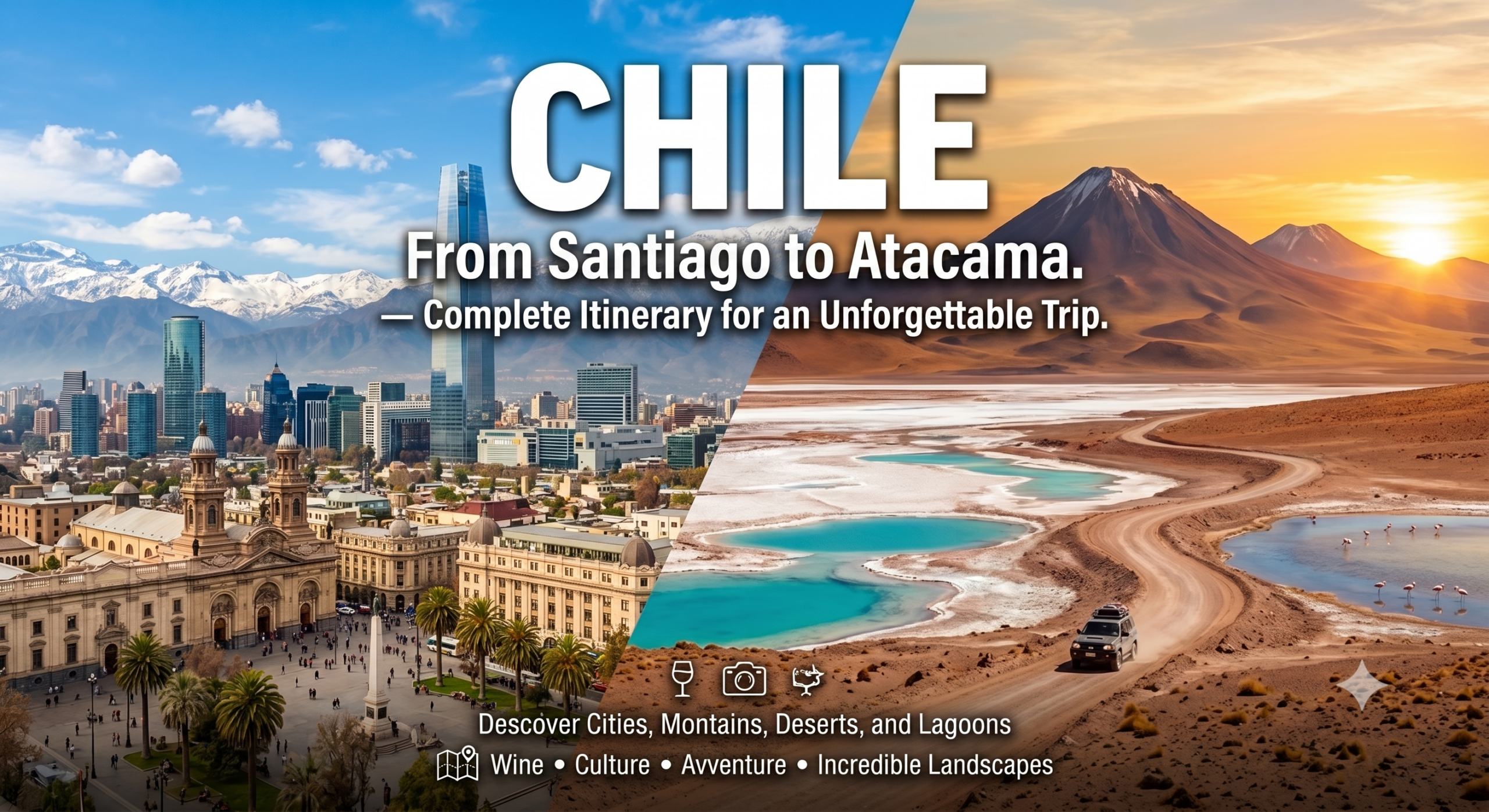
Chile: From Santiago to Atacama — A Complete Itinerary for an Unforgettable Trip
Chile, an elongated gem in South America, offers breathtaking landscapes that vary from the world’s driest desert to eternal glaciers in Patagonia. For many Brazilian travelers, the combination of Santiago, the vibrant capital, with the mystical and surreal beauty of the Atacama Desert, represents a dream trip. This complete itinerary is designed to guide you through this unforgettable journey, from planning to execution, ensuring you make the most of every moment. If you’re looking for a Chile Santiago Atacama itinerary, this is your definitive guide.
Why Choose Santiago and Atacama?
The Chilean capital, Santiago, is the perfect entry point for visitors to the country. Nestled between the imposing Andes Mountains and the Coastal Range, the city pulsates with culture, history, first-class gastronomy, and a lively nightlife. It’s the ideal base for exploring nearby wineries or even ski resorts (in winter).
Meanwhile, the Atacama Desert, located in northern Chile, is a spectacular contrast. One of the driest places on the planet, Atacama surprises with its colorful lagoons, majestic volcanoes, steaming geysers, and a night sky that is a showstopper in itself. It’s a destination for adventure and contemplation, where nature reveals itself in its most extreme and beautiful form.
Arriving in Santiago: First Contact with Chile
Flights to Santiago
Most international flights to Chile land at Comodoro Arturo Merino Benítez International Airport (SCL), in Santiago. Airlines such as LATAM, Sky Airline, and JetSMART operate direct routes from Brazil to Santiago. It is recommended to research and purchase tickets in advance to secure better prices. Always remember to check each airline’s baggage policies, as low-cost carriers often have more restrictive rules.
Transfer from the Airport to Santiago City Center
Getting to Santiago city center or your hotel is simple. Options include:
- Bus (Centropuerto/TurBus): These are the most economical options. They depart frequently from the airport and go to central metro stations, such as Los Héroes. The cost is affordable, around BRL 25.00 (approx. US$ 5.00) per person, but prices may vary. Consult the official website for updated schedules and prices.
- Shared Transfer (Delfos/TransVip): Great for those traveling alone or as a couple. It takes you directly to your hotel but may make several stops. The average cost is BRL 75.00 (approx. US$ 15.00) per person, but check current prices.
- Taxi/Ride-sharing Apps: Faster and more comfortable options, ideal for groups or with a lot of luggage. Official taxis are safe and have a meter. Apps like Uber and Cabify also operate in Santiago. A ride can cost an average of BRL 150.00 (approx. US$ 30.00), depending on the destination and traffic.
Tip: To avoid scams, always use official taxis or pre-booked transfers. Never accept transportation offers from unidentified individuals inside the airport lounge.
Exploring Santiago: 3 to 4 Days of Cultural Riches
Where to Stay in Santiago
The best areas to stay are Providencia, Las Condes, and the Historic Center. Providencia and Las Condes are more modern and safe, with many restaurant options and easy access to the metro. The Historic Center is ideal for those who want to be close to the main tourist attractions but can be more bustling.
What to Do in Santiago
A Chile Santiago Atacama itinerary starts with the capital. Dedicate 3 to 4 days to explore Santiago and its surroundings:
Day 1: Historic Center and Viewpoints
- Plaza de Armas: The heart of the city, with the Metropolitan Cathedral, Post Office, and the National Historical Museum.
- Palacio de La Moneda: Seat of the Chilean government, watch the changing of the guard (on specific days, consult the official website).
- Cerro Santa Lucía: An urban park with panoramic views of the city and the Andes.
- Cerro San Cristóbal: Go up by funicular or cable car for the most spectacular view of Santiago, especially at sunset. At the top, you’ll find the image of the Immaculate Conception Virgin and a zoo.
Day 2: Culture and Gastronomy
- Lastarria and Bellavista Neighborhoods: Explore charming streets, art galleries, cafes, and restaurants. Bellavista is famous for its nightlife and La Chascona, Pablo Neruda’s house-museum.
- Mercado Central and La Vega Central: Experience local flavors, fresh seafood, and the vibrant energy of the markets. Be mindful of your belongings.
- Museum of Fine Arts or Museum of Memory and Human Rights: For a cultural and historical immersion.
Day 3: Excursions Near Santiago
- Valparaíso and Viña del Mar: A UNESCO World Heritage site, Valparaíso charms with its colorful houses, funiculars, and street art. Viña del Mar is a more elegant coastal city. The tour lasts all day and can be done by bus (Terminal Alameda or San Borja) or with organized excursions.
- Wineries: Chile’s central region is famous for its wines. Concha y Toro, Santa Rita, and Undurraga are some of the most popular wineries for tours and tastings. Book in advance.
- Cajón del Maipo and Embalse El Yeso: For nature lovers, a trip through the Andes mountains, with stunning landscapes and the turquoise El Yeso reservoir. Check access conditions, especially in winter.
From Santiago to Atacama: The Journey Continues
After exploring Santiago, it’s time to prepare for the adventure in the Atacama Desert.
Flights from Santiago to Calama
There is no airport directly in San Pedro de Atacama. The closest airport is El Loa Airport (CJC), in Calama. Airlines such as LATAM, Sky Airline, and JetSMART offer frequent flights from Santiago to Calama, with an approximate duration of 2 hours. It is recommended to buy airline tickets in advance, as they can be a significant cost in your Chile Santiago Atacama itinerary.
Transfer from Calama to San Pedro de Atacama
From Calama, you will need a transfer to San Pedro de Atacama, which is about 100 km (62 miles) away (approximately 1h30 of travel). There are several companies that offer shared or private transfers, such as Transvip and Pampa. The cost of a shared transfer ranges from BRL 75.00 to BRL 100.00 (approx. US$ 15.00 to US$ 20.00) per person, but always confirm updated prices and make your reservation before traveling. Many hotels in San Pedro also offer or recommend transfer services.
Atacama Desert: 4 to 5 Days of Natural Wonders
San Pedro de Atacama is the small village that serves as a base for exploring the desert. It’s a charming village, with dirt roads, adobe houses, and a rustic and welcoming atmosphere.
Acclimatization and Important Tips
Atacama is at a high altitude (San Pedro is about 2,400m / 7,874 ft, and many tours go much higher). It is crucial to acclimatize. Arrive and rest on the first day. Drink plenty of water, avoid alcohol and heavy meals. Sunscreen, hat, sunglasses, and layered clothing are essential, as the thermal amplitude is significant.
What to Do in Atacama
A Chile Santiago Atacama itinerary wouldn’t be complete without the magic of the desert. Prepare for incredible tours:
- Moon Valley (Valle de la Luna) and Death Valley (Valle de la Muerte): Classic sunset tour, with lunar landscapes and dunes for sandboarding.
- Highland Lagoons (Miscanti and Miñiques): Vibrantly colored lagoons surrounded by volcanoes, home to flamingos and vicuñas. They are at a considerable altitude, be prepared.
- Geysers El Tatio: Wake up before sunrise to see the steam columns of the geysers in full activity. It is the third largest geyser field in the world. Intense cold guaranteed!
- Hidden Lagoons of Baltinache or Ojos del Salar: Saltwater pools where you can float, similar to the Dead Sea. A unique experience.
- Puritama Hot Springs: Natural thermal pools in the middle of the desert, perfect for relaxing after a day of tours.
- Astronomical Tour: Atacama has one of the clearest skies in the world for stargazing. Unmissable!
- Salar de Tara or Red Rocks (Piedras Rojas): Longer and more remote tours, but which reward with stunning landscapes and impressive rock formations.
Tip: Most tours are done with local agencies. Research and book your tours in San Pedro; there are many options. Compare prices and what is included (meals, entrance fees, guides).
Logistics and Practical Tips for Your Chile Santiago Atacama Itinerary
Currency
The official currency of Chile is the Chilean Peso (CLP). It is advisable to carry US dollars (USD) in cash and exchange them for pesos at exchange houses in Santiago, which generally offer better rates than at the airport. In San Pedro de Atacama, exchange options are more limited, and rates may be less favorable. Many establishments accept credit/debit cards, but always have some cash for small purchases or remote locations.
Safety
Santiago is a relatively safe city, but as in any metropolis, caution is needed, especially in busy and tourist areas. Avoid displaying valuables, keep your bag or backpack in front of your body, and be aware of pickpockets. In Atacama, safety is higher regarding theft, but risks are more related to weather conditions and altitude during tours. Always follow your guides’ instructions.
Power Adapter
Chile uses Type L and C outlets, with two or three round pins. The voltage is 220V. Bring a universal adapter to ensure your electronics work.
Connectivity
Buy a local (prepaid) SIM card to have internet access and make calls. The main operators are Entel, Movistar, and Claro. Coverage in Atacama can be limited in some more remote areas.
Travel Insurance
Do not travel without travel insurance! Unexpected events happen, and having medical coverage is essential, especially in high-altitude destinations like Atacama. Compare plans and choose one that suits your needs.
When to Go
- Santiago: Pleasant throughout the year. In summer (December to March), it’s hot. In winter (June to September), it’s possible to see snow in the mountains and ski. Spring (September to November) and autumn (March to May) offer mild temperatures.
- Atacama: Can be visited at any time. In summer, daytime temperatures are high, but nighttime temperatures drop considerably. There is a small chance of sporadic rains (Altiplanic Winter) in January and February. In winter, days are sunny and pleasant, but nights are extremely cold, with sub-zero temperatures. The sky is spectacular all year round.
Final Considerations for Your Chile Santiago Atacama Itinerary
A Chile Santiago Atacama itinerary is a transformative experience. Santiago’s cultural richness perfectly complements the untouched and surreal beauty of the desert. Prepare to marvel at landscapes that seem out of this world, savor excellent wines, and connect with a vibrant culture.
Remember that planning is fundamental. Research extensively, book accommodations and flights in advance, and be open to adapting to unforeseen events that can arise on any trip. Above all, enjoy every moment of this extraordinary adventure in the heart of Chile!
Websites for More Information
- Official Chile Tourism:
- Santiago Tourism and Culture:
- Domestic Flights in Chile:


Post Comment