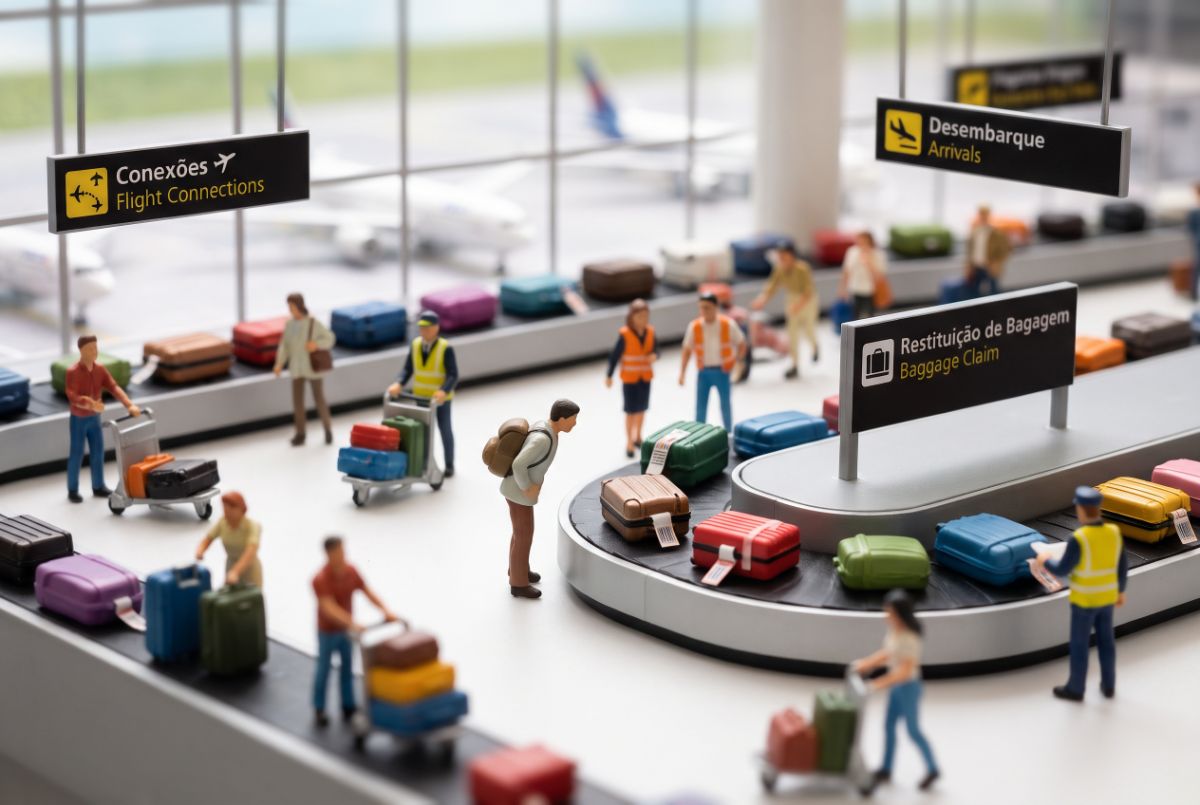
Checking Bags Through to Final Destination: When Do You Have to Re-Claim on a Layover?
Few phrases bring more immediate relief at an airport check-in counter than hearing the agent say: “Your luggage is checked all the way through to your final destination.” You tuck your baggage claim stub safely into your passport wallet, clear security, and settle into your flight assuming you will not see your rolling suitcase again until you land at your final stop. But halfway through your journey, as you step off the plane into a bustling transit hub to switch flights, doubt creeps in: “Do I walk straight to my next departure gate, or am I legally required to pull my bag off the carousel, clear customs, and re-check it?”
This is one of the most widespread—and expensive—misunderstandings in commercial aviation. Having an automated baggage tag printed with your final destination airport code does not guarantee that your luggage moves between airplanes autonomously. In major global gateways—most notably upon your first arrival into the United States, when entering Canada, when connecting to domestic flights across Australia or Brazil, or when switching between independent low-cost tickets—national border and biosecurity laws mandate that passengers physically take custody of their checked bags to clear customs. If you walk past baggage claim without retrieving your bag, it will spin on the carousel until airport ground crews send it to long-term storage, leaving you to complete your journey empty-handed. This comprehensive 2026 aviation guide breaks down customs regulations across the US, Europe, and Asia, explains how to read your baggage tag, and keeps your luggage moving smoothly.
Checked Luggage on Layovers: When Must You Re-Claim?
Compare regulatory requirements, baggage routing, and passenger actions across common itinerary types:
| Itinerary / Connection Type | Does Luggage Transfer Automatically? | Must You Collect Bags at Layover? | Governing Law / Operational Cause | Required Passenger Action |
|---|---|---|---|---|
| Domestic Connection (e.g., US or EU Domestic) | Yes (Automatic) | No | No internal customs or immigration borders between cities. | Deplane and walk straight to your onward departure gate. |
| First Point of Entry into the US (Port of Entry) | No (for domestic onward flights) | Yes (Mandatory) | U.S. Customs and Border Protection (CBP) inspection required at first US soil. | Clear passport control, collect bags at carousel, clear customs, drop at Baggage Re-Check belt. |
| Schengen Area Entry (e.g., US > FRA > FCO) | Yes (Automatic) | No | Passports checked at entry; customs clearance of bags happens at final destination. | Clear passport control at the transit hub; pick up bags at final city’s green/red customs channel. |
| International-to-International (Int-to-Int) | Yes (Most global hubs) | No | Baggage remains inside sterile airside transit (e.g., London, Doha, Singapore). | Follow Flight Connections / Transfers signs directly to your departure gate. |
| Airport Change in Layover City | Never | Yes (Mandatory) | Airlines never provide overland road freight between commercial airfields. | Collect bags, hire road transit (taxi/bus) to the second airport, and check in from scratch. |
| Separate Tickets (Self-Transfer) | Never | Yes (Mandatory) | Unlinked contracts without interline baggage transfer agreements. | Exit airside, retrieve bags from carousel, and check them at Airline #2’s landside desk. |
1. The “First Port of Entry” Doctrine: The US, Canada, and Australia
The single greatest operational shock for international flyers occurs when connecting through countries with strict, centralized border control. In these jurisdictions, national sovereignty dictates that customs and biosecurity inspections take place at the very first airport where your aircraft lands, regardless of your final domestic destination:
- The United States Rule (CBP Protocol): If you fly from London to Orlando with a layover in Atlanta, Miami, or Chicago, your first point of entry is that connection city. Even if your baggage tag reads MCO (Orlando), you must exit the plane, clear CBP passport control, wait at the international arrivals carousel, retrieve your suitcases, and wheel them through customs inspection.
- Once past customs inspection doors, look immediately for the dedicated Connecting Flights / Baggage Re-Check belt. Hand your already-tagged bags to the airline staff waiting at the belt—they will scan the existing barcode and send it into the domestic baggage system. You then proceed through TSA security screening to your domestic gate.
- The Rare Exception (ITI): A few US airports run International-to-International (ITI) pilot programs where bags on certain routes transit without passenger collection if connecting outward to a third country. Gate agents will specifically inform you if your flight qualifies.
- Canada (CBSA Regulations): Canada operates similarly for flights entering the country. When flying internationally into Toronto Pearson (YYZ) or Vancouver (YVR) with an onward domestic connection to Montreal or Calgary, passengers generally must clear Canada Border Services Agency (CBSA) checkpoints, collect their luggage, and drop it at onward transfer counters. Note: Toronto and Vancouver now feature automated baggage bypass protocols for select airlines; always confirm at your origin check-in desk.
- Australia & New Zealand Biosecurity: Due to hyper-strict agricultural biosecurity laws, all international arrivals into Sydney, Melbourne, or Auckland connecting to domestic regional flights require collecting your checked baggage for physical X-ray or canine agricultural screening before proceeding to domestic terminals.
2. How the European Union and Schengen Area Handle It
Europe handles checked baggage transfers completely differently than the United States, creating understandable confusion for global travelers:
- Passport Control vs. Customs Inspection: If you fly from New York to Rome with a connection in Frankfurt or Paris (CDG), you enter the border-free Schengen Area at your transit hub. You will clear passport immigration control in Frankfurt or Paris.
- Your Bags Stay Behind the Scenes: Unlike in the US, you do not collect your bags in Frankfurt or Paris. The airport ramp system transfers your suitcases directly to the aircraft heading to Rome. When you land in Rome, you retrieve your bags from the carousel and walk through the green (“Nothing to Declare”) or red (“Goods to Declare”) customs channel at your final Italian destination.
3. Pure International-to-International Connections (Int-to-Int)
When your entire flight itinerary stays outside domestic borders—such as flying London > Doha > Bangkok, or New York > Tokyo > Singapore—the process is streamlined:
- Your luggage remains confined to the secure airside baggage sortation network beneath the tarmac.
- You disembark into the international transit lounge, pass through a brief transit security screening checkpoint (carry-on X-ray and metal detector), and walk directly to your departure gate. You do not clear customs, and you never see your checked bags until your vacation destination.
4. Multiple Airports in the Same City: The Landside Trap
Itineraries connecting across major metropolitan centers that utilize multiple commercial airfields (such as London, Tokyo, or New York) feature an absolute rule:
- If your inbound flight lands at London Gatwick (LGW) and your outbound flight departs from London Heathrow (LHR), or if you arrive at Tokyo Narita (NRT) and depart from Tokyo Haneda (HND), no commercial airline transfers luggage over public highways.
- Your baggage tag will be printed strictly to the initial arrival airport. You must collect your suitcases from the reclaim belt, load them into a train, coach, or taxi, transfer yourself across the city, and line up at the check-in desk of the second airport to check them in from scratch.
5. Overnight Layovers: Short-Checking vs. Through-Checking
If your single-ticket journey includes a long overnight layover (typically exceeding 10 to 14 hours):
- Automated Cutoffs: Many automated airport baggage sortation systems reject holding luggage overnight for capacity and security reasons. In such cases, check-in agents will tag your luggage only as far as your connection hub.
- Requesting “Short-Checking”: If you intend to stay at an airport hotel during an overnight stop, you can explicitly ask the origin check-in agent to short-check your bag to your layover city. This ensures you have access to your personal items, clean clothes, and toiletries for the night. If you prefer not to haul heavy bags to your hotel, ask if the airline can check them through to your ultimate destination—just remember to pack essentials and medications in your carry-on.
6. How to Read Your Baggage Tag Stub for Absolute Certainty
Never rely solely on verbal confirmations. You can verify your luggage routing in seconds by inspecting the printed barcode sticker handed to you at check-in:
- The Destination Code Header: Look at the large 3-letter IATA code printed at the top of the receipt. If you are flying from Los Angeles to Athens via Frankfurt, the large letters at the top must read ATH (Athens). If it reads FRA, your bag has only been checked to the connection.
- The Flight Leg Sequence: Beneath the primary airport code, the tag will list each flight segment in sequence (e.g., LH 457 followed by LH 1280). If all flight legs are listed, the bag is electronically routed to your final destination—subject only to the local customs laws of your transit country.
Essential Layover Baggage Street Smarts
The Golden Question at Origin Check-In: When handing your bags over at the start of your journey, avoid vague questions like “Does my bag go all the way?”. Always ask specifically: “At my connection in [Airport X], do I need to pick up my bags from the carousel to clear customs, or do I only see them at my final stop?” Airline reservation screens display the exact regulatory customs requirements for that specific routing.
Track Bags in Real Time with Bluetooth Trackers: Pack a Bluetooth tracker (Apple AirTag or Samsung SmartTag) inside the interior lining of each checked bag. When you touch down at your connection hub, open the tracker app on your phone. If the app shows your bag sitting in the airport baggage yard or beneath your gate, you gain instant peace of mind without guessing.
Authoritative Customs & Aviation Resources
Consult verified national border agencies and international aviation associations for official baggage handling policies:
- Review international passenger arrival and baggage clearance rules at U.S. Customs and Border Protection (CBP Official Guide).
- Check Canadian entry and baggage transfer guidelines via the Canada Border Services Agency (CBSA Official Portal).
- Explore global baggage handling standards and interline transit protocols on the International Air Transport Association (IATA).


Post Comment